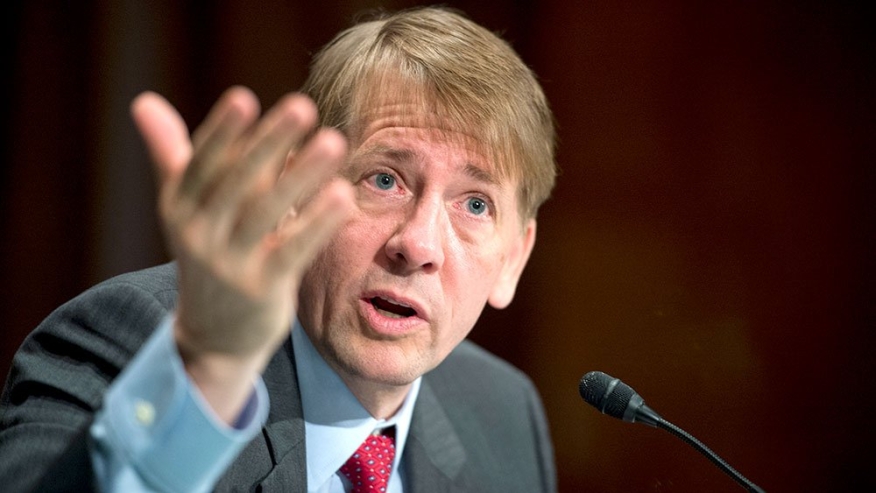
The tussle between the Credit Union National Association (CUNA) and the Consumer Financial Protection Bureau (CFPB) became somewhat thornier as CFPB Director Richard Cordray bluntly told the membership of the trade group that credit unions deserve to be under his agency’s regulation while faulty them for not appreciating the CFPB’s endeavors.
In a speech before a CUNA conference audience today, Cordray acknowledged that credit unions played no role in the 2008 financial meltdown and that this financial services sector made consumer protection a priority long before the CFPB was conceived. But, he pointedly insisted that credit unions need to be under the same federal regulatory umbrella as the Wall Street titans that crashed the economy eight years ago.
“Your leadership has strenuously made the suggestion that, in light of this history, the Bureau should simply exempt credit unions altogether from consumer financial protection laws,” Cordray told the CUNA audience. “They have argued that the law would allow us to do that. I have considered their arguments carefully, and I do not believe that is correct. The U.S. Congress had all of these suggestions in front of it when the Dodd-Frank Act was being written. But Congress did not do that, and though it gave us some amount of exemption authority, it is not plausible to me that we could use such authority to override Congress’s own judgment on such a broad-based policy matter.
“Instead,” Cordray continued, “Congress said that all financial institutions have to play by the rules, and we have to enforce them. That is our charge. But that does not mean one size necessarily fits all. Congress itself drew some thresholds and tiers that distinguished larger institutions from smaller institutions, such as its provision giving us supervisory authority over banks and credit unions with more than $10 billion in assets but not those with less. So where we can customize our rules to treat smaller institutions differently in light of their compliance burdens and the level of risk they pose, we have done so and will continue to do so.”
 Cordray also chided credit unions for not appreciating the success of the CFPB’s regulatory oversight.
“Many credit unions, and CUNA itself, have focused on the compliance burdens of the new rules,” he stated. “But they have overlooked the positive benefits of the rules. A safer mortgage market that does not allow ‘no-doc’ loans, or loans that can be underwritten over misleading teaser rates, is a market that presents more fertile ground for responsible lenders like credit unions. When bad practices are rooted out, good practices are able to thrive, freed from the unfair competition of a race to the bottom. That is exactly what has happened for credit unions over the past year. In addition, with the Consumer Bureau building out a vigorous supervision program over non-bank mortgage lenders and mortgage servicers, you are being put on a level playing field for the first time. Instead of attacking or resisting the CFPB, you should be supporting and speaking up for what it is doing for the best and most responsible financial institutions such as credit unions, that compete based on personal focus and strong customer service.”
Among the leading financial trade groups, CUNA has been among the most vocal critics of the CFPB, arguing against its handling of Home Mortgage Disclosure Act (HMDA) data and calling for Cordray’s office to be replaced with a bipartisan commission.