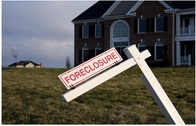
The Federal Housing Administration (FHA) has released guidance for homeowners and lenders that use the reverse mortgage or Home Equity Conversion Mortgage (HECM) program and are dealing with outstanding property taxes and unpaid hazard insurance premiums. FHA’s guidance is intended to assist elderly borrowers who have neglected to pay these expenses and may face foreclosure.
“We understand that some senior citizens have not paid their taxes or insurance for some time and may be at risk of losing their home,” said FHA Commissioner David H. Stevens. “Today’s guidance is designed to establish a clear framework that protects both the homeowner and the lender who participate in our reverse mortgage program.”
HUD regulations allow lenders to make tax and insurance payments on behalf of their elderly clients from the borrower’s available mortgage funds. However, once those resources are exhausted, the lender must advance funds to protect FHA’s interest and obtain reimbursement from the borrower.
Over time, however, these unpaid debts and lender advances have resulted in an untenable situation that could put the FHA Insurance Fund at risk and result in foreclosure proceedings against delinquent seniors. While the guidance issued is intended to help elderly homeowners avoid foreclosure, lenders may have no choice if these defaults are not cured.
FHA’s Mortgagee Letter 2011-01 applies to all HECM loans where the lender/servicer advanced corporate funds to satisfy an unpaid property charge on behalf of the borrower. It reminds lenders that foreclosure is to be a last resort when dealing with their elderly clients. It also includes sample letters that lenders may use to make certain borrowers understand that property tax and hazard insurance are required expenses that must be paid even though the homeowner owes nothing on their mortgage loan.
When a borrower fails to pay a property charge, the loan is deemed to be out of compliance with the provisions of the mortgage and FHA considers the loan to be delinquent. Lenders/servicers, however, must work with the borrower to try to bring the loan current at the earliest possible point. It is only after all loss mitigation strategies have been exhausted that the lender may submit a “due and payable” request to FHA.
Mortgagee Letter 2011-01 precisely defines the process and reporting requirements lender/servicers must follow to collect unpaid property charges from HECM borrowers. FHA is strongly encouraging HECM borrowers who have outstanding property charges to work closely with loan servicers and approved housing counselors who can provide free assistance to help them resolve the situation and avoid any foreclosure action.
Meanwhile, the U.S. Department of Housing & Urban Development (HUD) is providing nearly $3 million to housing counseling agencies to specifically help reverse mortgage borrowers facing this issue. Counselors will help elderly homeowners work with their servicer to create repayment plans that cure the outstanding balance. If keeping the home is no longer an option, the counselors will help the borrower transition to alternative housing.
Under this new guidance, lenders must send letters to borrowers who recently missed a property charge payment, borrowers who had an unpaid property charge balance for an extended period, and to borrowers with a significant unpaid property charge balance. Lenders have until Feb. 28, 2011, to send all letters to borrowers with loans that are delinquent as of the date of the Mortgagee Letter. Thereafter, letters must be sent as soon as the mortgagee receives notice of a missed payment.
The lender must also offer loss mitigation options to allow the borrower the opportunity to cure the deficiency. These options must include, but are not limited to, establishing a realistic repayment plan; contacting a HUD-approved housing counseling agency to provide free assistance to the borrower; and refinancing the delinquent HECM to a new reverse mortgage if there is sufficient equity to pay off the existing mortgage and bring the property charges current.
To avoid problems with unpaid property charges in the future, FHA recently enhanced the HECM program’s pre-closing counseling requirements. Counselors must now place a greater focus on educating borrowers on how important it is that they fulfill the terms of the mortgage, including the requirement that borrowers make timely tax and insurance payments. In addition, counselors now employ a new financial tool which helps identify potential budget shortfalls. Finally, HUD will shortly publish a proposed rule that adds more preventative measures and consumer protections to the existing HECM regulations.
For more information, visit www.hud.gov.