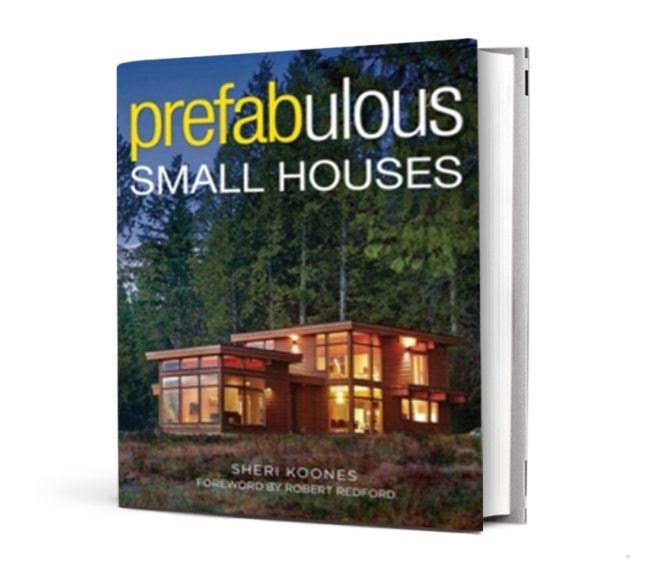
 One of the most pressing issues facing housing today is the lack of inventory, especially in residential property that offers affordability to first-time buyers. For award-winning real estate writer Sheri Koones, one potential solution could be found in the growing popularity of smaller-scale prefab housing.
In her new book, Prefabulous Small Houses (published by Taunton Press), Koones takes a look at the new trend in prefabricated construction on homes that are sized between 350- and 2,500-square feet.
“This is the ideal type of house,” said Koones in an interview with National Mortgage Professional Magazine. “It offers coziness, more energy efficient, and it is easier to maintain. It also gives you the opportunity to do other things than spend all of your time working around the house.”
Koones stressed that the modest residences she covers in the book—which includes a foreword by film and environmental icon Robert Redford—should not be confused with tiny houses, the micro-sized properties that have gained new attention via a popular HGTV series.
“Tiny houses are good for some people, such as college students or people who travel a lot,” she added. “But small houses that meet the code are more practical.”
Koones book details 30 smaller houses around the country, focusing on a diversity of prefabricated construction styles including modulars, panelized, timber frames, container houses and component houses.
 At the moment, the prefab smaller house movement has built up momentum to address inventory shortages—Koones admitted it is still a relatively new trend. But from a business standpoint, Koones believed smaller houses could be a win-win situation for all stakeholders in the housing market.
“Studies show that prefab houses can save five to 15 percent of the cost [of homebuilding],” she continued. “Homeowners can get to the mortgage stage much quicker. Some builders are reluctant about prefab housing, but there are builders that work with prefab and like it—they can build more houses this way, and more quickly.”
She noted that smaller house communities are more prevalent in some markets, most notably in California and Washington—states where increasingly pricey real estate and a stronger sense of energy efficiency makes this option feasible. Koones also detected a greater interest in this option among the much-desired Millennials market.
“The younger generation is much more concerned about energy and the environment,” she said. “In future, this will be a growing trend. We are seeing people look to build better, not larger.”