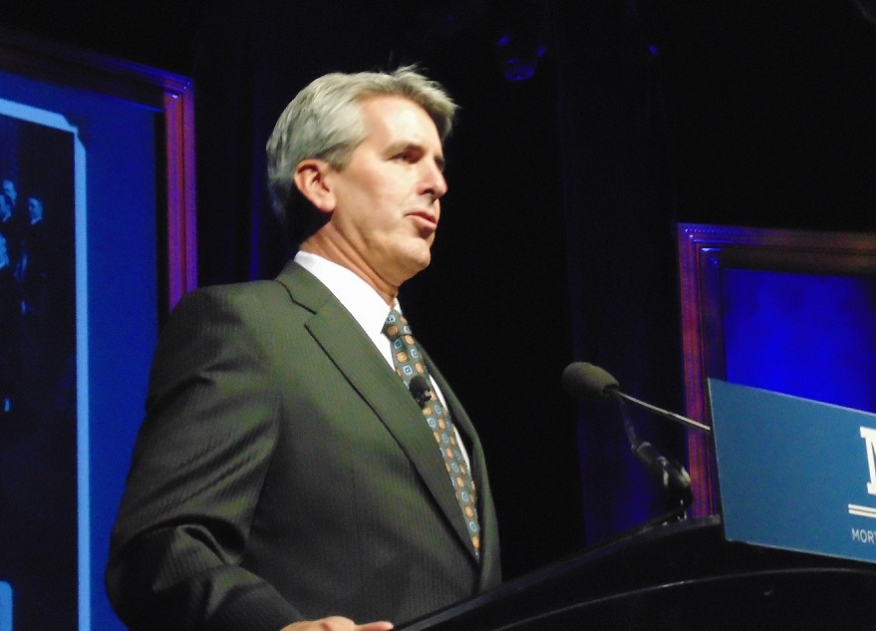
The chief of the nation’s leading mortgage industry trade group came to Capitol Hill to challenge lawmakers to bring about a conclusion to the federal conservatorship of the government-sponsored enterprises (GSEs).
In testimony presented today before the U.S. Senate Committee on Banking, Housing, and Urban Affairs, Mortgage Bankers Association (MBA) President and CEO David H. Stevens questioned the congressional lethargy in seeking GSE reform. “It has been nearly nine years since the GSEs entered conservatorship, and yet their long-term status remains unresolved,” he stated. “The financial crisis exposed the structural conflicts and misaligned incentives in the GSE business model, as well as weaknesses in the regulatory framework that was in place at the time. Extended conservatorship is economically and politically unsustainable and an unacceptable long-term outcome. Without comprehensive reform, borrowers, taxpayers, and lenders will all face increased risk and uncertainty about the future.”
Stevens detailed the MBA’s proposals for a post-conservatorship federal housing policy that, in his words, include “recasting the GSEs’ current charters and allowing a multiple-Guarantor model that features at least two entities and preferably more.” But Stevens warned that it is the responsible of Congress and not the GSEs’ regulator, the Federal Housing Finance Agency (FHFA), to take the leadership on this issue.
“Only Congress can bring about the changes necessary to achieve the core principles outlined in our plan, which are necessary for a vibrant housing finance system,” he continued. “FHFA has put in place a number of policies and procedures to improve access to the secondary mortgage market and reduce the risks to taxpayers. Now is the time for Congress to act to “lock in” these improvements. After all, only Congress can alter the existing GSE charters, establish an explicit federal government guarantee, and create a regulatory mandate to maintain a level playing field.
And most importantly, only Congress can provide the legitimacy and public confidence necessary for long-term stability in both the primary and secondary mortgage markets.”