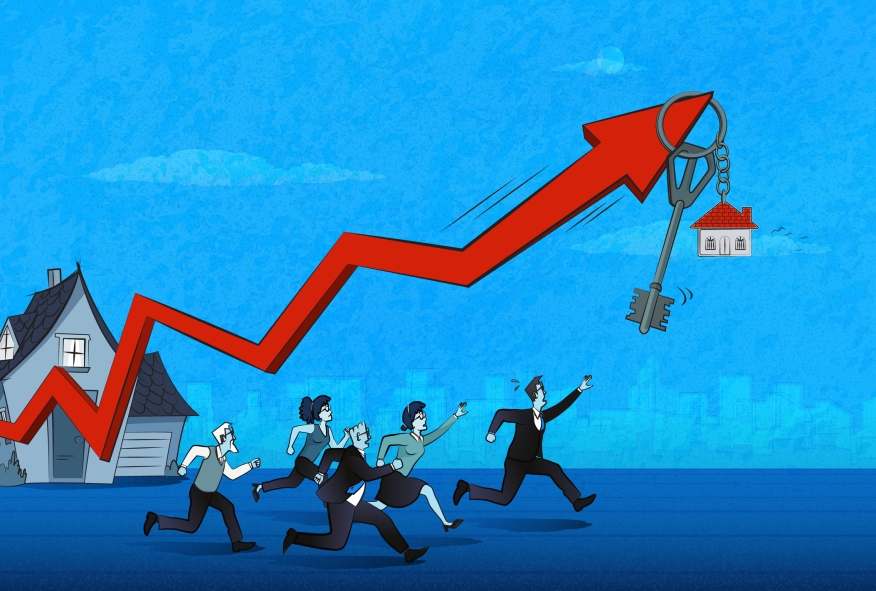
Median single-family home prices reached their highest level in 45 years during the second quarter of 2024, according to new data from the National Association of Realtors (NAR).
San Jose, Calif. recorded a median single-family home price of $2,008,000 during Q2, marking the first time a metro area’s median price exceeded $2 million since NAR began tracking metro area single-family home prices in 1979.
Nearly nine out of 10 metro markets (89%) recorded home price gains in the same time frame, as the 30-year fixed mortgage rate ranged from 6.82% to 7.22%, according to the NAR’s latest quarterly report. Additionally, double-digit price gains were seen in 13% of the 223 tracked metro areas, down from 30% in Q1 2024.
“The record-high home prices in most metro markets bring good and bad news,” said NAR Chief Economist Lawrence Yun. “It’s terrific news for homeowners who are moving ahead in wealth gains. However, it’s difficult for those wanting to buy a home as the required income to qualify has roughly doubled from just a few years ago.”
On a national scale, median prices for existing, single-family homes grew 4.9% in Q2 year-over-year. Prices increased 5% in the first quarter.
The largest share of single-family, existing home sales took place in the South, which registered 45.5% of transactions in Q2. The South saw a YOY price appreciation of 2.3% – the lowest among the four U.S. regions. Prices rose 9.8% in the Northeast, 5.5% in the Midwest, and 5.4% in the West.
The largest YOY median price increases ranged from 14.1% in Trenton, N.J., to 19.8% in Racine, Wash., and Glens Falls, N.Y. The top 10 metro areas by price increase also included El Paso, Texas (19.2%); Morristown, Tenn. (16.7%); Manchester-Nashua, N.H. (16.2%); Anaheim-Santa Ana-Irvine, Calif. (15.0%); New York-Jersey City-White Plains, N.Y.-N.J. (14.8%); Springfield, Ill. (14.8%), and Dutchess County-Putnam County, N.Y. (14.2%).
California was home to seven of the top 10 most expensive markets in the U.S. during Q2. The top three markets were San Jose-Sunnyvale-Santa Clara, Calif. ($2,008,000; 11.6%); San Francisco-Oakland-Hayward, Calif. ($1,449,000; 8.5%); and Anaheim-Santa Ana-Irvine, Calif. ($1,437,500; 15%).
Nearly 10% of markets experienced home price declines, up from 7% in the first quarter.
“Previously fast-gaining markets took a breather in the past quarter, including Nashville, Durham, Austin, and several Florida metro areas,” Yun pointed out. “Conversely, some markets that experienced declines last year have roared back, such as San Francisco, Anaheim, and New York.”
As mortgage rates increased in Q2, the monthly mortgage payment on a typical existing single-family home with a 20% down payment was $2,262, up 11.1% from Q1’s $2,036 payment and 10.3% YOY. Families typically spent 26.5% of their income on mortgage payments, up from 24.2% in the previous quarter and 25.3% one year ago.
First-time homebuyers were perhaps most impacted by these affordability constraints. The monthly mortgage payment for the typical starter home valued at $358,800 (with a 10% down payment) jumped to $2,218 in Q2, up 11.1% from Q1 ($1,997) and 10.3% from one year ago ($2,011).
A family needed a qualifying income of at least $100,000 to afford a 10% down payment mortgage in 48% of markets, up from 40.7% in the previous quarter.
“Housing affordability will improve in upcoming months,” Yun said. “Mortgage rates have fallen measurably, and more supply is reaching the market. Therefore, the income required to buy a home will decrease."