As if wanna-be homebuyers don’t have enough to worry about 一 high prices, high mortgage rates and a flagging economy 一 now the longest running government shutdown in history also is giving them pause.
Nearly half of all Americans polled by Redfin say they are less likely to make a major purchase because of the shutdown, now in its second month and with no end in sight. That’s double the number who said the shutdown would give them pause in early October. The federal government closed its doors on October 1.
The largest increase came from those who said they are much less likely to make a major purchase, rising from 14% to 28%. Seventeen percent said they are a little less likely, up from 8% a month earlier.
Slightly more than half told pollsters the shutdown has not changed their likelihood of making a major purchase, one way or the other, a number that is down from 64% in early October.
Uncle Sam closed up shop when Congress failed to agree on a continuing resolution that would extend the budget for fiscal year 2025 for three months, or until lawmakers agreed on a new budget for 2026. Thousands of federal workers have gone without pay, and many local programs that depend on government funding have been disrupted.
But the shutdown’s impact goes far beyond making big ticket purchases, the survey found. For example, of the 745 respondents with a monthly mortgage or rent payment, 7% have missed a payment, and 13% have been late. Moreover, 14% said they are likely to be late on a house payment within the next three months, and 10% said they are likely to miss a payment altogether,
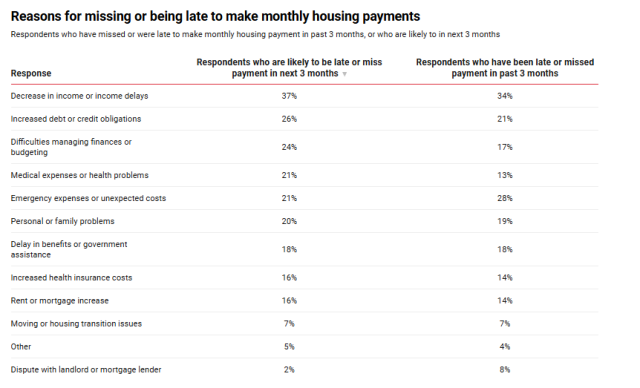
Of the 107 respondents who have missed or have been late or are likely to miss or be late in the next three months, 32% cited the government shutdown as a direct cause, and 17% said the shutdown is an indirect cause for their missed or late payment. More than one-third said the shutdown was not the reason. Decreased or delayed income was the most cited reason for missing or being late.
Overall, 56% of the approximately 1,000 respondents said the closure has had no impact on their lives, but 35% said they are doing worse financially because of it 一 12% much worse.