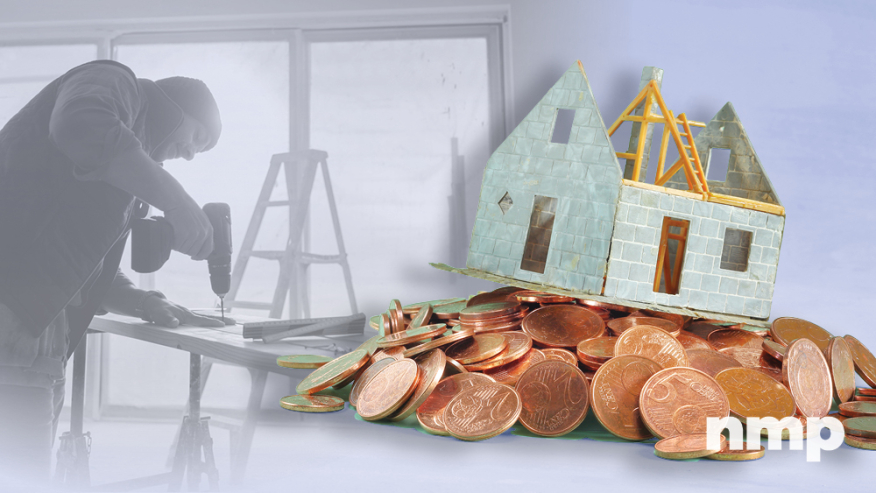
The cost of home repairs and remodeling continued its upward climb in the third quarter of 2025, reaching new decade-long highs and maintaining a pace in line with broader inflation, according to the latest Verisk Repair & Remodel Index.
Overall, repair and remodeling expenses rose 3.07% year-over-year compared to the same period in 2024, and 0.57% from Q2 of 2025, extending a long trend that has pushed costs nearly 75% higher since Verisk first launched its Remodel Index in 2013.
The Index, which tracks 31 categories of home repairs across more than 430 local markets, found that repair and remodeling costs matched the Consumer Price Index’s (CPI) 3% annual rise — marking the first time in recent memory that home repair inflation has moved in lockstep with national inflation levels.
Greg Pyne, Verisk’s vice president of pricing, noted that after dramatic increases during the pandemic, cost growth has slowed but continued to outpace inflation until this quarter. If the current trend persists, he said, stakeholders across the housing ecosystem — from homeowners to contractors to investors — may finally see some relief in cost volatility
Labor Continues To Drive Cost Growth
Labor remained the dominant force behind rising costs, accounting for nearly 63% of the total expenses associated with repair and remodeling projects. Four of the five categories with the largest quarter-over-quarter price gains were also among the most labor-intensive activities. Categories such as remodeling full or primary baths, sealing and painting entire homes, and replacing tile flooring all saw cost increases of at least 1% — with labor comprising between 74% and 81% of the total cost in these categories.
One notable exception was the “Deck Build Out With Railing” category, which saw a 1.21% cost increase despite labor comprising only 39% of the cost structure. Still, every category measured posted at least a slight quarterly increase, underscoring the persistence of inflationary pressure in the sector.
Regional Disparities Remain Pronounced
Every U.S. region experienced both quarterly and annual cost increases, but the magnitude varied considerably. The South Atlantic, East North Central, and West North Central regions posted the highest annual gains, each surpassing 3.2%. In the South Atlantic — a region still recovering from Hurricanes Helene and Milton — annual costs surged 3.25%; however, quarterly gains there were the lowest in the nation at just 0.63% as the region began to stabilize. New England led quarterly growth at 0.88%, followed by the East North Central and Pacific regions, the latter still experiencing volatility linked to catastrophic wildfires in the Palisades region of Los Angeles.
At the state level, quarterly cost increases were significant. Washington, D.C. reported the single largest rise at 3.76%, nearly double the next highest — Delaware at 1.95% — while Utah followed at 1.79%. A total of 22 states saw quarterly increases of at least 1%, a dramatic jump from the previous quarter, when only three states reached that threshold. The smallest increases occurred in Kentucky, Oklahoma, and Arizona, all below 0.70%.
A Decade Of Escalating Costs
Verisk’s report reinforces a long-term pattern: repair and remodeling costs have soared nearly 67% since 2015 and show no signs of reversing. While the alignment with inflation this quarter offers a glimmer of normalization, ongoing labor shortages, regional disasters, and persistent demand continue to keep pricing elevated. For insurers, builders, and homeowners alike, Verisk’s quarterly index provides an increasingly critical benchmark for navigating a market where repair and reconstruction remain historically expensive and regionally uneven.