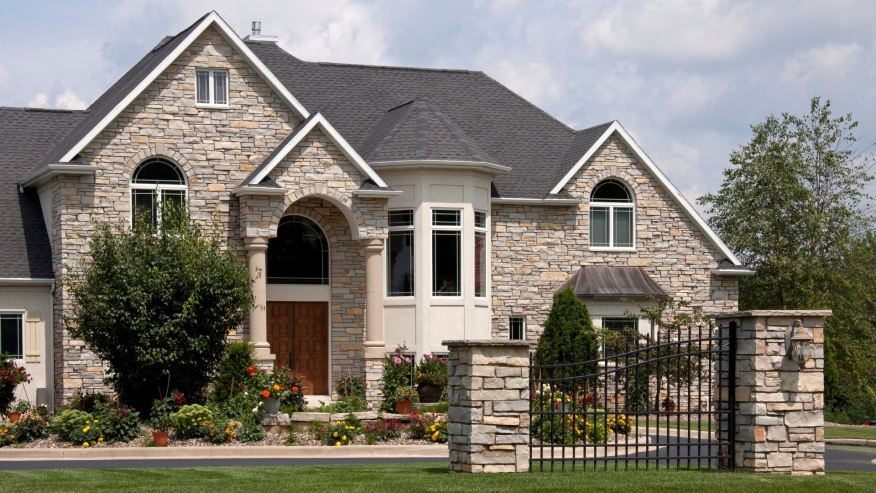
Million-dollar houses are almost ubiquitous — likely one in 10 are worth a million or more. But they may not be clustered exactly where you think.
Montana, for example, ranks fifth in the nation in the number of houses priced at $1 million or more, according to a new study. And Wyoming is right behind it at No. 6, research by exterior renovation specialists Craftsmen Home Improvements found.
In all, the average in nine states tops the million dollar mark, the contractor discovered.
As you might expect, Hawaii tops the list with an average listing price at just over $1.54 million. The state also leads for median listing price at $799,000, making it America's priciest housing market by both measures.
But California, a place almost synonymous with high housing prices, is only third on the list, with an average listing price of $1.47 million during the 12-month period between June 2024 and May 2025. The Golden State's median listing price sits at $763,250.
New York grabs the second spot with average home costs hitting $1.49 million. But it slips to fourth in terms of the median listing price with its $654,987. And Massachusetts is No. 4 with average listings at $1.42 million, while grabbing second for median price at $779,700.
Montana and Wyoming come next. Montana’s average listing price is $1.16 million, despite having just 4,739 homes for sale. The state's median asking price of $632,000 puts it sixth nationwide. And Wyoming ranks in sixth place, with average listings hitting $1.12 million, while its median price is way down at 20th place nationwide at $475,500.
Rounding out the top nine are Connecticut with listings averaging $1.06 million, Colorado tying that also at $1.06 million, and Rhode Island at $1 million.
Meanwhile, another study, one that looked at Census Bureau data as well as data from the National Low Income Housing Coalition, found that the typical resident in Maine, Louisiana, West Virginia, and Mississippi can never save enough for a down payment because they are usually in the red at the end of every month.
The study by garybuyshousesar.com found that after covering essentials like rent, health care, groceries, and transportation, residents in those four states are left in the negative. In Maine, for instance, the typical renting household earns $42,627 a year — $92 short every month after paying for basic necessities.
In Louisiana, the monthly shortfall is $195. In West Virginia, it’s $243, while in Mississippi, the deficit is $25.
On the other side of the scale, the typical Virginia resident has the potential to save $728 a month after paying for the basics. Those who do put that money aside can save enough for a down payment faster than residents anywhere else, according to the report.
The median house in Virginia costs $382,900, allowing motivated savers to accumulate the $57,435 needed for a 15% down payment in as little as 6 years and 7 months.
Alaska claimed second place in that regard. Renters there have the potential to save enough for a house down payment in 6 years and 11 months. Alaska's spot on the list comes from the typical renting household earning $63,740 yearly while facing modest rent bills, creating $630 monthly savings potential.
(Residents in Alaska are also fortunate enough to receive an annual dividend payment from the Alaska Permanent Fund, which shares the profits of the state's oil and gas revenue with its residents. In 2024, the share was $1,702.)
Maryland took third with its timeframe of 7 years and 7 months. North Dakota ranked fourth at 9 years flat, and Washington state completed the top five at 9 years and 11 months.