Identity and transaction fraud rise for the second consecutive year, CoreLogic reports
The CoreLogic Mortgage Application Fraud Risk Index increased 8.3% nationwide over last year and increased by 1.1% since last quarter. Overall, the CoreLogic report found that one in 123 mortgage applications were estimated to have indications of fraud in the second quarter of 2024.
Driving Factors
In reviewing trends among six fraud types, the 2024 CoreLogic fraud report found identity fraud and transaction fraud were the two with an increase over the previous year.
Identity fraud is reported less frequently in the industry, and is rarely mirrored in the Fannie Mae fraud trend reporting. Yet, identity fraud risk indicators have increased for two straight years, up 5.5% year-over-year in 2024 and up 12% the year prior. Researchers believe this is due to the rise in ITIN (Individual Tax Identification Numbers) loan programs for people who do not have Social Security Numbers.
Transaction fraud risk, on the other hand, has appeared more frequently with indicators increasing 4.9% in 2024 after increasing 1.9% last year. CoreLogic ties the rising trend to upticks in rapid resales with rising prices, more high-activity buyers, and sales transactions with multiple high-risk flags. Elements of those transactions, such as down payments, property uses, or non-arm's-length relationships, are more likely to be misrepresented.
Property fraud risk and income fraud risk were down 1.8% and 2%, respectively, from last year. Occupancy fraud risk and undisclosed real estate debt fraud risk were down 3.9% and 6%, respectively.
Get the NMP Daily
Essential stories, every weekday.
High interest rates have kept mortgage volume in check, CoreLogic reports, with the refinances share of activity staying between 24% and 27.5% since mid-2022. Meanwhile, purchase transactions as a share of overall volume were 74.3% in the second quarter of 2024, hardly changing from last year.
Risky States For Fraud
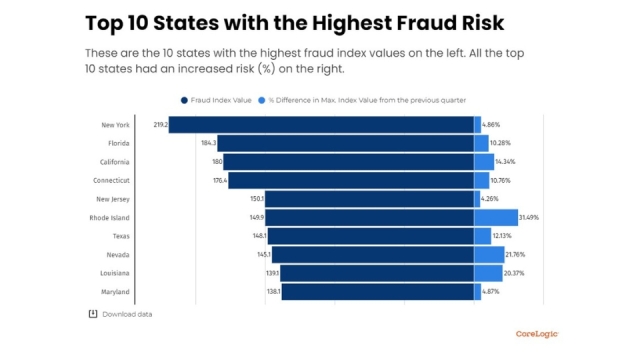
Number one on the list for having the most fraud risk is New York, up 4.8% from last year, due to its high concentration of above-average risk loans, including two- to four-unit loans, FHA purchases, and investment purchases.
Next is Florida, which has shown increased risk in FHA purchases in the past two years, with the overall state risk increasing 10.2% in the last year. Following in third is California, which had the largest overall risk increase of 14.6%, nearly double the national increase rate. The increase was distributed across loan segments.
Coming in fourth is Connecticut, where risk levels are largely due to investment loans — both purchase and refinance — which are at higher risk levels and in higher volumes than national averages. Overall risk was up 10.8%. In fifth, New Jersey had the smallest increase of the top five states, at 4.3%. Its risk level is impacted by higher-risk two- to four-unit purchases and refinances.
CoreLogic data showing the top 10 states with the highest fraud risk index in 2024.
The MoneyGuide founder’s free planning app helps buyers map when they could afford a home, with an optional handoff to its wholly owned brokerage
GetWyz, a free homeownership planning platform founded by MoneyGuide creator Bob Curtis, launched today on iOS and the web to help first-time buyers estimate when they could afford a home, explore financing options, and plan for expenses after closing.The platform also offer...
September’s decline leaves originators competing for fewer purchases, while rising borrowing costs and limited new listings keep affordability under pressure
Realtor.com finds 66 of 99 metros favor buyers or are moving that way, while rising financing costs have cut borrowing capacity 7.2% since late August for a fixed monthly payment
J.D. Power finds banks outperform servicers even among equally familiar users, while easy account access and payment history are tied to a 39-percentage-point difference in willingness to keep using an app