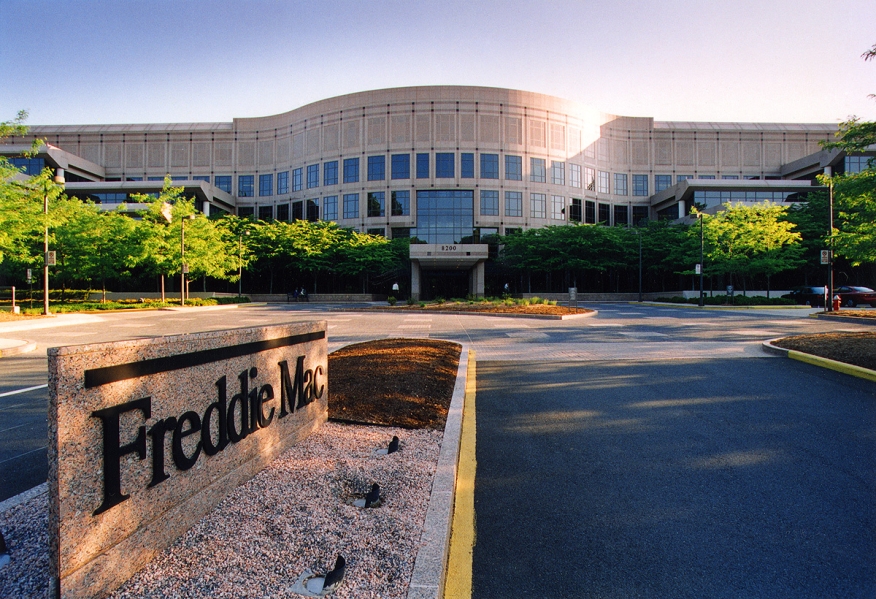
Freddie Mac’s weekly Primary Mortgage Market Survey report released Thursday shows that fixed mortgage rates increased for the third straight week.
Rates averaged 5.89% as markets continue to manage the prospect of more aggressive monetary policy to combat elevated inflation, according to Sam Khater, Freddie Mac’s chief economist.
“Not only are mortgage rates rising, but the dispersion of rates also has increased, meaning that borrowers can benefit from shopping around for a better rate,” Khater said. “Our research indicates that borrowers could save an average of $1,500 over the life of a loan by getting one additional rate quote, and an average of about $3,000 if they get five quotes.”
According to the report:
- 30-year fixed-rate mortgage averaged 5.89% with an average 0.7 point as of Sept. 8, up from last week when it averaged 5.66%. A year ago at this time, the 30-year FRM averaged 2.88%.
- 15-year fixed-rate mortgage averaged 5.16% with an average 0.8 point, up from last week when it averaged 4.98%. A year ago at this time, the 15-year FRM averaged 2.19%.
- 5-year Treasury-indexed hybrid adjustable-rate mortgage (ARM) averaged 4.64% with an average 0.4 point, up from last week when it averaged 4.51%. A year ago at this time, the 5-year ARM averaged 2.42%.
“Federal Reserve Chair Jerome Powell noted late in the prior week that the Fed is committed to containing inflation, which will likely result in some economic pain. While data is pointing to easing pressure on prices in several sectors, the level of economic activity appears to give the Fed more runway to raise rates before triggering recession risk," said Paul Thomas, vice president of Zillow Home Loans. “Employment data, while softer than prior weeks and months, still highlights a tight labor market and inflationary pressures pushing up wages.”
Thomas added that investors are adjusting expectations for short-term interest rates given these results, and now expect rates to increase more and stay at elevated levels for a longer time. “Markets will be focused on comments from Fed officials before they go into a quiet period in front of the September FOMC meeting later this month,” he said.
The Federal Open Market Committee is scheduled to meet Sept. 20-21.
Hannah Jones, economic data analyst for Realtor.com, said markets continue to adjust for uncertainty and anticipate further monetary tightening by the Fed.
“Mortgage rate volatility has been high in the last couple months as the market shifts with each new piece of economic intel,” Jones said. “This week, investors awaited the highly anticipated release of the Fed’s Beige Book, for a regional pulse on the U.S. economy and indicators of what may happen with interest rates at the FOMC meeting in a couple of weeks.”
Jones said that Wednesday’s release indicated sustained price increases in all 12 Fed districts, though a moderating rate of increase in nine of them. “This could be an early sign of the eventual ease in inflation, which would precede slowed interest rate hikes,” she said.
Jones said that even though mortgage rates are more than 250 basis points higher than a year ago, potential homebuyers are seeing some relief from record-high listing prices, which fell in August, and that seasonal cooling coupled with the rebalancing of the housing market will mean more homes will be up for grabs for those still looking.
“Despite a slightly more favorable homebuying market, still-high rates mean a typical monthly mortgage payment would be roughly $2,000 in August, $750 more than this time last year,” Jones said. “However, there is hope on the horizon as increased inventory and slowing time on market means buyers may benefit from more price reductions and more homes in their budget.”
The survey is focused on conventional, conforming, fully amortizing home-purchase loans for borrowers who put 20% down and have excellent credit. Average commitment rates should be reported along with average fees and points to reflect the total upfront cost of obtaining the mortgage.