Supply Surge Leaves Sellers Competing As Buyer Demand Weakens – NMP Skip to main content

Supply Surge Leaves Sellers Competing As Buyer Demand Weakens

Feb 24, 2026
Sellers Competing As Buyers Demand Weakens

A widening imbalance between home sellers and buyers has shifted the U.S. housing market decisively in favor of buyers, as elevated mortgage rates and affordability pressures continue to suppress demand

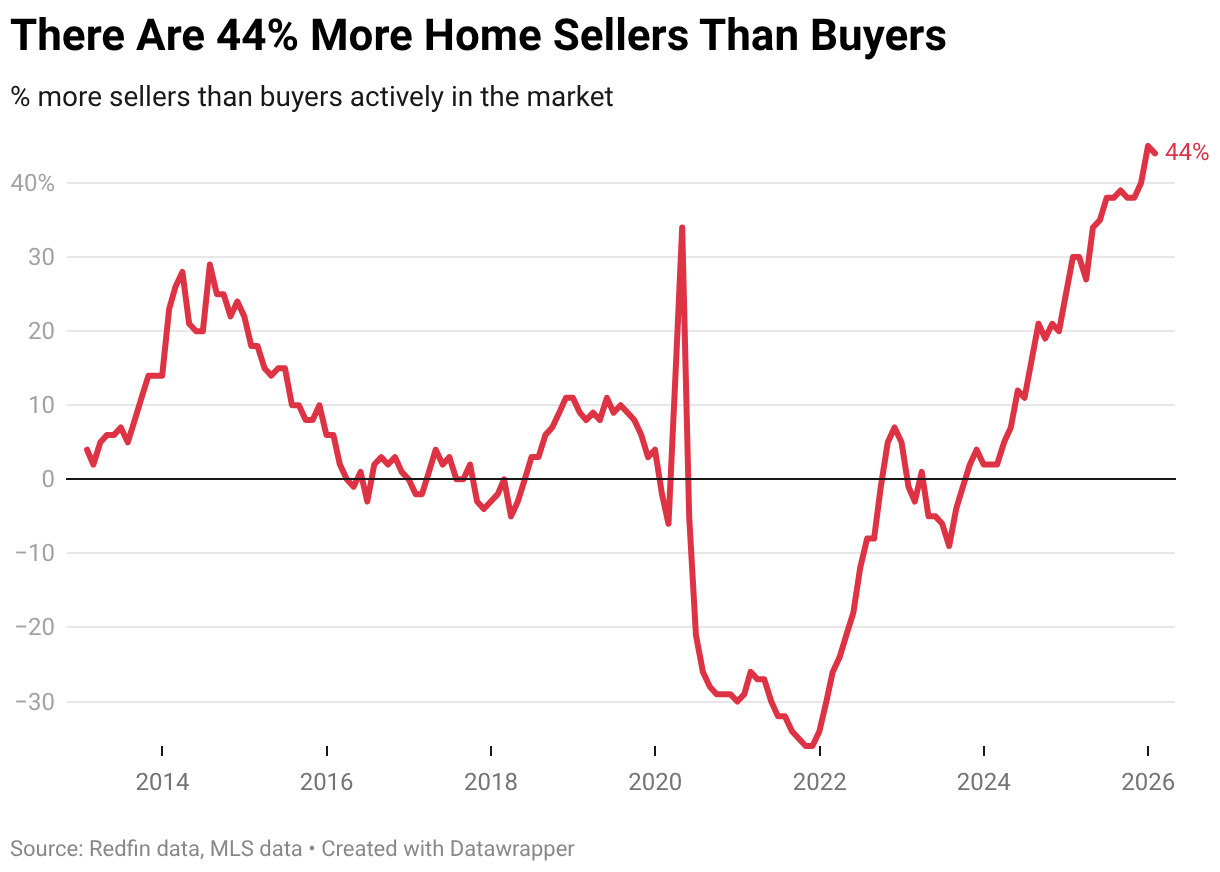
A new report from Redfin has found that there are now 44% more home sellers than buyers nationwide, marking one of the largest gaps on record and underscoring a significant shift in housing market dynamics. The imbalance reflects a surge in listings combined with weaker buyer activity, creating conditions that favor negotiation and concessions.

The growing supply-demand gap is being driven primarily by affordability constraints. Mortgage rates, which remain well above pandemic-era lows, have substantially increased monthly payments, pricing many prospective buyers out of the market. At the same time, economic uncertainty and elevated home prices have further dampened demand, leaving fewer active buyers relative to the number of homes available.

As a result, homes are taking longer to sell, and buyers who remain in the market are gaining leverage. Redfin noted that properties going under contract in January typically took 66 days — the slowest pace for that month in a decade — highlighting the cooling effect of weaker demand.


There were an estimated 44% more home sellers than buyers in the U.S. housing market in January (or 600,314 more, in numerical terms)


The shift has broad implications for pricing and market behavior, as historically, when sellers significantly outnumber buyers, home-price growth tends to slow or decline as sellers compete more aggressively. While prices have remained relatively stable in many areas, the imbalance suggests increasing downward pressure in certain regions, particularly in markets with large inventory gains.


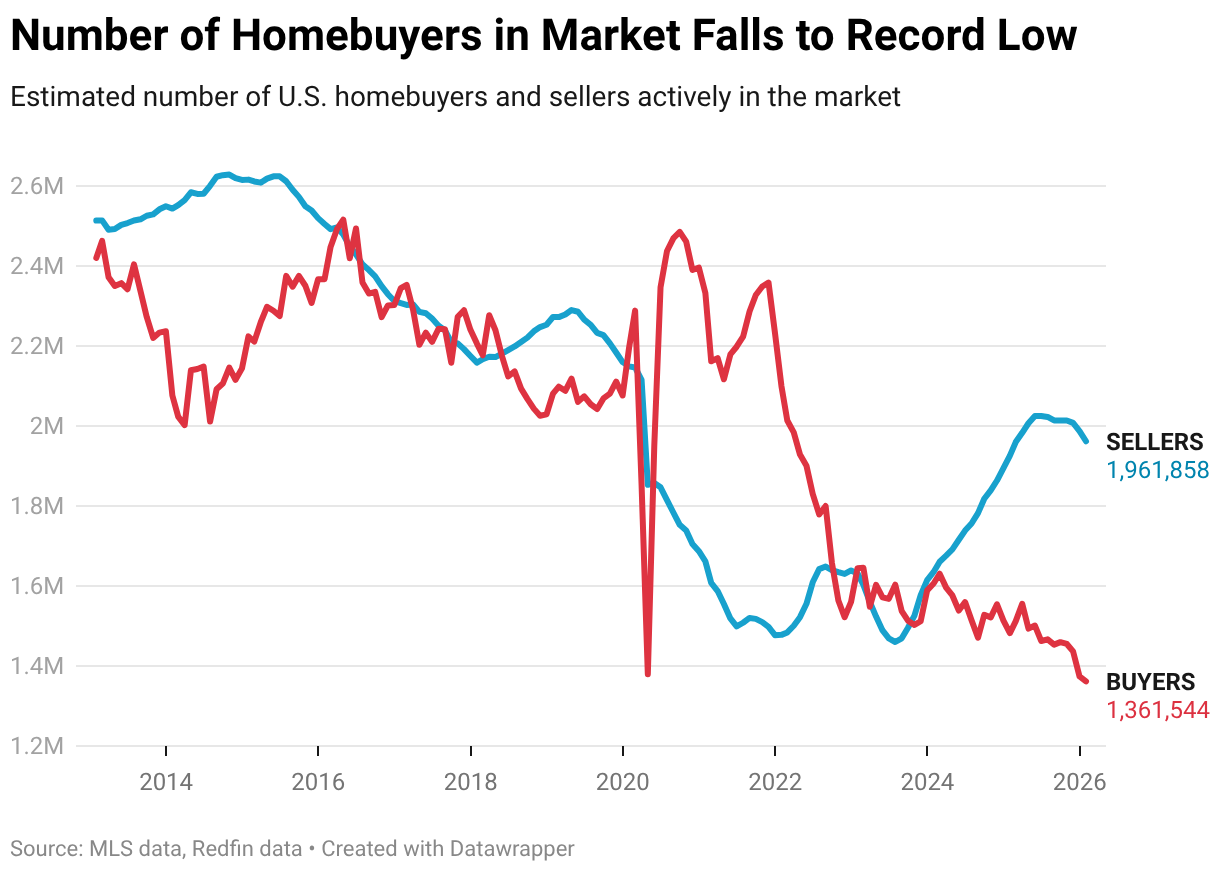
The number of homebuyers in the market fell 1% month over month and 8% year over year in January to an estimated 1.36 million—the lowest level on record


Regional variation remains significant, with many Sun Belt and Western metros having transitioned firmly into buyer’s markets, while parts of the Northeast and Midwest remain more balanced due to tighter inventory levels. This uneven distribution reflects differences in construction activity, migration trends, and local affordability conditions.

Despite improved negotiating power for buyers, affordability challenges remain a barrier to widespread market recovery. Redfin economists noted that while buyers now have more choices and bargaining flexibility, elevated borrowing costs and economic uncertainty continue to limit overall demand.

About the author
Published
Feb 24, 2026
Home Price Growth Expected To Slow Further: Realtor.com

Slower appreciation and more realistic seller pricing could improve purchase opportunities even as mortgage rates remain elevated

Jul 13, 2026
14.5 Million Homes Sit Vacant. So Why Is Inventory Still So Tight?

New LendingTree data shows most vacant properties are vacation homes, rentals or otherwise unavailable to buyers, helping explain today's persistent supply crunch

Jul 10, 2026
Homebuyers Return During Short-Lived Mortgage Rate Decline

Redfin says a brief drop in mortgage rates lifted pending home sales to a two-month high, but rising rates and tighter inventory could test whether the momentum lasts

Jul 10, 2026
Luxury Home Prices Pull Further Ahead In Key Markets: Redfin

South Florida leads the nation in luxury price premiums, while high-end buyers continue to shrug off mortgage rates that are sidelining much of the broader housing market

Jul 10, 2026
Conforming Loans Slip Below Half Of Mortgage Production

June purchase locks climbed 14% year over year while non-conforming and Non-QM lending continued gaining market share, according to Optimal Blue

Jul 09, 2026
Wealth Gap Creates Two-Speed Housing Market As Home Prices Edge Higher: Cotality

May prices increased 0.8% year over year, with equity-rich buyers fueling gains in markets like San Francisco while affordability continues to sideline many traditional borrowers

Jul 09, 2026