In Two Years, Building Material Costs Have Risen Almost A Third – NMP Skip to main content

In Two Years, Building Material Costs Have Risen Almost A Third

Mar 21, 2022
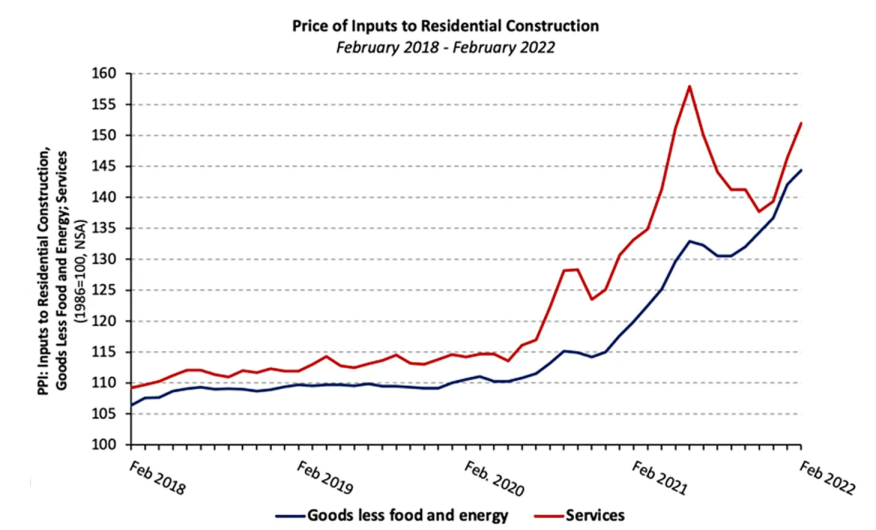
National Association of Home Builders February 2022 Price Input
Building material prices increased 20.4%, year over year, and have risen 31.3% since January 2020.
National Association of Home Builders
Senior Editor

NAHB research shows, however, that the costs for some building materials are experiencing declines.

KEY TAKEAWAYS
  • Building material prices increased 20.4%.
  • Softwood lumber prices jump 79.5% in six months.
  • Steel mill products prices declined 9.9%.

The cost of building supplies continues to outpace inflation, according to data compiled by the National Association of Home Builders.

Building material prices increased 20.4%, year over year, and have risen 31.3% since January 2020. NAHB based its conclusions on research from the Federal Bureau of Labor Statistics (BLS) for February 2022.

The Producer Price Index (PPI) for softwood lumber, seasonally adjusted, increased 2.6% in February following a combined 28.9% increase over the previous two months, NAHB reported. In six months, prices have increased 79.5%. According to Random Lengths, a company that tracks and analyses data from the lumber industrty, the “mill price” of framing lumber has more than tripled since late August.

The PPI for ready-mix concrete (RMC) rose 0.8% in February after increasing 1.1% in January. The index for RMC has been relatively volatile since mid-2020 and has climbed 8.2%, year over year. Prior to January 2021, year-over-year price increases had not exceeded 8% since December 2006.

Not all segments are seeing continued price spikes. After a 12-month period during which the prices of exterior and interior paint increased 30.3% and 21.2%, respectively, NAHB determined paint prices held relatively steady in February. The prices of exterior architectural coatings gained 0.1%, and interior architectural coatings PPI rose 0.3%.

Some segments showed declines. Steel mill products prices declined 9.9% in February, the second consecutive decrease after increases in each of the prior 15 months. The last time the steel mill products PPI decreased more than 9% was December 2008. While January and February have been good months for the cost of derivative steel products, the PPI remains 74.4% greater than it was 12 months ago, the NAHB said.

The PPI for gypsum products declined 1.9% in February, snapping an 11-month streak of increases during which the index climbed 31.4%. Gypsum products prices are up 20.7%, year over year. Among other uses, gypsum is found in plasterboard or drywall.

About the author
Senior Editor
Keith Griffin is a senior editor at NMP.
Published
Mar 21, 2022
Smaller Down Payments Give Buyers More Room, But Rates Limit The Savings

The typical down payment fell 9% from a year ago, while shifting market conditions are giving originators different affordability conversations across the country

Sep 25, 2026
Mortgage Rates Break 7% Just As Builders Find A Way To Move Buyers

New-home sales rose 6.4% in August as builders cut prices, offered incentives, and sold more lower-priced homes. Now mortgage rates are moving against buyers again

Sep 25, 2026
Borrowers Want Digital Closings, But Some Originators Remain Hesitant

ServiceLink finds 45% of surveyed LOs cite borrower reluctance as a barrier, even though most recent buyers say digital options would influence their choice of mortgage provider

Sep 23, 2026
A Record Buyer’s Market, Without Lower Home Prices

Redfin counted 58% more sellers than buyers in August, but national home prices still increased as equity-rich owners resisted steep discounts

Sep 22, 2026
The Best Week To Buy Is Almost Here. Are Your Borrowers Ready?

Realtor.com projects more inventory, less competition, and lower listing prices next week, giving originators a short window to revisit sidelined borrowers

Sep 21, 2026
More New Homes Are Underway, But Financing May Decide Who Wins

Single-family construction rebounded in August, but falling permits, fewer completions, and widespread builder incentives point to a tougher fight for the purchase loans those homes eventually produce

Sep 18, 2026