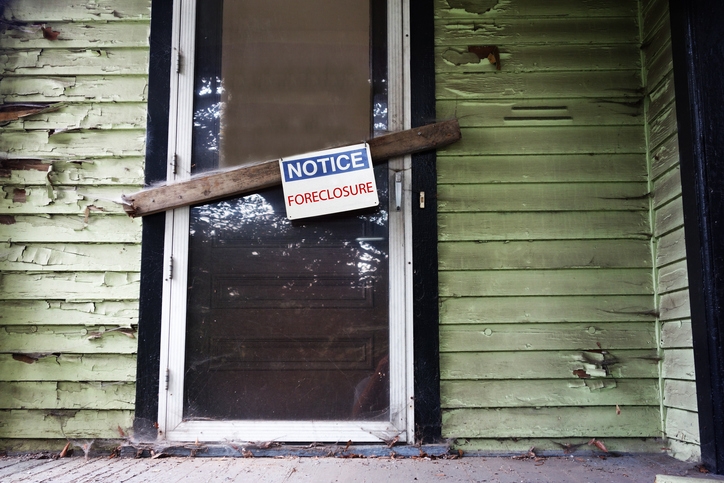
It's tough to find a home to buy, but ATTOM reported that nearly 1.3 million residential properties are actually vacant. That figure represents 1.27%, or one in 78 homes – virtually the same as in the third quarter of this year and not enough to make a dent in the housing market.
The new report found that 320,765 residential properties in the U.S. are in the foreclosure process in the fourth quarter of this year, up 1.7% from the third quarter of 2023 and up 12.8% from the fourth quarter of 2022. A growing number of homeowners have faced possible foreclosure following the nationwide moratorium on lenders pursuing delinquent homeowners, imposed after the Coronavirus pandemic hit in early 2020 and lifted in the middle of 2021.
Among those pre-foreclosure properties, about 8,900 sit vacant as zombie foreclosures (pre-foreclosure properties abandoned by owners) in the fourth quarter of 2023. That figure also is up slightly from the prior quarter, by 1.4%, and up 15.3% from a year ago. The latest increase marks the seventh straight quarterly rise.
However, the fourth-quarter count of zombie properties represents only a tiny portion of the nation’s total housing stock - just one of every 11,412 homes around the U.S.
“The ongoing strength of the U.S. housing market continues to benefit neighborhoods around the country in so many ways, with the near-total lack of zombie foreclosures standing out as one striking example,” said Rob Barber, CEO for ATTOM. “Rising equity flowing from rising home values has not only kept foreclosure cases from spiking since the moratorium was lifted. It also keeps giving delinquent homeowners a valuable resource they can use to either stave off eviction or sell their homes and move on. As a result, we continue to see none of the widespread abandonment that followed the housing market crash after the Great Recession of the late 2000s.”
The nation's median home value has also witnessed growth, increasing by 11% this year, setting a new benchmark at $350,000. These gains come after an 8% dip from mid-2022 to early 2023. This uptick in value has positioned homeowners at an all-time high in wealth accumulation, with nearly half owing less than half the value of their homes.
Regionally, the number of zombie properties has seen fluctuations across states. Some states like Kentucky, Connecticut, Maryland, Texas, and California have recorded 12-15% increases. In contrast, states like New Mexico, New Jersey, Maine, Nevada, and Georgia have reported decreases in zombie properties.
New York, however, maintains its position with the highest proportion of zombie homes, one in every 2,115 properties, followed by states like Ohio, Illinois, Iowa, and Indiana. The overall residential property vacancy rate has held firm for six consecutive quarters at around 1.27%.
In terms of investor-owned homes, roughly 842,400 of the 23.6 million properties remain vacant. States like Indiana, Illinois, Oklahoma, Alabama, and Ohio have the highest vacancy rates, hovering around 6 percent.
Furthermore, among the 15,000 bank-owned homes in Q4 2023, 15.9% remain vacant, with states like Kansas, Michigan, Ohio, Missouri, and Wyoming reporting the highest vacancy rates.