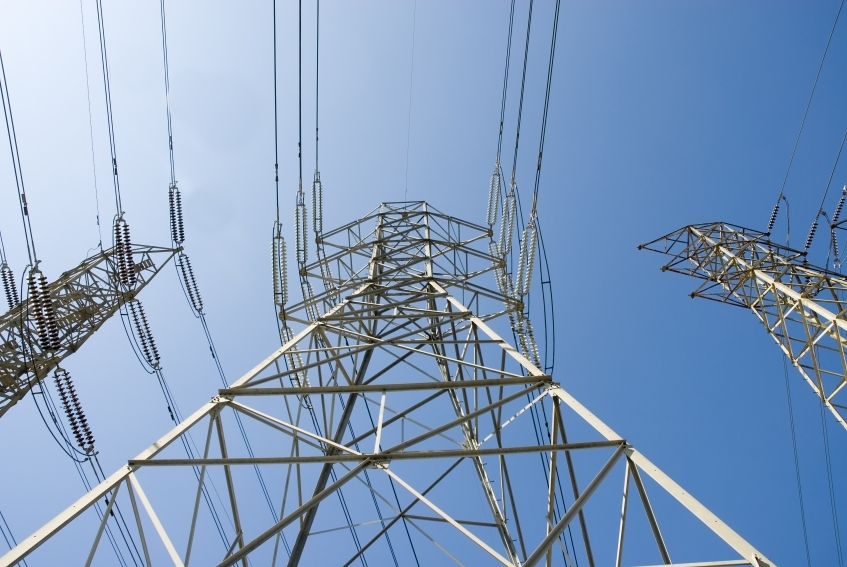
A property’s value is not affected when the home is located close to high-voltage transmission lines, or when those power lines are visible from the home, according to an article appearing in The Appraisal Journal’s summer issue. The Appraisal Journal is a quarterly publication of the Appraisal Institute, the nation’s largest real estate appraisal association. “High-Voltage Transmission Lines: Proximity, Visibility, and Encumbrance Effects,” by James A. Chalmers, PhD, and Frank A. Voorvaart, PhD, cites a study of 1,200 home sales in Massachusetts and Connecticut from 1998 to 2007. The study also found that a transmission line easement adjoining a home’s property had only a small negative effect on the sale price.
“In the four study areas examined here, there is no evidence of systematic effects of either proximity or visibility of 345-kV (kilovolt) transmission lines on residential real estate values,” the article states. “Encumbrance of the transmission line easement on adjoining properties does appear to have a consistent negative effect on value, although the statistical significance with which it is measured varies.”
The authors note that researchers and appraisers may mistakenly attribute a negative price impact to proximity, while the true impact is associated with the transmission line easement.
“The professional literature cited, combined with the results reported here, support the position that a presumption of material negative effects of HVTLs (high-voltage transmission lines) on property values is not warranted,” the article states.
Chalmers has a PhD in economics and is a certified general real estate appraiser in Arizona. From 1990 to 2002, he led the real estate damages practice at Coopers & Lybrand and, after its merger, at PricewaterhouseCoopers. Since retiring from PricewaterhouseCoopers in 2002, he continues to consult in the area of real estate damages as the principal of Chalmers & Associates LLC, located in Billings, Mont.
Voorvaartis a vice president with the Dallas office of Analysis Group, where he special izes in real estate litigation consulting. He has evalu ated class certification criteria and property value diminution claims in residential class action litigation, and also has evaluated the validity and applicability of experts’ valuation methodologies to determine dam ages to real estate on a classwide basis.
Click here for the full article, “High-Voltage Transmission Lines: Proximity, Visibility, and Encumbrance Effects."