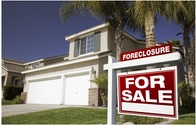
CoreLogic, a provider of consumer, financial and property information and business services, has released negative equity data showing a second consecutive quarterly decline in national negative equity rates. CoreLogic reports that 11 million, or 23 percent, of all residential properties with mortgages were in negative equity at the end of the second quarter of 2010, down from 11.2 million and 24 percent from the first quarter of 2010.
Foreclosures, rather than meaningful price appreciation, were the primary driver in the change in negative equity. An additional 2.4 million borrowers had less than five percent equity. Together, negative equity and near-negative equity mortgages accounted for nearly 28 percent of all residential properties with a mortgage nationwide.
Negative equity, often referred to as "underwater" or "upside down," means that borrowers owe more on their mortgages than their homes are worth. Negative equity can occur because of a decline in value, an increase in mortgage debt or a combination of both.
Data highlights
►Negative equity remains concentrated in five states: Nevada, which had the highest percentage negative equity with 68 percent of all of its mortgaged properties underwater, followed by Arizona (50 percent), Florida (46 percent), Michigan (38 percent) and California (33 percent).
►The biggest declines in negative equity were concentrated in the hardest hit states. Nevada experienced an 11.8 percentage point decline in negative equity share, followed by California (-1.3), Florida (-1.3), and Arizona (-1.3). About two-thirds of all states experienced a decline in negative equity share. Since peaking in Q4 2009, the number of borrowers in a negative equity position has declined by about 350,000.
►The declines were entirely due to foreclosures, not the stabilization or small increases in prices in some markets. The largest decrease in negative equity occurred among those with loan-to-value (LTV) ratios in excess of 125 percent, where the number of negative equity borrowers fell to 4.8 million, down from five million last quarter.
►Homes with more equity are appreciating faster than underwater homes. The average values of properties with 50 percent or more equity increased over one percent between Q4 2009 and Q2 2010. Properties with 25 to 50 percent in equity increased an average of 0.2 percent in that period. However, values fell for every segment in negative equity, with the biggest value decline occurring for properties that are 50 percent or more in negative equity.
"Negative equity continues to both drive foreclosures and impede the housing market recovery. With nearly 5 million borrowers currently in severe negative equity, defaults will remain at a high level for an extended period of time," said Mark Fleming, chief economist with CoreLogic.
Click here for the full Q2 negative equity report, with charts and state-level data.
For more information, visit www.corelogic.com.