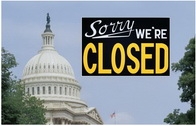
The U.S. Department of Housing Development (HUD) has released its contingency plan should the government adhere to its deadline to shut down at midnight, Friday, April 8th. Emergency activites would continue at HUD, according to the report, "HUD FY2011 Contingency Plan for Possible Lapse in Appropriations," as 846 of 9,700 of HUD's total employees would be kept around to maintain the agency.
"All excepted staff will be performing functions associated with multi-year as well as no-year credit reform financing ('x-year') appropriations and are necessary to administer transactions for which a commitment has been made; administering the portfolio of FHA-insured loans (collecting premiums, paying claims); or fulfilling obligations associated with Housing’s project-based rental assistance programs," said HUD in the report. "In addition, 'excepted' employees will be performing functions related to the protection of government property."
New Federal Housing Administration (FHA) loans will not be endorsed and only operations vital to the FHA's existing portfolio will carry on, including maintenance of real estate-owned (REO) inventory.
Operations at Ginnie Mae would not be impacted by a government shutdown says the HUD plan, as the agency is deemed "vital to the stability and liquidity of the primary mortgage market." The report notes that an interruption in the operations at Ginnie Mae would create immediate and significant market disruption that would lead to financial losses for investors and increased mortgage rates for government-insured mortgage loans.
If HUD employees, who are funded through appropriations that have lapsed, are on temporary duty assignments (travel, rotations, details, training) away from their normal duty stations at the time of the governmental shutdown, they are encouraged to make arrangements to return home whenever reasonable and practicable.
Certain governmental positions, such as HUD's Acting Inspector General, Michael P. Stephens, is excepted from furlough as a necessary position to conduct an orderly shutdown of non-excepted activities and to conduct on-going excepted activities. Stephens will perform official duties during a furlough, as long as he does not expend appropriated funds which have lapsed or engage furloughed employees to perform work on activities that are not excepted. Stephens may meet with all members of the public, Congressional staff and members, state and local officials, and executive branch officials not subject to furlough. In his role as acting Inspector General, Stephens will identify employees who are necessary to address emergency situations where the failure to perform those functions would result in an imminent threat to the safety of human life or the protection of property.