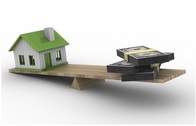
According to a newly-published report, "The Great Recession and Attitudes Toward Homebuying," prospective homebuyers believe now is a good time to buy, given today's low home prices and low mortgage interest rates, but potential sellers are nearly unanimous in reporting that it is not a good time to sell a home, citing difficulty in finding buyers at desired sales prices. The report, published by the Mortgage Bankers Association (MBA) and conducted by Gary V. Engelhardt, professor at Syracuse University and sponsored by the MBA's Research Institute for Housing America (RIHA), utilizes 30 years of data from the University of Michigan's Survey of Consumer Attitudes to examine consumer attitudes toward homeownership before, during and after the most recent recession to see if consumer sentiment changed toward homebuying and selling.
"Despite high unemployment and slow economic growth, the bulk of American households believe that now is a good time to buy a home," said Engelhardt. "Positive sentiment towards homebuying is strong particularly among young, educated, white and Hispanic households, and is attributable to low house prices and low mortgage interest rates. In fact, the pattern of homebuying sentiment during the current recession looks very similar to that of past recessions. Homebuyer sentiment falls as the unemployment rate increases, and improves as job growth returns and housing becomes more affordable."
Key findings from "The Great Recession and Attitudes Toward Homebuying" include:
►Despite high unemployment, slow economic growth and other problems plaguing the economy, almost 80 percent of American households believe that now is a good time to buy a home.
►What is different about the current recession is that positive home-selling sentiment is at an historic low. Indeed, the sell-side of the market is dominated by deeply negative sentiment.
►Negative home-selling sentiment is strongly related to difficulty in finding buyers at desired sales prices, as well as the large overhang of mortgages past due or on foreclosure.
►Over the last two decades, the value of mortgage purchase originations has tracked home-selling sentiment more strongly than home-buying sentiment.
►Over the next five quarters, positive homebuying sentiment is forecast to remain around current and long-run average levels. In contrast, positive home-selling sentiment is forecast to remain around current, historic-low levels. This suggests that selling sentiment and, hence, market activity, will remain sluggish in the near term.
"What distinguishes the current recession, though, is the dramatic decline in home-selling sentiment," said said Engelhardt. "From 1992 through 2005, positive home-selling sentiment fluctuated between 40 and 60 percent. Since 2005, sentiment has dropped precipitously, to around seven percent currently, even while homebuying sentiment remains high."
Michael Fratantoni, MBA's VP of research and economics said, "The housing market has been stuck in a rut for the past three years. Following sharp declines in home values, the pace of housing construction remains near 50 year lows, and the volume of home sales remains more than 20 percent below that seen prior to the crisis. This study shows that young households still value homeownership. The recession did lead homebuyers to pull back from the market, but homebuyer sentiment has returned to its long-run average. The difference with this downturn was with current owners - they are not lowering their asking prices, for multiple reasons, and hence we continue to see low transaction volumes. In some cases, buyer expectations of prices, developed based upon national trends, may not be aligned with their local market. Our forecast suggests that home sales will remain low in 2012, but should pick up in 2013 and beyond as home prices begin to recover."