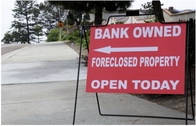
The Federal Housing Finance Agency (FHFA) has announced the first step of a Real Estate-Owned (REO) Initiative targeted to the hardest-hit metropolitan areas nationwide. Investors interested in participating may “pre-qualify” to establish eligibility to bid on transactions in the initial pilot phase as well as subsequent phases. The REO Initiative will allow qualified investors to purchase pools of foreclosed properties with the requirement to rent the purchased properties for a specified number of years. This rental period could provide relief for local housing markets that continue to be depressed by the volume of foreclosed properties, and provide additional rental options to certain markets. Pre-qualification ensures investors will have the financial capacity and operational expertise to manage properties in a way that is conducive to the stabilization of communities hard hit by the housing downturn.
The REO Initiative was developed in conjunction with the U.S. Department of the Treasury, the U.S. Department of Housing & Urban Development (HUD), the Federal Deposit Insurance Corporation (FDIC), the Federal Reserve, Fannie Mae and Freddie Mac. The Initiative was formulated by meetings with stakeholders and a review of more than 4,000 responses to a Request for Information (RFI) seeking input on options for selling single-family REO properties held by the government-sponsored enterprises (GSEs)—Fannie Mae, Freddie Mac—and the Federal Housing Administration (FHA).
“This is an important step toward increasing private investment in foreclosed properties to maximize value and stabilize communities,” said FHFA Acting Director Edward J. DeMarco. “I am grateful for the collaborative effort by the many stakeholders including investors, non-profit organizations, and state and local government officials, who have worked together on this Initiative.”
During the pilot phase, Fannie Mae will offer pools of various types of assets, including rental properties, vacant properties and non-performing loans, for sale with a focus on the hardest-hit areas. The first transaction will be announced in the near-term.
The pre-qualification will require those interested in receiving information regarding specific pilot transactions to meet certain minimum criteria including, but not limited to, (a) financial wherewithal to acquire the assets; (b) sufficient experience and knowledge in financial and business matters to analyze and bear the risks of the investment opportunity; and (c) agreement to keep certain information about the REO and related matters confidential.
Interested investors can register at FHFA’s REO Initiative page to pre-qualify. FHFA is also looking at ways to improve REO sales to homeowners and small investors, enhancing the existing retail sales strategy at the GSEs. Both companies sell the majority of their REO properties to owner-occupants at close-to-market value. The purpose of the pilot phase will be to examine investor interest in various types of assets, including the location, size and composition of pools of assets; the ways in which investors maximize the participation of experienced local firms and organizations that can provide the types of services and support needed to ensure community stabilization; the types of structures and/or financing that improve returns to the sellers as well as home values in impacted markets; and the process by which investors are qualified to and ultimately participate in the sales transactions.