Richmond Fed Chief Resigns After Self-Identifying as Data Leaker – NMP Skip to main content

Richmond Fed Chief Resigns After Self-Identifying as Data Leaker

Apr 04, 2017
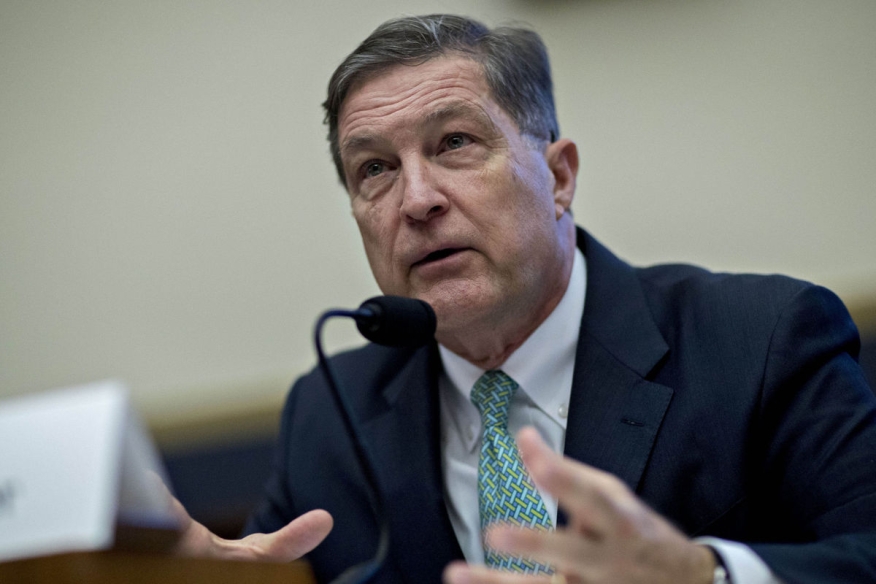
Richmond Federal Reserve President Jeffrey Lacker abruptly announced his resignation today while acknowledging that he was the source of the leak of the central bank’s plans regarding economic policy

Richmond Federal Reserve President Jeffrey Lacker abruptly announced his resignation today while acknowledging that he was the source of the leak of the central bank’s plans regarding economic policy.
 
CNBC reported that Lacker, who became the head of the Richmond Fed in August 2004 and announced plans in January to retire this year, used his resignation letter to admit that he passed along the information to a Medley Global Advisors analyst regarding the confidential information discussed during the September 2012 meeting of the Federal Open Market Committee. In announcing his resignation, the central bank distanced itself from Lacker’s action.
 
“The Federal Reserve places a high priority on safeguarding information,” said the Fed in an unattributed press statement. “We expect every employee to comply with all relevant policies and procedures, as well as our standards of conduct. Employees must review and acknowledge our policies annually. Once our Bank’s Board of Directors learned of the outcome of the government investigations, they took appropriate actions.”
 
First Vice President Mark Mullinix will serve as the Richmond Fed’s acting president until a replacement is hired.
About the author
Published
Apr 04, 2017
MISMO Updates Mortgage Insurance Standards To Support FICO 10T, VantageScore 4.0

New implementation guide standardizes mortgage insurance data exchange, helping lenders, insurers and technology providers prepare systems for newer credit scoring models

Congress Weighs New Roadmap To End Fannie, Freddie Conservatorship

Rep. Scott Fitzgerald's three-bill housing package would establish a statutory framework for releasing the GSEs while expanding construction lending and easing some TRID compliance requirements

CHLA Backs Bank Capital Proposal, Questions Impact On Mortgage Lending

Trade group supports lower mortgage risk weights but says broader market forces — not capital rules — drove banks' retreat from the market

Senate Passes 21st Century ROAD To Housing Act In 85-5 Vote

Sweeping housing package heads back to House after Senate clears final version with broad bipartisan support

MISMO Updates Business Glossary To Support AI, eMortgages

New definitions covering eHELOCs, remote online notarization, valuation modernization, and compliance initiatives aim to improve consistency

Underwriters Don’t Slow Down Loans. They Eliminate Uncertainty.

ndustry’s biggest bottleneck is not underwriting itself — it is the uncertainty that reaches underwriting too late in the process. When validation happens upstream, speed follows naturally.


