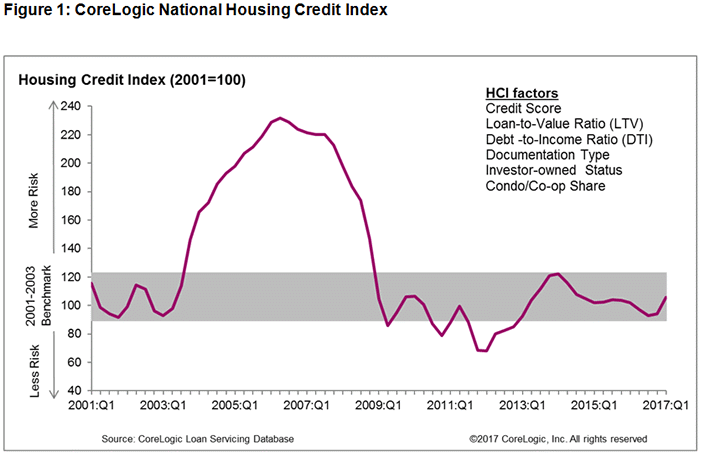
The HCI measures trends in six home mortgage credit risk attributes—borrower credit score, debt-to-income ratio (DTI), loan-to-value ratio (LTV), investor-owned status, condo/co-op share and documentation level. In the first quarter, the index rose to 105.6, up 3.6 points from one year earlier. However, CoreLogic pointed out the level of credit risk during the first quarter was nearly the same as the average of 105.9 for the period of 2001 to 2003, which is considered as a normal baseline for credit risk.
During the first quarter, the average credit score for homebuyers increased seven points year-over-year from 734 to 741, while the share of homebuyers with credit scores under 640 was less than three percent; in 2001, under-640 share was 25 percent. The average DTI for homebuyers in the first quarter was 36 percent, barely changed from one year earlier, while the LTV for homebuyers fell by 1.7 percent year-over-year from 87.6 percent to 85.9 percent. The investor share of home-purchase loans was five percent, up by a single percentage point from ne year earlier, while the share of home-purchase loans secured by a condominium or a co-op building increased two percentage points to 12 percent. Low- or no-documentation loans remained a small part of the mortgage market, increasing from two percent to three percent of home-purchase loans during the past year.
"Mortgage rates during the first quarter of 2017 were up about 0.5 percentage points from a year earlier," said Frank Nothaft, chief economist for CoreLogic. "Since 2009, for every one-half percentage point increase in mortgage rates, the average credit score on refinance borrowers has dipped by 9 points, and this pattern will likely continue if mortgage rates move higher. That is because when rates rise, applications drop off and loan officers spend more time with the applicants that have less-than-perfect credit scores, require more documentation or have unique property issues."