
Average Down Payment Slips Nationwide As Buyer Leverage Grows – NMP Skip to main content

Average Down Payment Slips Nationwide As Buyer Leverage Grows

Feb 17, 2026
Average Down Payment Slips

The typical U.S. down payment fell to $64,000 in December as buyers gained negotiating leverage, mortgage rates eased, and affordability pressures reshaped purchasing behavior

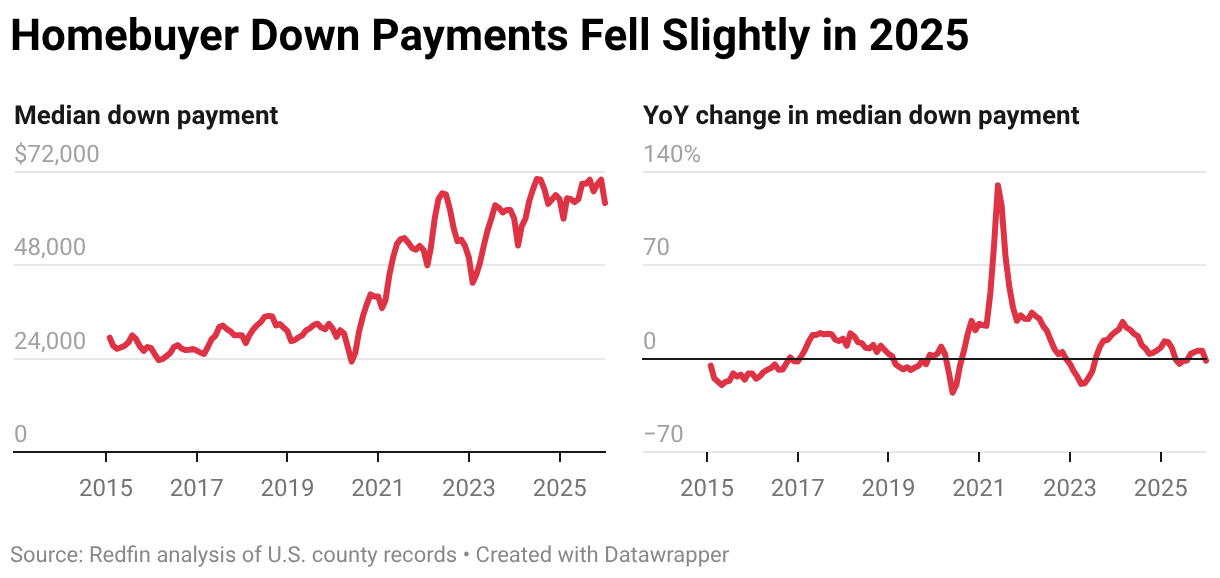
A new Redfin report shows the typical U.S. homebuyer’s down payment fell 1.5% year-over-year to $64,000 in December 2025, marking the first decline in five months as housing market conditions evolve.

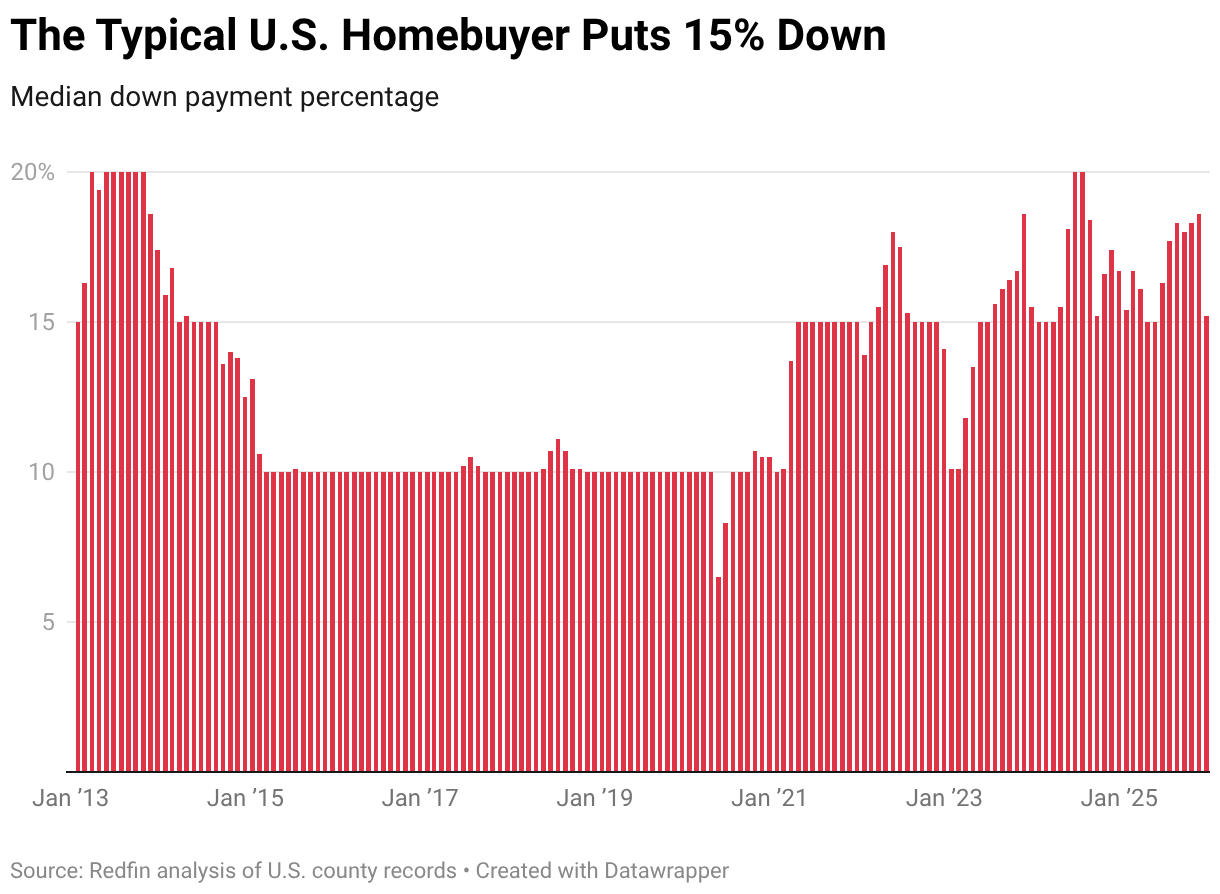
In percentage terms, buyers put down 15.2% of the purchase price, down from 16.7% a year earlier, even though the median home‑sale price edged up modestly in December. The data reflects purchases where buyers took out a mortgage and covers 38 of the most populous U.S. metropolitan areas (MSAs).

“Down payments may be falling in part because Americans are seeking out more affordable homes due to high prices, elevated mortgage rates, and economic uncertainty,” said Redfin Principal Economist Sheharyar Bokhari. “Sellers typically prefer buyers who make large down payments because it signals financial stability, but sellers don’t have much say in today’s market. Buyers hold the negotiating power because there are more homes for sale than people who want to buy them.”


The typical U.S. homebuyer’s down payment fell 1.5% year over year to $64,000 in December—the first decline in five months


Mortgage rates have eased somewhat from recent highs, with the average 30‑year fixed rate mortgage (FRM) hovering around the 6.09% mark, near its lowest level since 2022. This softening has helped lower monthly payments and may encourage some buyers who were previously on the sidelines.

Metro‑level figures reveal significant variability, as the largest median down payments were found in expensive California markets such as San Francisco ($400,310), San Jose ($360,000), and Anaheim ($270,800). Cities like Virginia Beach, Virginia ($8,700), Cleveland ($25,025), and Cincinnati ($25,143) remained at the low end.

All‑cash home purchases ended 2025 at a five‑year low, and affordability indicators suggest that buyers need significant income to qualify for typical home prices — though the gap between renter and buyer finances has narrowed slightly.


the typical homebuyer put down 15.2% of the purchase price, compared with 16.7% a year earlier
About the author
Published
Feb 17, 2026
Gen Z Drives 19% Of Purchase Inquiries With Just 10% Down

LendingTree data shows millennials dominate mortgage shopping and match baby boomers’ $65,000 median planned down payment

Jul 24, 2026
Equifax Mortgage Revenue Rises 25% Despite Weaker Loan Volume

Credit-score pricing contributed heavily to the increase, while exclusive VantageScore use remained limited

Jul 24, 2026
Mortgage Servicer Satisfaction Rises Despite Borrower Strain

J.D. Power finds better digital service, fee transparency, and issue resolution are strengthening trust while homeowners face mounting financial pressure

Jul 23, 2026
Home Price Growth Accelerates, But Luxury Buyers Skew The Market

Redfin’s index rose 3% annually in June, with luxury demand and limited move-in-ready inventory supporting prices despite elevated mortgage rates

Jul 23, 2026
Lenders Expect More Volume Without Adding More Overhead

TMC survey finds lenders are looking to current sales teams, experienced recruits, and lower production costs to drive second-half growth

Jul 23, 2026
Higher Mortgage Rates Push Pending Home Sales Lower In June

Contract signings fell 5.4% from May as elevated borrowing costs and record home prices continued to pressure affordability, particularly for first-time buyers

Jul 20, 2026


