The Consumer Financial Protection Bureau (CFPB) is cracking down on financial institutions attempting to collect phantom debt from borrowers that is old, defaulted, or not owed and is somehow still being pursued for collection.
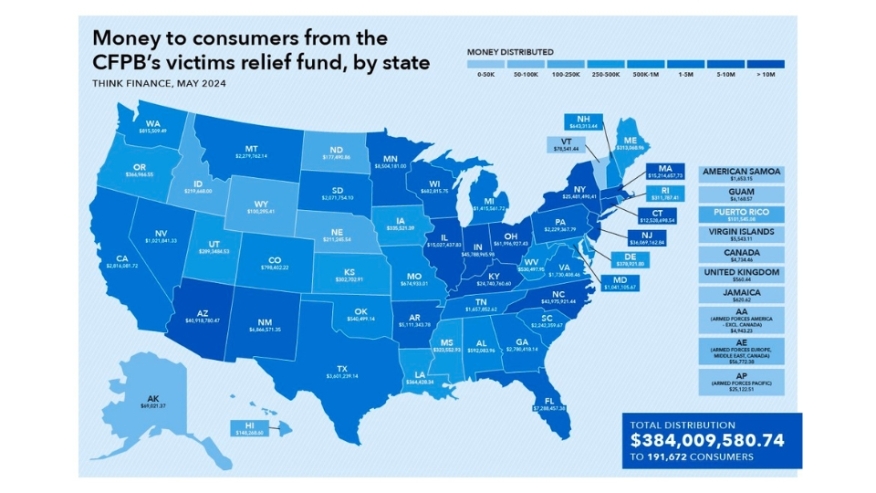
On May 14, the CFPB distributed more than $384 million to 191,000 consumers harmed by Texas-based online lender, Think Finance, for deceiving borrowers into repaying loans they did not owe. The CFPB distributed the money through its victims relief fund.
In 2017, the CFPB filed a lawsuit against Think Finance, alleging the company deceived consumers into repaying loans they did not owe. The loans were void under state laws governing interest rate caps and lender licensing requirements, but the lender still made electronic withdrawals from consumers’ bank accounts and sent letters demanding payment.
“Too often, victims of financial crimes are left without recourse even when the companies that harm them are stopped by law enforcement,” said CFPB Director Rohit Chopra. “The victims relief fund allows the CFPB to help consumers even when bad actors have squandered their ill-gotten profits.”
This recent CFPB prosecution brings the fund's total amount distributed to consumers harmed by scams, frauds, and other illegal practices to more than $1 billion.
This comes after the CFPB published research finding consumers tend to pay more for products that have more complex pricing structures, such as “buy now, pay later” loans — one of the fastest-growing categories in consumer finance, according to a separate report by Wells Fargo.
“Because no central repository exists for monitoring it, growth of this ‘phantom debt’ could imply total household debt levels are actually higher than traditional measures,” said Tim Quinlan, senior economist at Wells Fargo and co-author of the report.
“It’s hard to know how much of this debt is out there,” said Ted Rossman, senior industry analyst at Bankrate. “It’s this kind of shadow debt that’s hanging over people.”