Consumers Expect Home Prices To Drop, But Credit Tightens – NMP Skip to main content

Consumers Expect Home Prices To Drop, But Credit Tightens

Mar 14, 2022
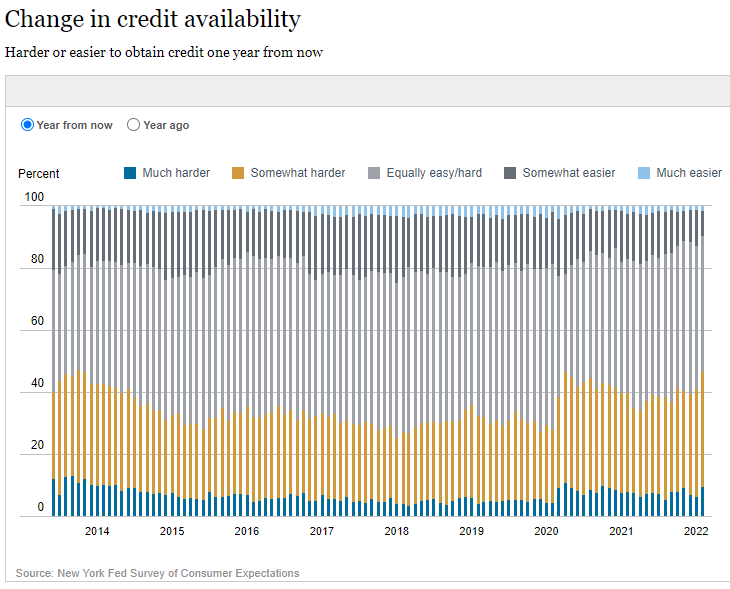
Change in Credit Availability
Consumers expect credit to tighten in coming months
New York Federal Reserve Bank
Senior Editor

N.Y. Fed survey finds unemployment a bright spot, though.

KEY TAKEAWAYS
  • Median year-ahead home price change expectations decreased to 5.7% from 6.0%.
  • Consumers expect unemployment numbers to drop.
  • Expectations about future credit availability deteriorated considerably.

Consumers are showing mixed emotions about the housing and mortgage markets in the coming months. They expect home prices to drop, but feel credit availability will deteriorate.

The New York Fed’s February 2022 Survey of Consumer Expectations shows consumers perceive credit will tighten in the coming months, but expect home prices to decrease by 5.7% over the next 12 months.

Expectations about future credit availability deteriorated considerably, with more respondents expecting it will be harder to receive and substantially fewer respondents expecting it will be easier to obtain credit in the year ahead, the survey found. Perceptions of credit access compared to a year ago also deteriorated, with more respondents finding it harder to obtain credit.

The survey shows median inflation uncertainty — or the uncertainty expressed regarding future inflation outcomes — decreased slightly at the one-year horizon and increased at the three-year horizon. Both measures remain elevated compared to their pre-pandemic levels.

Median one-year-ahead inflation expectations increased to 6.0% in February from 5.8% in January, matching its November 2021 series’ high. The increase was widespread across age, education, and income groups, but largest for the respondents without a high school degree.

On the positive side, consumers are optimistic about unemployment figures. Mean unemployment expectations— or the mean probability that the U.S. unemployment rate will be higher one year from now — decreased to 34.4% from 35.9%. The decline was broad-based across age, education, and income groups.

The Survey of Consumer Expectations is a nationally representative, internet-based survey of a rotating panel of approximately 1,300 household heads conducted by the New York Federal Reserve Bank. Respondents participate in the panel for up to 12 months, with a roughly equal number rotating in and out of the panel each month, according to the New York Fed.

About the author
Senior Editor
Keith Griffin is a senior editor at NMP.
Published
Mar 14, 2022
loanDepot Nears Break-Even, But Adjusted Profitability Still Lags

Home equity and purchase lending lifted production economics, while management characterized its relaunched wholesale channel as a supporting business rather than a major growth engine

Aug 06, 2026
Lower-Payment Mortgage Applications Nearly Match Median Rent

Principal-and-interest payments reached $1,522 for lower-payment purchase applicants in June, just $9 below the national median asking rent

Aug 03, 2026
Home Price Cuts Keep Purchase Market Moving

One in five listings had a price reduction in July, while pending sales increased for the eighth consecutive month

Aug 03, 2026
Higher Mortgage Rates Shrink Purchase Demand, Expand Buyer Leverage

Pending sales fell to their lowest level since early April, but lower asking prices and reduced competition give originators more options to structure deals for qualified borrowers

Jul 31, 2026
Even Stable Public-Service Careers No Longer Guarantee Homeownership

Younger teachers, health care workers, first responders, and military households can afford median-priced homes in only a fraction of major metros

Jul 31, 2026
Buyers Gain Negotiating Power In 41 Major Housing Markets

Price cuts and longer listing times are creating opportunities for loan officers to help borrowers negotiate seller concessions, but leverage varies sharply by metro

Jul 30, 2026