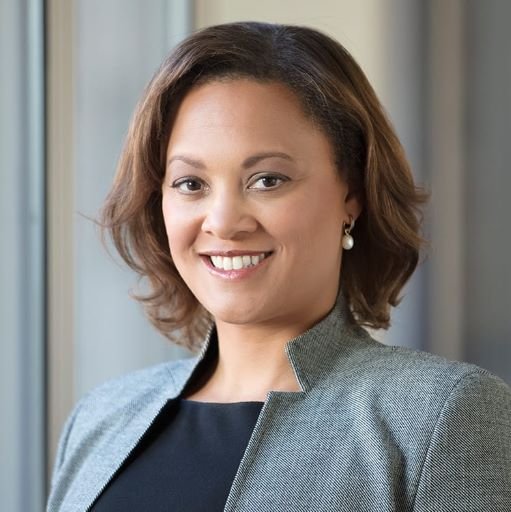
The revolving door at Fannie Mae continues to spin, with the government-sponsored enterprise notifying federal officials Tuesday that Chief Operating Officer Kimberly H. Johnson intends to resign effective April 25.
Johnson, who also serves as executive vice president, has held her current positions since March 2018. As EVP & COO, she led the enterprise’s “digital transformation and has responsibility for technology, data, enterprise models, operations, and resiliency,” according to her profile on the Fannie Mae website.
She joined Fannie Mae in 2006 and has held other executive positions that include credit risk officer; deputy chief risk officer; senior vice president–multifamily capital markets and pricing; vice president for capital markets–multifamily, and vice president–credit risk, enterprise risk management.
Fannie Mae filed a Form 8-K with the Securities and Exchange Commission on Tuesday to announce Johnson’s intention to step down. Form 8-K is used to notify investors of events that may be important to shareholders and/or the SEC, including the departure or appointment of certain executive officers.
In addition to her work with Fannie Mae, Johnson also has been a member of the board of directors of Eli Lilly & Co. since February 2021, serving on both the compensation committee and the ethics & compliance committee.
Before joining Fannie Mae, Johnson served as director-fixed income sales at Credit Suisse Group AG, an investment banking company. She is also a member of the Princeton University board of trustees and sits on the boards of several nonprofit organizations.
Her departure adds to the turnover in the C-suite at Fannie Mae over the past couple of years. Last May, Chief Financial Officer Celeste Mellet Brown resigned, following the resignations of Andrew Bon Salle (former head of single-family business), Jeffery Walker (chief strategic officer for single-family), Desmond Smith (chief customer officer), and John Forlines (chief risk officer).
It is not known whether Fannie Mae intends to replace Johnson with another person of color. The enterprise last month announced that it had appointed Sharifa A. Anderson as its first diversity and inclusion officer. Anderson was also named senior vice president.
Fannie Mae officials said at the time that Anderson’s role signifies its sustained commitment to promoting supplier diversity, enabling opportunities for minority- and women-owned firms in capital markets, and fostering an accessible, inclusive workplace that attracts, develops, and retains diverse talent.
In December, the enterprise announced the appointment of Chryssa C. Halley as executive vice president and chief financial officer, and promoted Jim L. Holmberg to senior vice president and controller. Both executives are white.
Fannie Mae did not immediately respond to a request for comment.