A new survey from real estate platform Clever Offers finds that 97% of millennial homebuyers report facing at least one significant barrier to achieving homeownership in 2026, underscoring persistent affordability challenges for the generation.
The study, Millennial Home Buyer Report: 2026 Edition, which polled more than 1,000 prospective millennial buyers, reveals that financial obstacles are the dominant factor discouraging ownership plans.
Despite 40% of respondents describing themselves as “desperate” to buy a home this year, three-quarters believe that homeownership is unattainable for the average member of their generation. A strong majority also report feeling financially overextended by the prospect of purchasing property.
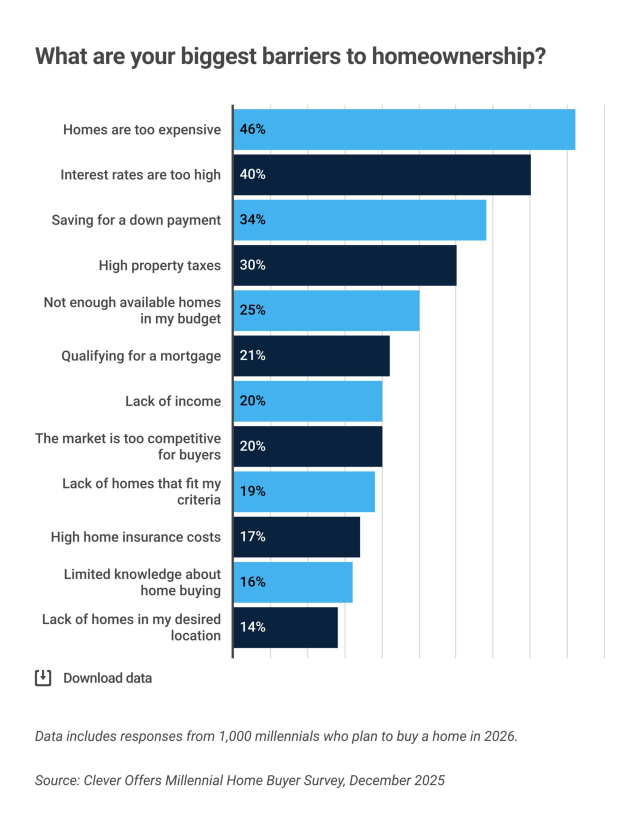
The top barriers identified by millennials are rooted in the cost environment:
- 46% say homes are too expensive
- 40% cite high mortgage rates
- 34% struggle with saving for a downpayment
- 30% point to high property taxes as limiting factors
While the median U.S. home price exceeds $400,000, most millennials plan to spend less than that threshold, including 67% of first-time buyers.
Interest rate expectations are a critical element of homebuying sentiment, as 78% cited potential rate drops would entice them to buy, and 51% would only consider purchasing if rates fall below current levels that hover in the 6% range. However, nearly half would still consider a rate above 6% if it meant securing a home, and 44% would be willing to allocate more than half of their monthly income toward housing costs.
The survey further highlights millennials’ limited savings: only 28% could afford a 20% downpayment, and just 45% have enough for a 10% downpayment. Additionally, 24% carry more debt than savings.
While 72% still view homeownership as part of the American dream, 41% fear they may be the last in their family able to afford it, thus reflecting a broader sense of financial constraint among today’s aspiring buyers.