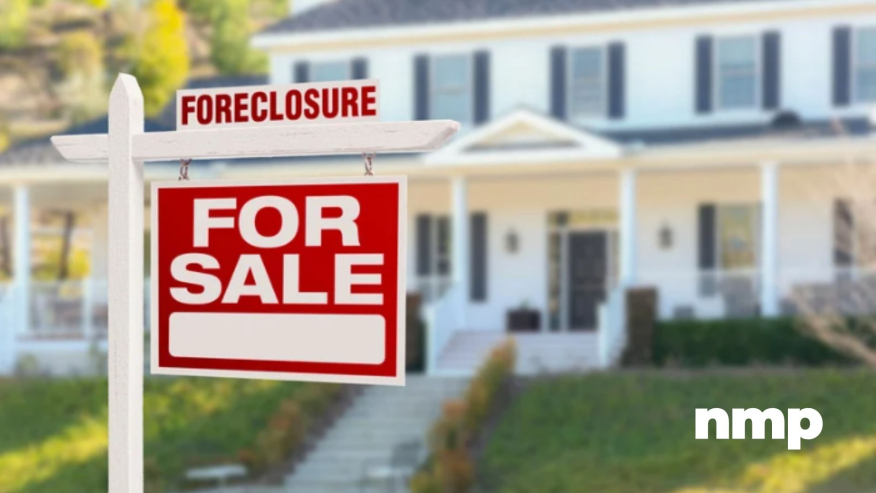
Bank repossessions jump 45% year-over-year while industry voices warn the wave is just getting started
Foreclosure filings are rising at their fastest annual pace in years, and the latest numbers from ATTOM suggest the trend is accelerating.
In the first quarter of 2026, US properties with foreclosure filings totaled 118,727, according to ATTOM's Q1 2026 U.S. Foreclosure Market Report. That marks a 26% increase from the same period last year and a 6% increase from the previous quarter.
Bank repossessions climbed even more steeply, with lenders taking back 14,020 properties — a 45% jump from the first quarter of 2025. Foreclosure starts, the first formal step in the process, rose 20% year over year to 82,631 properties.
"While volumes remain below historical peaks, the continued rise, especially in starts and bank repossessions, suggests financial pressure may be building for some homeowners and could signal shifting housing market dynamics," said Rob Barber, CEO at ATTOM.
For Donna Schmidt, CEO of DLS Servicing, a firm that assists mortgage servicers with loss mitigation, the numbers come as no surprise.
Get the NMP Daily
Essential stories, every weekday.
"The surge in foreclosures is very expected. We had 5 years of very low foreclosures due to loss mitigation policies that allowed borrowers who could no longer afford the homes to keep kicking the can down the road. The restructuring of loss mitigation that has reduced the number of options offered has revealed this weakness," Schmidt said.
She added: "I expected to see 5 years of normal foreclosure activity get condensed and forced through the system in the next 2 years. This is just the start."
Mirza Hodzic, Founder and Managing Director, BlackWolf
The rising volume is already creating operational strain for servicers, according to Mirza Hodzic, managing director and founder of BlackWolf.
"When foreclosure starts rise year over year, servicers feel it first as pipeline pressure. The work is not limited to the foreclosure department. It stretches loss mitigation transitions, borrower communications, document processing, and oversight of attorneys and vendors. If capacity and controls do not scale with volume, timelines and borrower experience suffer," Hodzic said.
The data points to several regional hot spots. Indiana posted the nation's worst foreclosure rate at one in every 739 housing units, followed by South Carolina at one in 743 and Florida at one in 750. Texas led all states in raw foreclosure starts with 10,617, while Florida followed closely at 10,099.
Among major metros, Lakeland, Fla., had the highest foreclosure rate at one in every 409 housing units. New York led in total starts with 3,868, followed by Houston at 3,614,and Chicago at 3,401.
Repossession activity spiked in several states. Colorado saw its REO count more than triple year over year, climbing from 99 to 321. Alabama nearly doubled from 153 to 355, and Florida jumped from 487 to 1,014.
Hodzic said the repossession numbers carry their own operational implications.
"The jump in bank repossessions is a signal that the back end of the process is getting busier too. That puts real demand on REO and property related functions like inspections, preservation, title and curative, and vendor management. The servicers that perform best in this environment are the ones with disciplined counsel oversight, clear performance expectations, and tight exception management," he said.
Schmidt pointed to insurance costs as a key driver behind the sunbelt numbers in particular.
Donna Schmidt, CEO, DLS Servicing
"While it is hard to say what is behind the data — it is widely believed that that the surge in homeowners' insurance rates have pushed many people to move out of the sunbelt. Florida saw a huge surge in home prices during COVID and those gains are being reversed. This just means that borrowers who find that their homes are now unaffordable, cannot sell their properties and completely satisfy their liens," she said.
Foreclosure timelines offered a counterpoint to the rising volume. Properties that completed the process in Q1 had spent an average of 577 days in foreclosure, down 14% from a year earlier and marking six consecutive quarters of decline. Texas moved fastest at an average of 165 days, while Louisiana's average stretched to 3,140 days.
But shrinking timelines paired with rising volume create their own challenge, Hodzic cautioned.
"Shorter average foreclosure timelines can be positive, but it also compresses the window for clean execution. When volume rises and timelines tighten at the same time, small gaps become costly fast. Servicers should prioritize workflow discipline, strong quality checks on critical milestones and notices, and better visibility into attorney and vendor status so issues are caught early rather than after they turn into backlogs or complaints," he said.
March amplified the quarterly trend. Filings hit 45,921 for the month, up 28% year over year. Starts reached 30,334, a 21% annual gain. Completed foreclosures totaled 5,229, up 42% from March 2025.
Bottom Line
For originators, the takeaway from ATTOM's data is threefold: foreclosure volume is climbing fast, the pressure is concentrated in states where production has been heaviest, and the borrowers entering distress today are increasingly the ones that originated into tight margins. If that pipeline grows, originators might expect tighter counterparty scrutiny, rising repurchase risk, and a sharper regulatory focus on front-end underwriting quality.
Schmidt's warning that this is "just the start" points to a deeper story — one rooted in years of FHA loss mitigation policy decisions now coming due.
The foreclosure numbers tell only part of the story. What's been building inside FHA servicing portfolios tells the rest. To get the full picture, set a reminder for the release of next month's cover story in NMP Magazine on May 24, 2026.
The dispute over publicly marketed homes comes amid a Compass–Rocket alliance linking home search, buyer inquiries, and financing offers
Six multiple listing services have sued Compass over its demands that they stop penalizing agents who publicly market homes without sharing the listings through the MLS, escalating a dispute over who gets access to for-sale inventory and when.The lawsuit, filed Oct. 21 in th...
Veterans United’s survey finds less willingness to hold out for lower rates, but little change in purchase timelines
Prospective homebuyers are growing more pessimistic about interest rates, and less inclined to wait for relief.In Veterans United Home Loans’ latest survey, 57% expect interest rates to rise over the next year, up from 45% a year earlier. Yet the share who would consider wai...
September’s decline leaves originators competing for fewer purchases, while rising borrowing costs and limited new listings keep affordability under pressure
Realtor.com finds 66 of 99 metros favor buyers or are moving that way, while rising financing costs have cut borrowing capacity 7.2% since late August for a fixed monthly payment