Gen-Zers are more financially-savvy than their superiors believe, with less credit card debt than generations prior and a desire to plan and save.
A recent study by StanCorp Financial Group entitled “Boost Financial Literacy, Build Gen Z Tenure” includes a survey about the financial priorities of Gen Z. The survey responses from 1,250 Gen Zers was compared to a survey of 500 managers and human resources-related supervisors of Gen Z employees. After analyzing the results, researchers found supervisors are out of touch.
In the first survey of Gen Z full-time workers and soon-to-be workers, responses show that Gen Z takes a “forward approach” to money, wanting help with saving and planning; however, the survey of managers and HR leaders with Gen Z employees think this age group is more worried about debt.
Saving Is Number One
One of the key findings from the study was Managers, like HR leaders, don’t realize how much Gen Z focuses on their financial future. An impressive 79% of Gen Zers report saving is their number 1 goal. But only 55% of managers and 57% of HR leaders say Gen Z feels this way.
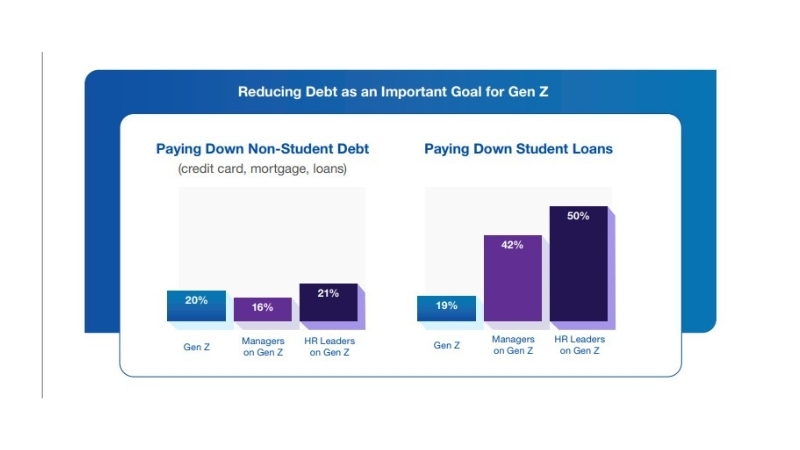
Rather, half of managers supervisors and 59% of HR leaders believe paying off debt is one of Gen Z’s top objectives. In reality, only 37% of Gen Zers say lowering debt is an important goal.
In regard to financial fears, less than one-third of Gen Zers worry about never getting out of debt, meanwhile 41% of supervisors and 52% of HR leaders think debt is Gen Z’s top concern.
Student Debt Divide
Researchers found that the supervisor group and Gen Z group of survey respondents mainly diverted on the topic of student debt. While only 19% of Gen Zers rank paying student loans as a key ambition, much larger percentages of managers (42%) and HR decision-makers (50%) think it's Gen Z's primary aim. When focusing on non-student debt, supervisors and HR leaders are closely aligned with the small number (20%) of Gen Zers who say it's a top goal.
“Why wouldn’t companies provide Gen Z workers with tools to strengthen their financial literacy?” asked The Standard Vice President, Corporate Actuary, Chief Risk Officer Lauren Canfield. “Reducing financial stress on young employees cuts down on distractions and positions them to bring their best to an organization.”
Other Key Findings:
-
80% of Gen Zers value working for an employer who provides support for financial literacy. Three quarters of HR leaders concur and 70% say their company offers help, whereas fewer managers (59%) know their organizations offer resources for financial education.
-
Government data shows that Gen Z owes less credit card debt than other age groups and external data from a Federal Reserve Bank of New York study shows Gen Z has lower student debt per capita than other generations.