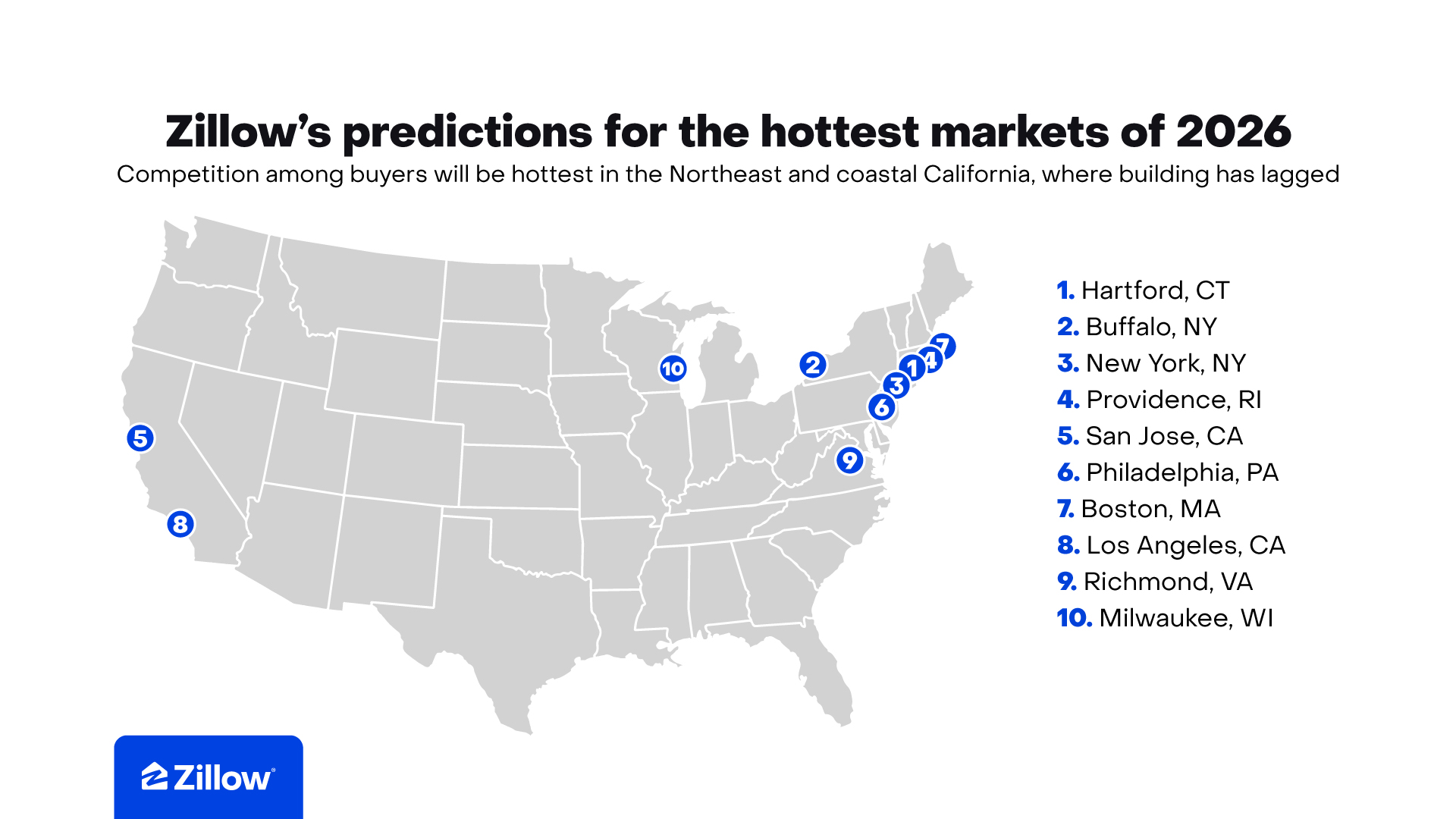
Hartford, Connecticut has passed Buffalo, New York as the hottest housing market in the U.S. for 2026, according to Zillow’s latest annual forecast of competitive real estate markets. The ranking reflects where buyer demand is strongest relative to supply, where homes sell rapidly and with minimal price reductions, and where price growth is projected to remain robust.
Zillow’s analysis, which evaluates the 50 largest U.S. metropolitan areas, places Hartford at the top of its rankings. Key contributors to the region’s ranking include an extreme inventory shortfall, with housing supply approximately 63% below pre-pandemic levels, the most severe deficit in the country, and a record share of homes selling above list price. In 2025, more than two-thirds of Hartford homes sold for over asking, signaling intense bidding competition. Zillow forecasts home values in Hartford will continue to grow near 4% in 2026, following a strong 4.6% gain last year.
Buffalo — the nation’s hottest market in both 2024 and 2025 — dropped to second place in Zillow’s 2026 forecast. While still highly competitive, Buffalo’s projected price growth of roughly 2.5%, and a less pronounced inventory shortage relative to Hartford, contributed to its second-place ranking.
Rounding out the top five hottest markets are the New York metropolitan area; Providence, Rhode Island; and San Jose, California. Factors driving strong demand in these metros include continued job growth, limited new construction, and historically low levels of price cuts. The New York market also recorded one of the lowest shares of listings with price reductions among major metros.
"Competition among buyers will be stiff and sellers will have the upper hand in this year's hottest markets. Shoppers will need to tap all the resources they can muster in these fast-moving markets, from their team of experts to tech aids to financial assistance, but successful buyers will quickly gain equity," said Zillow Chief Economist Mischa Fisher. "In today's market affordability is all-important, but any improvements in 2026 will depend on location."
Overall, Zillow’s national outlook anticipates a modest recovery in home value growth in 2026, with mortgage rates expected to trend lower and affordability improving marginally for buyers.