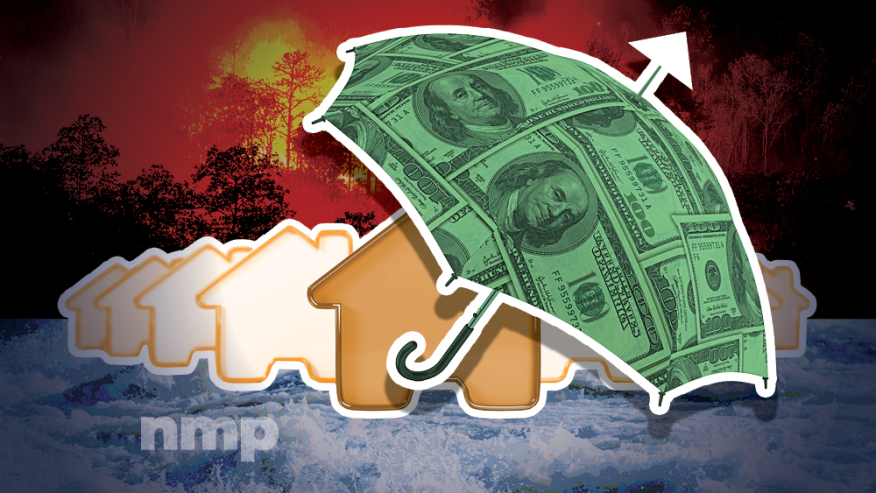
A new report from the Natural Resources Defense Council (NRDC) warns that millions of Americans are being priced out of homeowners insurance as climate-driven disasters drive premiums higher, creating an escalating insurability crisis.
The report, An Uninsurable Country: States Must Take Action to Fend Off the Looming Home Insurability Crisis, highlights early warning signs of coverage shortages and offers practical steps for state governments to address the problem.
“Insurance premiums are skyrocketing as severe weather and disasters become more frequent and more severe,” said Rob Moore, NRDC’s director of climate adaptation and the report’s author. “If states don’t address the root causes, we’re headed for a full-blown insurability crisis, leaving people without a safety net and undermining housing markets nationwide.”
Data cited in the report underscore the urgency: the number of uninsured homes in the U.S. more than doubled from 2019 to 2023, with 7% to 13% of homes currently uninsured. Meanwhile, typical homeowners’ premiums rose 24% between 2021 and 2024, outpacing inflation, and enrollment in state-run insurers of last resort (FAIR plans) jumped 61% from 1.5 million to 2.7 million policies between 2020 and 2024, signaling growing coverage constraints.
NRDC identifies four warning signs that a state may face an insurability crisis:
- Rising damage from climate-influenced hazards
- Rapidly increasing premiums
- Growing numbers of uninsured homes, and
- Increased enrollment in insurers of last resort
The report calls on states to adopt a proactive approach, including strengthening hazard-ready building codes, funding resilience and retrofits, modernizing insurers of last resort to reduce risk, and requiring insurer contributions to mitigation efforts.
“States regulate insurance markets, but they can also determine whether homes stay insurable in the long run,” said Alfonso Pating, NRDC’s global finance regulation analyst. “State governments can’t just wait to respond to premium hikes — they should focus on preventing the costly climate losses that drive those premiums up in the first place by making homes more resilient to the climate reality we live in.”
NRDC, founded in 1970, is an international non-profit dedicated to confronting climate change, protecting public health, and safeguarding nature, with offices in the U.S., China, and India and more than three million members and online activists.