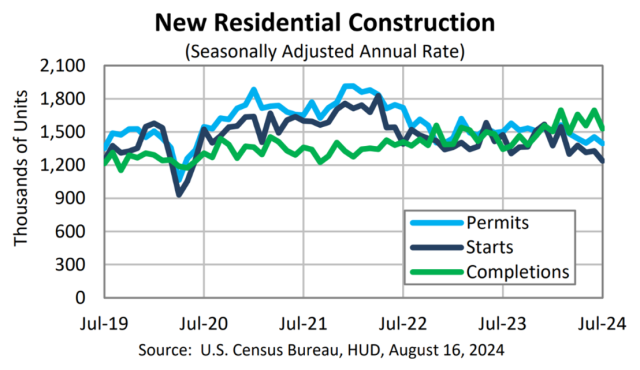
Overall housing starts fell 6.8% from June to July to a seasonally adjusted annual rate of 1.238 million — a 16% year-over-year decline and the slowest pace of starts in roughly four years. Single-family starts dropped by 14.1% to a rate of 851,000 in July, a 14.8% annual decrease per the U.S. Census Bureau and U.S. Department of Housing and Urban Development’s (HUD) latest figures.
On a year-to-date basis, single-family starts are up 11.4%.
The news of July’s slump in new construction follows reports of credit tightening for residential builders in the second quarter of 2024, when average effective rates on loans for land acquisition and speculative single-family construction were the highest they’ve been since 2018.
“Buyers remain concerned about challenging affordability conditions and builders are grappling with elevated rates for builder loans, a shortage of workers and lots, and supply chain concerns for some building materials,” said Robert Dietz, economist for the National Association of Home Builders (NAHB), of the latest figures on new-home starts and permitting.
Down 4% percent from June and 7% annually, overall residential permitting fared only slightly better than starts, reaching an annual rate of 1.396 million in July. Single-family permitting was virtually unchanged from June, but 1.6% lower than the same period last year.
The mid-year slowdown in builder activity matches a months-long deterioration in builder sentiment, which has fallen since April as elevated interest rates have persisted longer than many hoped. Single-family homes under construction fell back to a count of 653,000 — down 4.1% compared to a year ago.
First American Deputy Chief Economist Odeta Kushi focused on new-home completions as a bright spot in the Census bureau’s latest figures, which remained 33% higher than the pre-pandemic, five-year average. “With more new homes coming on the market, new housing inventory is higher than it was a year ago. An increase in new-home supply could help ease pricing pressures in this affordability constrained housing market,” Kushi said.