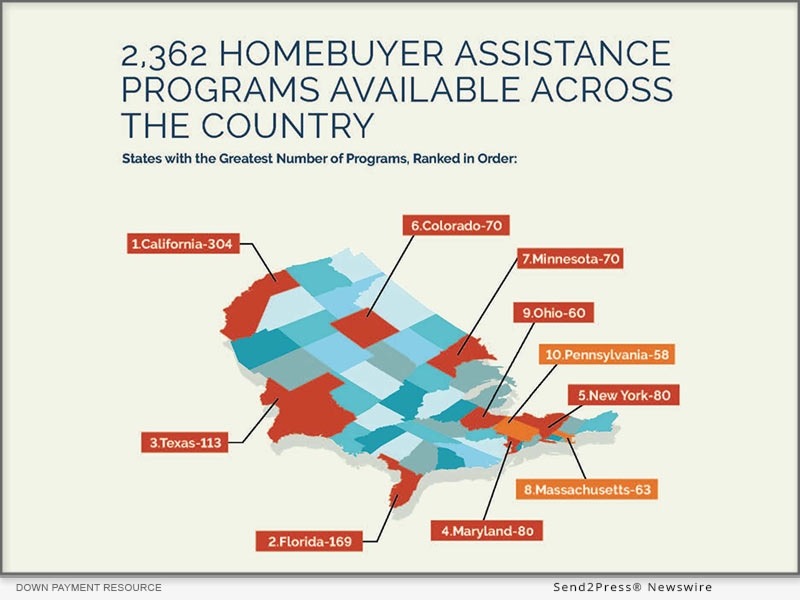
Nationwide, homebuyer assistance programs to help finance home purchases increased by 0.5% in the first quarter, according to a report from Down Payment Resource.
The Atlanta-based provider of technology for the housing industry issued its Q1 2023 Homeownership Program Index (HPI) report this week, which surveys the funding status, eligibility rules, and benefits of U.S. homebuyer assistance programs administered by state and local housing finance agencies, municipalities, nonprofits, and other housing organizations. The programs tracked include down payment and closing-cost programs, Mortgage Credit Certificates (MCCs) and affordable first mortgages, the company said.
The first-quarter report determined that the number of assistance programs available nationwide has risen to 2,362.
The report also found:
- Majority are forgivable: 57.8% of down payment assistance (DPA) programs — which take the form of grants, community second mortgages, or a combination of the two — are forgivable, meaning that they never have to be repaid as long as program conditions are met. Of all types of homebuyer assistance, 43.4% of programs are forgivable. The share of both categories of forgivable programs increased fractionally over last quarter, the report said.
- Incentivized programs are rising: There was a 3% increase in incentivized programs — which are geared toward public servants, such as teachers and public safety workers, Native Americans, people with disabilities, and veterans, among others — over the previous quarter. Programs with incentives now make up 17.5% of all available programs.
- Multifamily property support increased: Programs that support multifamily homeownership saw a 2.2% increase over the previous quarter. These programs now make up 29.8% of all homebuyer assistance offerings.
- Non-first-time homebuyer programs rose: DPA programs without a first-time homebuyer requirement grew by 2% in the quarter; 39.7% of all assistance offerings do not feature a first-time homebuyer requirement.
“The increase in down payment assistance for several consecutive quarters represents growing opportunities for homebuyers that have been traditionally underserved,” said DPR Founder and CEO Rob Chrane. “DPR will continue to raise awareness about the myriad assistance programs available and enhance our solutions that enable housing professionals to help more people achieve their homeownership goals.”
A more detailed look at the report is available here.