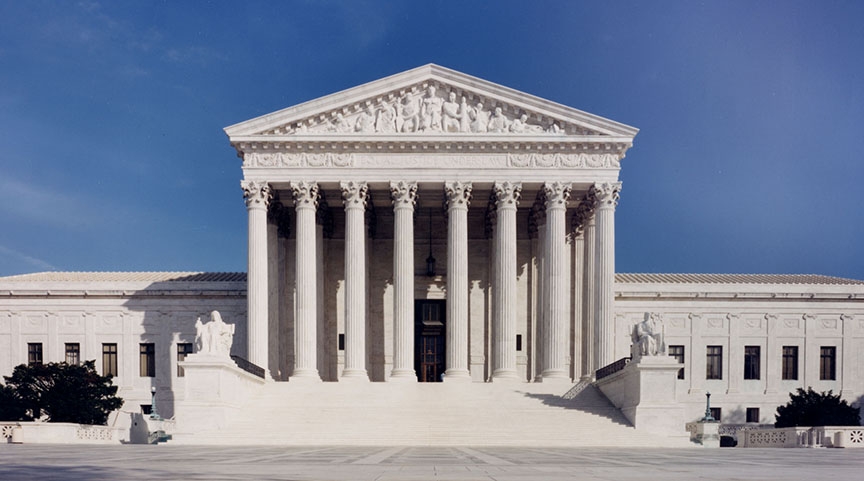
In a 7-2 ruling issued Thursday, the U.S. Supreme Court rejected a challenge to the funding structure of the Consumer Financial Protection Bureau (CFPB). A ruling supporting the challenge could have called into question every CFPB regulation and enforcement action effective since the Bureau's inception 13 years ago through the passage of the the Dodd-Frank Wall Street Reform and Consumer Protection Act.
Penning the majority opinion, Justice Clarence Thomas wrote, "Under the appropriations clause, an appropriation is simply a law that authorizes expenditures from a specified source of public money for designated purposes. The statute that provides the Bureau’s funding meets these requirements. We therefore conclude that the Bureau’s funding mechanism does not violate the appropriations clause.”
Justice Neil M. Gorsuch and Justice Samuel A. Alito Jr., dissented.
The Supreme Court's decision undermines a central goal of the conservative legal movement to limit the power of government agencies. It also reverses a lower court's decision from 2020, in which the federal appeals court in New Orleans held that the funding violated the Constitution’s appropriations clause because it improperly shields the CFPB from congressional supervision.
The case, Consumer Financial Protection Bureau v. Community Financial Services Association of America, No. 22-448, was brought by two trade groups representing payday lenders. They took issue with a CFPB regulation limiting the number of times that lenders can try to withdraw funds from borrowers’ bank accounts.
“For years, lawbreaking companies and Wall Street lobbyists have been scheming to defund essential consumer protection enforcement," wrote the CFPB in a statement applauding the decision. "The Supreme Court has rejected their radical theory that would have devastated the American financial markets. The Court repudiated the arguments of the payday loan lobby and made it clear that the CFPB is here to stay.”
Community Financial Services Association of America argued the way Congress chose to fund the Bureau had violated the appropriations clause of the Constitution. The Bureau is funded by the Federal Reserve System (FRS), in an amount determined by the Bureau so long as the sum does not exceed 12% of the FRS's operating expenses.
“Congress created the CFPB to be the primary federal watchdog protecting consumers from predatory and abusive practices in the financial sector. Since the CFPB opened its doors in 2011, it has delivered more than $20 billion in consumer relief to hundreds of millions of consumers and has handled more than 4 million consumer complaints,” the CFPB's statement continued.
"This ruling is impactful because it can help insulate the agency from significant cuts if there is a change in administration," said Daniella Casseres, partner and head of the Mortgage Regulatory Practice Group at Mitchell Sandler, commenting on the decision. "The agency’s enforcement efforts will not slow any time soon, at least not due to resource constraints."
The final verdict isn't very surprising, particularly in light of the questions the justices asked during oral arguments in October 2023, said Bradley Arant Boult Cummings Financial Services Partner and CFPB group member, Jonathan Kolodziej.
"While many may have hoped that this decision could have been a catalyst for reform of the CFPB – specifically, to weaken the Bureau’s independence," he clarified, "had the Court found that the CFPB’s funding structure is unconstitutional, significant questions were looming about the effect that would have had on prior rulemakings, enforcement matters, and many other actions taken by the CFPB that the industry has relied upon.”
The highly anticipated decision, "perhaps once and for all, puts to bed questions about whether the CFPB’s structure is constitutional," Kolodziej added.
“This ruling upholds the fact that the CFPB’s funding structure is not novel or unusual, but in fact an essential part of the nation’s financial regulatory system, providing stability and continuity for the agencies and the system as a whole," the CFPB's statement went on to say.