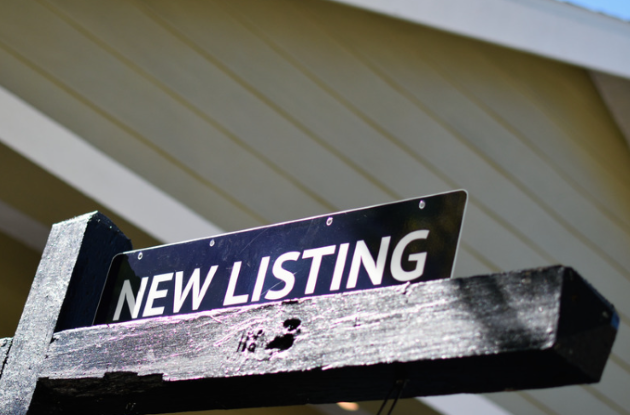
Reluctant homeowners chose to stand pat instead of listing their houses for sale in February, bringing new listings down to a record low and leaving potential buyers frustrated by the limited options, according to a new report from Zillow.
Blame it all on relatively high and volatile mortgage rates.
"We know there are a lot of motivated buyers looking for homes. When we see mortgage rates fall, sales pick up," said Skylar Olsen, Zillow chief economist. "But buyers are disappointed in their options. Homeowners aren't giving up their current house and low monthly payments to join a tight, expensive market. Meanwhile, volatility in the economy makes planning extremely difficult."
The volume of new listings in February was at a record low for this time of year, Zillow said, at nearly a third lower than before the pandemic and 22% below the same point last year.
Mortgage rates are likely driving the decline — those who bought or refinanced in 2020 or 2021, when rates were well below 3.5%, are unwilling to trade in their current mortgage for a new one with double the interest, Olsen said.
The largest annual declines in new listings were in West Coast markets: San Jose, Calif. (-47%), Portland, Ore., (-46%), Seattle (-45%), and Sacramento, Calif. (-44%).
The lack of new listings in February contributed to extremely low levels of total inventory, now 17% higher than the absolute bottom in February 2022 but still about 43% below pre-pandemic norms, Zillow said. Instead of inventory growing through the first two months of the year, as it did in 2018 and 2019, the number of choices shrank.
"This market is not as frenzied as it was during the last two years, but homebuyers might start to feel some déjà vu at the dearth of options," said Jeff Tucker, Zillow senior economist. "Home sellers seem to be sitting out the early spring selling season in surprising numbers."
Mortgage rates have been incredibly volatile over the past six months, and buyers are responding to the chance to lock in a cheaper monthly payment when the opportunity arises, Zillow said.
While sales activity is picking up, it’s not accelerating like it usually does at this time of year. After being reinvigorated by lower rates in late January, sales slowed over the course of February as rates climbed back up. In all, February saw 19% fewer newly pending sales than it did a year earlier, and 5% fewer sales than the most recent pre-pandemic reading for February in 2020.
Dramatically low inventory means that when attractive, well-priced houses do come on the market, they are readily finding buyers. Homes that went under contract in February did so after a median span of 17 days. That's more time than in 2022 and 2021, when time on market was seven and nine days, respectively, but significantly less than before the pandemic.
Home values flatlined from January to February, leaving the typical home value at $328,604, or 4% below the peak set in July 2022, according to the Zillow Home Value Index.
Home values are 4.4% higher than a year earlier — a rapidly decelerating pace of annual growth, down from the nearly record-high 18.8% year-over-year growth measured last April. The overall lack of inventory, along with the resurgence of buyers when costs fall, should prevent significant price declines, Zillow said.
Mortgage rates are likely to remain volatile through the spring selling season, it added.