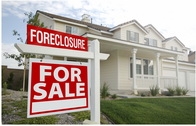
RealtyTrac, an online marketplace for foreclosure properties, has released its U.S. Foreclosure Market Report for April 2011, which shows foreclosure filings—default notices, scheduled auctions and bank repossessions—were reported on 219,258 U.S. properties in April, a nine percent decrease from March and a 34 percent decrease from April 2010. The report also shows one in every 593 U.S. housing units received a foreclosure filing during April 2011.
“Foreclosure activity decreased on an annual basis for the seventh straight month in April, bringing foreclosure activity to a 40-month low,” said James J. Saccacio, chief executive officer of RealtyTrac. “This slowdown continues to be largely the result of massive delays in processing foreclosures rather than the result of a housing recovery that is lifting people out of foreclosure.
Nationwide, foreclosures completed real estate-owned (REO) properties in the first quarter of 2011 took an average of 400 days from the initial default notice to the REO, up from 340 days in the first quarter of 2010 and more than double the average 151 days it took to foreclose in the first quarter of 2007.
The foreclosure process took much longer in some states. The average timeframe from initial default notice to REO in New Jersey and New York was more than 900 days in the first quarter of 2011, more than three times the average timeline in the first quarter of 2007 for both states. The average foreclosure process in Florida took 619 days for foreclosures completed in the first quarter, up from 470 days in the first quarter of 2010 and nearly four times the average of 169 days it took in the first quarter of 2007. The average foreclosure process in California took 330 days for foreclosures completed in the first quarter, up from 262 days in the first quarter of 2010 and more than double the average of 134 days in took in the first quarter of 2007.
Default notices (NOD, LIS) were filed for the first time on a total of 63,422 U.S. properties in April, a 14 percent decrease from the previous month and a 39 percent decrease from April 2010. After spiking 16 percent in March, default notices in April dropped back down close to the 48-month low hit in February. Scheduled foreclosure auctions (NTS, NFS) hit a 31-month low in April, with a total of 86,304 U.S. properties scheduled for an auction for the first time during the month—down seven percent from March and down 37 percent from April 2010.
Lenders foreclosed on 69,532 U.S. properties in April, down five percent from March and down 25 percent from April 2010, but REOs were still above a 22-month low hit in February 2011.
States with a judicial foreclosure process registered a three percent decrease in overall foreclosure activity from March and a 47 percent decrease in overall foreclosure activity from April 2010. States with a non-judicial foreclosure process posted an 11 percent month-over-month decrease and 26 percent year-over-year decrease in overall foreclosure activity.
The state of Nevada posted the nation’s highest state foreclosure rate for the 52nd straight month in April, with one in every 97 housing units receiving a foreclosure filing during the month. Overall foreclosure activity in Nevada decreased nine percent from the previous month and was down 27 percent from April 2010. Bank repossessions increased 23 percent from March and were up 12 percent from April 2010 to 4,606—an all-time monthly high since RealtyTrac began issuing the report for Nevada in April 2005.
Arizona REOs decreased three percent from March but were still up 22 percent from April 2010, helping the state maintain the nation’s second highest foreclosure rate for the fifth consecutive month. One in every 205 Arizona housing units received a foreclosure filing during the month, and overall foreclosure activity decreased 15 percent from March and was down 17 percent from April 2010 despite the year-over-year jump in REOs.
Overall, foreclosure activity in California was down monthly and annually in April, but a 22 percent month-over-month jump in REOs helped keep the state’s foreclosure rate at the third highest among all states for the sixth consecutive month. One in every 240 California properties received a foreclosure filing in April.
One in every 322 Utah housing units received a foreclosure filing in April, the fourth highest state foreclosure rate, and one in every 325 Idaho housing units received a foreclosure filing in April, the fifth highest state foreclosure rate.
Other states with foreclosure rates ranking among the top 10 in April were Michigan, Florida, Georgia, Colorado and Oregon.