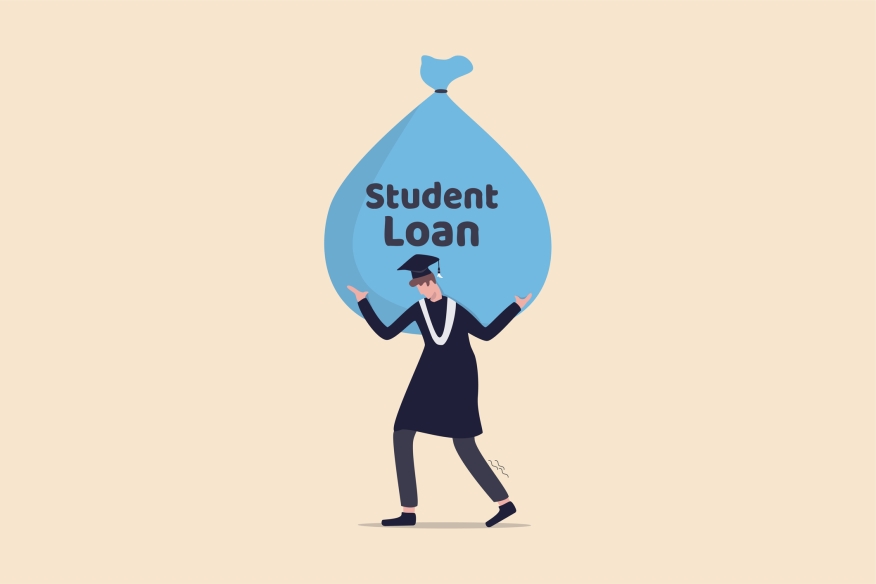
As federal student loan forbearance concludes, a new survey by Achieve reveals that nearly half of borrowers are under significant stress. The forbearance, initiated in March 2020, aimed to reduce financial pressures during the COVID-19 pandemic. Yet, as payments are set to restart in October, borrowers face an economic backdrop of escalating inflation, high interest rates, and unparalleled debt levels.
Achieve's survey presented these findings:
- 45% of respondents expressed profound stress over restarting their student loan repayments.
- 28% anticipate the need to accrue more debt for maintaining financial equilibrium.
- 24% foresee requiring financial assistance or provisions for hardship.
- 29% felt more encumbered by their student loans than at the beginning of the forbearance.
In line with these financial pressures, Freddie Mac, one of the government-sponsored mortgage enterprises in the U.S., implemented new requirements for borrowers with student loans. As of September 6, mortgage companies are instructed to list a non-zero payment for borrowers with educational debt, even if the borrower's income qualifies for no payment. This adjustment appears to anticipate the end of pandemic-related forbearance for educational loans.
"Student loan forbearances brought relief for millions during the uncertain times of the COVID-19 pandemic," said Andrew Housser, co-founder and co-CEO of Achieve. "But after more than three years, many consumers are now bracing for significant adjustments to their household budgets. Many will even have to delay major life plans and milestones in order to manage their student loans, existing debts and other day-to-day expenses."
While some permanent adjustments were recently made to income-driven student loans, allowing a greater number of borrowers to qualify for $0 payments, Freddie Mac's guidance has particular relevance. Some exceptions to these guidelines include loans nearing forgiveness, cancellation, or discharge. However, evidence of eligibility for these reliefs must be provided by borrowers.
Scott Schang, founder of Find My Way Home, said that loan originators should go through their client databases to talk with past borrowers about their cash flow.
He said there's a huge opportunity here for cash-out refinances.
Schang said loan originators should create content and educate themselves about student loan repayment programs. There are expanded criteria for qualifying for those programs, and student loan borrowers must be wary of student loan consolidation companies.
Despite efforts by the Biden administration to broaden student loan relief opportunities, some measures, including a vast forgiveness initiative, were hindered by court interventions. Post-forbearance, certain late fees, and negative credit reporting will be suspended for about a year, giving borrowers a transition period. However, those failing to meet their commitments might accumulate more debt.
Come Jan. 4 next year, Freddie Mac will introduce added requirements for income-based student loans. In certain circumstances, lenders will have multiple options for documenting payments. Meanwhile, Fannie Mae, Freddie's counterpart, continues to permit lenders to list a zero payment for student loans, provided there's additional documentation beyond the credit report.
This convergence of factors — end of loan forbearance, spiraling economic pressures, and new mortgage requirements — has made the financial landscape even more intricate for borrowers. As many navigate these changes, there's a palpable need for support and clear guidelines to prevent further financial strain.