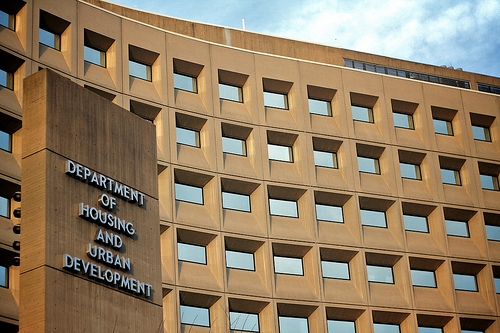
A federal agency said recently it is repealing a rule that never actually went into effect.
The U.S. Department of Housing and Urban Development (HUD) announced Friday that it plans to restore the 2013 “discriminatory effects” rule to the Fair Housing Act.
HUD said it submitted to the Federal Register for publication a final rule entitled “Restoring HUD's Discriminatory Effects Standard.” The final rule rescinds the department's 2020 rule governing Fair Housing Act disparate impact claims and restores the 2013 discriminatory effects rule.
The 2020 rule never took effect due to a preliminary injunction issued in a lawsuit, Massachusetts Fair Housing Center v. HUD, that stayed its implementation. The 2013 rule still stands and regulated entities that have been complying with the 2013 rule do not need to change any practices to comply with the final rule, HUD said.
In the final rule, HUD said, it emphasizes that the 2013 rule is more consistent with how the Fair Housing Act has been applied in the courts and in front of the agency for more than 50 years, and that it “more effectively implements the act's broad remedial purpose of eliminating unnecessary discriminatory practices” from the housing market.
"Discrimination in housing continues today and individuals, including people of color and people with disabilities, continue to be denied equal access to rental housing and homeownership," said HUD Secretary Marcia L. Fudge, adding that the final rule “brings us one step closer to ensuring fair housing is a reality for all in this country.”
The Fair Housing Act prohibits discrimination in housing and housing-related services based on race, color, religion, national origin, sex (including sexual orientation and gender identity), familial status, and disability. The discriminatory effects doctrine (which includes disparate impact and perpetuation of segregation) is a tool for addressing policies that unnecessarily cause systemic inequality in housing, regardless of whether they were adopted with discriminatory intent.
The act has long been used to challenge policies that unnecessarily exclude people from housing opportunities, including zoning requirements, lending and property insurance policies, and criminal records policies, HUD said. Having a workable discriminatory effects standard is vital for the Biden-Harris Administration to accomplish its goal of creating a housing market that is free from both intentional discrimination and policies and practices that have unjustified discriminatory effects, the agency said.
HUD's 2013 discriminatory effects rule codified long-standing case law for adjudicating Fair Housing Act cases under the discriminatory effects doctrine, for cases filed administratively with HUD and for federal court actions brought by private plaintiffs, the agency said.
Under the 2013 rule, a policy that had a discriminatory effect on a protected class was unlawful if:
- It was not necessary to achieve a substantial, legitimate, nondiscriminatory interest, or
- If a less discriminatory alternative could also serve that interest.
The 2020 rule complicated that analysis, HJD said, by adding new pleading requirements, new proof requirements, and new defenses. All of that made it more difficult, the agency said, to establish that a policy violates the Fair Housing Act and harder for entities regulated by the Fair Housing Act to assess whether their policies were lawful. HUD now returns to the 2013 rule’s straightforward analysis, the agency said.
The final rule will take effect 30 days after it is published in the Federal Register.