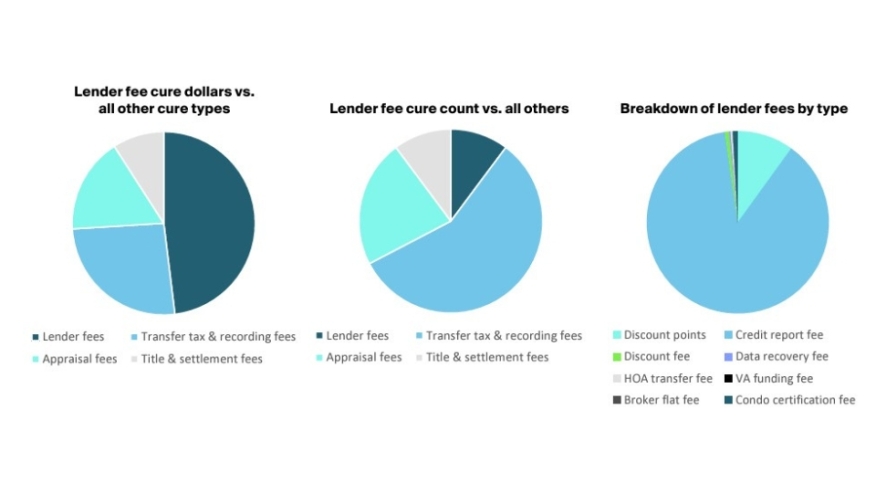
While lender fees occurred on only 5% of loans studied, they accounted for the largest volume of dollars in fee cures at 37%. Discount points were the most costly type of lender fee (28%) and impacted 3.6% of loans.
ICE whitepaper finds mortgage fee cures cost $1,225 per loan, on average.
A whitepaper from Intercontinental Exchange, Inc (NYSE:ICE), a global provider of technology and data, exposes the hidden costs of mortgage fee cures based on an analysis of preventable expenses eating away at mortgage lender profits.
The TILA-RESPA Integrated Disclosure (TRID) rule, also called the “know before you owe” rule among borrowers, requires mortgage lenders to provide borrowers with a detailed account of the costs and fees associated with their purchase or refinance. The lender is responsible for detecting and rectifying any errors made in the disclosure. Depending on the specifics of the error, lenders may be required to pay the difference between the disclosed and updated costs.
As originations begin lifting off from a 30-year low, Tim Bowler, president of ICE Mortgage Technology, emphasized the importance of lenders being diligent and efficient in correcting those errors, saying that "Every basis point counts."
“Unfortunately, fee cures and the costs associated with them – entirely preventable expenses – are contributing to the already ballooning cost to originate a mortgage,” Bowler said.
A major paint point for lenders is keeping track of frequently changing closing costs and especially transfer taxes. Failing to keep up with those changes could lead to further runup costs.
Get the NMP Daily
Essential stories, every weekday.
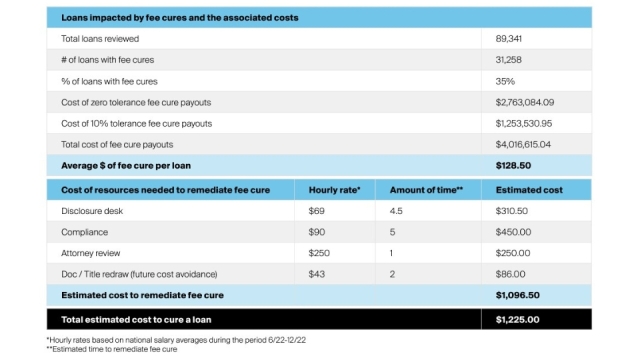
Anecdotal evidence suggests that fee cures are cutting into origination revenue. An ICE review of nearly 90,000 mortgages found an average $1,225 per loan wasted on fee cures and related expenses.
The whitepaper calls the prevalence of such fee cures – a significant amount when extrapolated over a lender’s entire pipeline – “startling.” Over a period of six months, the study also found that more than one-third of loans reviewed in the study required some type of fee cure.
ICE Whitepaper: The Hidden Cost of Fee Cures
After looking at more than 31,000 transfer tax changes documented by ICE Fee Solutions from 2021 through early 2023, it appears the trend is accelerating. These changes can have short implementation timelines, variable schedules, and substantial fee increases, all of which pose operational challenges for lenders trying to rapidly document these changes.
Employers added just 29,000 jobs in September, sending Treasury yields lower and offering a potential counterweight to the recent rise in mortgage rates
The September jobs report gave the mortgage market something it hasn't had much of lately: downward pressure on Treasury yields.U.S. employers added just 29,000 jobs in September, while the unemployment rate edged up to 4.2%, according to the Bureau of Labor Statistics. The ...
The wholesale lender is adopting a new identity three years after acquiring Homepoint’s wholesale business and rising to No. 4 in industry rankings
The Loan Store has a new name after a three-year expansion that transformed the once-small wholesale lender into one of the largest players in the broker channel.The Tucson, Arizona-based lender has rebranded as Averra Financial Inc., effective immediately, the company annou...
Employers added just 29,000 jobs in September, sending Treasury yields lower and offering a potential counterweight to the recent rise in mortgage rates
The typical down payment fell 9% from a year ago, while shifting market conditions are giving originators different affordability conversations across the country
New-home sales rose 6.4% in August as builders cut prices, offered incentives, and sold more lower-priced homes. Now mortgage rates are moving against buyers again
ServiceLink finds 45% of surveyed LOs cite borrower reluctance as a barrier, even though most recent buyers say digital options would influence their choice of mortgage provider