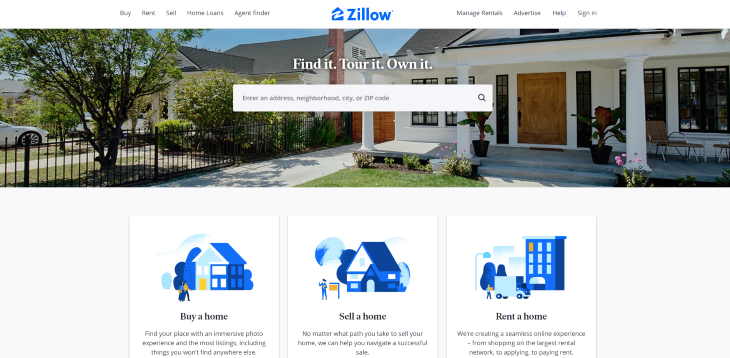
A class action lawsuit filed in Washington state accuses Zillow of violating the privacy rights of visitors to its website.
The lawsuit, filed Monday in U.S. District Court for the Western District of Washington in Seattle, was filed for plaintiffs Kenneth Hasson of Pennsylvania and Natalie Perkins of South Carolina on behalf of “themselves and all others similarly situated.”
The lawsuit names Seattle-based Zillow Group Inc. and Redmond, Wash.-based Microsoft Corp. as defendants.
In the complaint, the plaintiffs claim Zillow employs Microsoft and other third-party vendors to “embed snippets” of computer code on its website, “which then deploys on each website visitor’s internet browser for the purpose of intercepting and recording” their interactions with the site. This can include recording “mouse movements, clicks, keystrokes, … URLs of web pages visited, and/or other electronic communications in real-time.”
According to the complaint, third-party vendors then use the data to recreate each website visitor’s “entire visit to Zillow’s website.”
It continues, “Microsoft and other Session Replay Providers create a video replay of the user’s behavior on the website and provide it to Zillow for analysis.” The complaint adds that this is the “electronic equivalent of ‘looking over the shoulder’ of each visitor to the Zillow website for the entire duration of their website interaction.”
The lawsuit claims this violates the Washington state wiretapping statute, and constitutes an invasion of the privacy rights of website visitors.
The complaint makes the argument that website users have “a reasonable expectation of privacy in their interactions with websites.” It states that privacy polls and studies show that a majority of Americans consider “one of the most important privacy rights to be the need for an individual’s affirmative consent before a company collects and shares its customers’ data.”
The suit does note that the computer code used to recreate visitors’ interactions is “utilized by websites for some legitimate purposes,” but adds that “it goes well beyond normal website analytics when it comes to collecting the actual contents of communications between” visitors and the websites.
According to the complaint, ZIllow website’s computer code allows the website to “capture and record,” among other things, “the visitor’s personal or private sensitive data, sometimes even when the visitor does not intend to submit the data to the website operator, or has not finished submitting the data ….”
As a result, the complaint states, visitors aren’t sharing data with just the website, but also with “an analytics service that may be watching over their shoulder.”
In addition, the complaint states, the computer code may “capture data that the user did not even intentionally transmit to a website during a visit, and then make the data available to website owners when they access the session replay.” The complaint says visitors can type information into a text form field and then choose not to submit the information, which nonetheless would still be captured by the embedded code.
The suit claims the use of the embedded code also exposes website visitors to “identity theft, online scams, and other privacy threats.”
The lawsuit notes that Zillow’s website is “the most popular real estate website in the United States, with over 36 million unique monthly visitors and more than 135 million properties listed.”
The plaintiffs say they are seeking “all civil remedies,” including but not limited to compensatory, statutory, and/or punitive damages, and attorneys’ fees and costs.”
A Zillow spokesperson said in an email to National Mortgage Professional that the company is aware of the lawsuit and "is currently reviewing it," adding that the company takes the privacy and security of users’ information “very seriously.”
"We are transparent with our users through our privacy policy, which explains to users the types of information we collect as they use our apps and websites," the spokesperson said.
Seattle-based Tousely Brain Stephens PLLC is the lead law firm for the complaint, along with firms from Alabama, Pennsylvania, and New York.