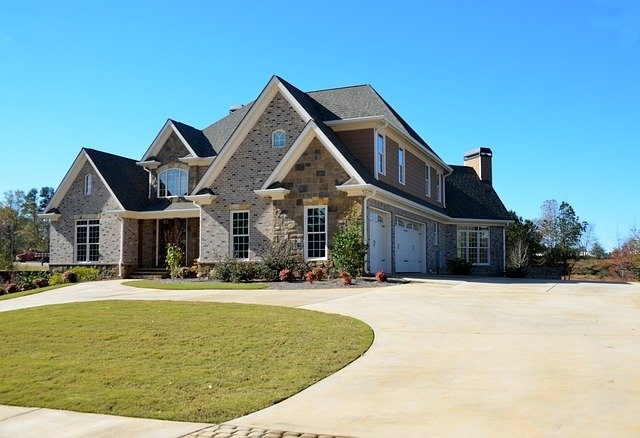
It’s a tale of two housing markets; while typical homes on the market are appreciating more slowly, luxury home values have grown 3.9% from last year. The likely culprit, Zillow reports, is the lack of luxury home inventory, which remains almost 50% below pre-pandemic levels – a much bigger deficit than the overall housing market.
Luxury home value growth has consistently lagged the market's middle tier over the past several years, but a new Zillow analysis found that luxury homes have outpaced appreciation on typical homes for five consecutive months. Luxury home values soared 3.9% while typical homes only appreciated 3.2% from last year.
The typical luxury homes Zillow looks at in its analysis are defined as the most valuable 5% of homes in a given region. Nationwide, those typical luxury homes are worth about $1.62 million. Among the 50 largest U.S. metro areas, the typical luxury home ranges from a low of $750,000 in Buffalo to more than $5.3 million in San Jose.
Reviewing historical data, Zillow analysts found that the rate of typical homes' appreciation outpaced luxury homes on an annual basis every month between January 2019 to January 2024. But, since January 2024, luxury homes' price gains have outpaced typical homes'.
"Luxury homes can be challenging to sell because the pool of buyers is so much smaller. That's one reason prices for them usually grow more slowly," said Anushna Prakash, economic research scientist at Zillow. "We're seeing a different trend play out this year. Luxury home buyers are likely less affected by higher mortgage rates than a typical buyer, especially repeat buyers who saw their home equity soar over recent years. Many will be able to pay with cash and skip a mortgage payment altogether."
Luxury home inventory has been slower to recover compared to overall inventory, which has kept up price growth. Inventory for luxury homes is up almost 16% from last year but 47% below pre-pandemic levels. However, total inventory is 22.7% higher than last year and about 32.6% below pre-pandemic averages.
Nonetheless, the share of luxury listings with a price cut is climbing, though it’s tracking below the market as a whole. In June, 20.8% of luxury listings experienced a price cut, up from 19.4% the previous June. Among all homes, 24.5% of listings had a price cut.
The luxury home market in Richmond, Va., is red hot, with values 16.5% higher than last year, far surpassing the growth seen in any other major market. Hartford luxury homes had the next strongest growth, up 8.6% over the same period. Luxury home inventory in Richmond is down 13.2% year over year, making it one of only six major markets with fewer luxury homes for sale than last year. Luxury homes in Richmond that sold in June did so after just six days on the market, the fastest rate in the country.
Austin, Texas, is the only major market where luxury home values declined over the past year, down 1.5%. Home values in Austin overall saw a meteoric rise during the pandemic, and a building boom in response to that demand has helped lessen competition for each home and bring price growth under control.