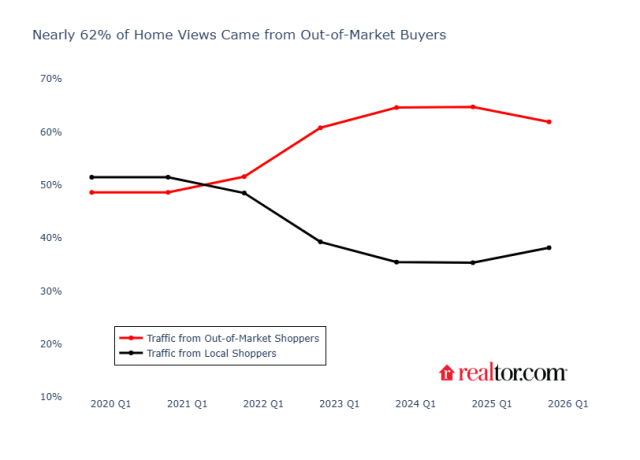
Out‑of‑town home shoppers are now the dominant force in the vast majority of the nation’s largest housing markets, according to a new report from Realtor.com analyzing online listing activity in Q4 of 2025.
The data show that buyers from outside a market accounted for 61.9% of home views across the 100 largest U.S. metropolitan areas, a marked increase from the 48.6% share seen in late 2019, underscoring a growing trend of geographically mobile demand.
In the latest quarter, 87 of the largest 100 metros were driven primarily by out‑of‑market interest, leaving just 13 areas where local shoppers still made up the majority of listing traffic.
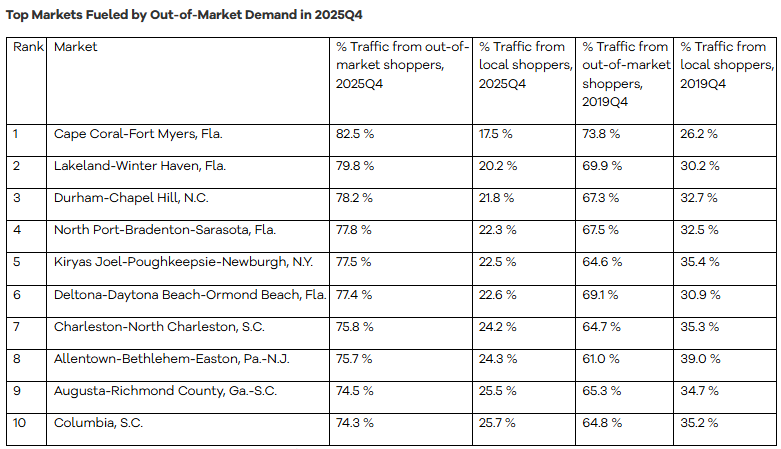
Sun Belt metros such as Cape Coral, Fla.; Lakeland, Fla.; and Durham‑Chapel Hill, N.C. ranked among the top markets with the highest share of out‑of‑town engagement, often exceeding 75% of total traffic. These regions appeal to relocators with comparatively lower home prices and lifestyle amenities, making them magnets for buyers seeking affordability and quality of life elsewhere.
"We have seen a fundamental change in where Americans who are shopping for a home are looking to live," said Danielle Hale, chief economist at Realtor.com. "As the 'lock-in effect' keeps some owners from selling, those who are moving are increasingly untethered to the market they're currently in. Whether driven by a search for affordability in the Sun Belt or following the wave of AI-driven job opportunities in the Rust Belt and West, home shoppers are looking further afield than ever before."
The report also identifies a significant uptick in out‑of‑market interest in metros once dominated by local buyers.
For example, the California regions of San Francisco‑Oakland‑Fremont saw its share of external traffic climb by more than 25 percentage points since 2019, while cities such as Philadelphia and Pittsburgh also recorded notable increases in non‑local demand, partly driven by job growth in technology and data infrastructure sectors.
Despite a handful of high‑entry markets like New York and Washington, D.C. where local shoppers remain relatively prevalent, even these areas have seen a declining local share as nationwide buyers cast wider nets in their home searches.