Like mailing your high school sweetheart a generous wedding present, or sending your first-born child to college to pursue his passion for rocket science after learning his dreams don’t involve taking over the family flower business, sometimes love means letting go.
For Norcom Mortgage CEO Phil DeFronzo, that’s what it was like selling his 25-branch retail division to CMG Financial this year.
Advertisement
Not Bitter, Just Sweet
“First of all, the salespeople that we have on the retail side were amazing. I mean, they really were some of the best,” DeFronzo said thoughtfully, inside Norcom’s Avon, Conn. home base exactly two weeks after the acquisition was announced.
It’s been 35 years since he and his mother started churning out mortgages from a one-room office behind Avon Appliance. In 2023, Norcom, now headquartered in a 35,000 sq. ft. building on a sprawling, forested campus, reported $482 million in loan volume on Modex, with 121 active loan officers and 38 branch locations across the country.
“We’ve been together for 25 years, so they’re really like our family,” DeFronzo said of his former retail team, now tasked with helping CMG pad out its Northeastern footprint.
“We had a focus group recently and were looking at our process and marketing and it was good, but when you went out there and looked comparably to a company like CMG, their marketing platform and what they can give their loan officers, I felt like a parent holding my kids back in a way,” DeFronzo said. “Why am I trying to invest in two platforms? I’m better off focusing on one, and letting the people who are the great producers in our company go with a company that already has the things they need to take their business to the next level.”
He has high hopes for distributed retail in mortgage, particularly for large companies like CMG, which originated over $21.5 billion in 2023.
“I believe what’s going to happen is you’re going to see interest rates drop down a little bit, you’ll see inventory pick up, and a number of loan officers will get out of the business. So if volume goes up 30% and you have 30% [fewer] loan officers, the distributed retail is going to be a great play. People ask me, why are you getting out of it if you feel that way? We just wanted to focus on one thing. You have limited resources when you’re not a giant company. Where do you see growth and where can you place those resources? 80% of our volume was TPO, so it made more sense for us to focus on that.”
“I felt good about handing over some great friends and great people to a great company. It’s the right thing to do.”
Phil DeFronzo, CEO and founder, Norcom Mortgage
DeFronzo is now subdividing Norcom’s building into different suites, which will be rented out to several different mortgage-related businesses. CMG Financial is one of them.
“I’ve known Chris George for years. He’s a good guy. It’s impressive what he’s built. I felt good about handing over some great friends and great people to a great company. It’s the right thing to do,” DeFronzo remarked.
CEO of the San Ramon, Calif.-based CMG Financial, George is a former Mortgage Bankers Association Chairman and founded his company in 1993, just a few years after DeFronzo established Norcom.
“Phil and I both started our companies with similar roots and a shared passion to give more home buyers access to homeownership,” George said in CMG’s April 11 announcement about the purchase. “Thirty years later, we’re still living out our dreams by helping buyers and owners alike achieve theirs.”
Opportunities Elsewhere
DeFronzo poses on the Norcom campus next to the tree
donated by employees in honor of his mother Sophie, who
passed away in 2015. Sophie worked with her son when he
founded Norcom in 1989 and during the company’s first 20
years in business.
DeFronzo and his team may have shed an arm, but they’re growing a leg.
“I love this business, and I haven’t been this excited in years,” DeFronzo said. “We were able to pick up some amazing account executives, some of the top of the country. We’re kind of blowing it out of the water.”
In 2022 Norcom stripped down its third-party origination (TPO) platform and web portal, relaunching TPO GO. The sales team is being led by Vice President Trey Van de Bogart, who joined the company in 2020.
“Going all in on wholesale is a huge opportunity,” Van de Bogart told NMP. “It’s very exciting. We have a great product menu, and we want to focus on what we do really well.”
DeFronzo praised the young leader for bringing a different perspective to the role.
“It’s fresh to bring somebody who’s comfortable in processes and systems into the fold,” he pointed out. “We do an amazing renovation business with a lot of different products … Some of the mortgage brokers that we work with are in market areas that standard banks or loan officers don’t support, like Hartford and New Haven.”
TPO GO is projected to make over $2 billion in wholesale volume in 2024, which would place it among the top 15 wholesale lenders in the U.S.
“Because we have such great people, in the next year we’re going to be trying to get the account executives we have to grow to as much as we can,” DeFronzo said. “We’re going to try to expand out a little bit in markets that we don’t have AEs in that might be good markets for us. We’ll do ongoing training on all different products. We’re positioned to really grow TPO GO.”
Retail mortgage lenders need to have scale in order to be competitive and to be successful today.
Rick Roque, EVP of retail sales, Sierra Pacific Mortgage
Company leaders are looking at opportunities to weave automation more deeply into their business in an effort to double down on efficiency.
“I don’t want it to just be about volume,” DeFronzo said. “You retain employees by giving them opportunities and helping them grow their business and treating them the way that you would want to be treated. And I think that that’s what we do.”
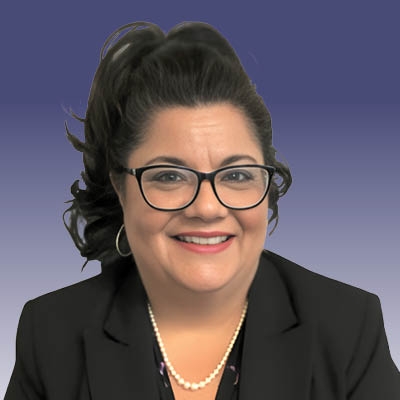
Katie Plezia, new Account Executive
with TPO GO
He’ll be the first to admit that it was a risk on Norcom’s part to go hot and heavy on wholesale.
“More to lose, big time. I don’t think the market’s that saturated now, but I wonder three years from now if a big company will just come in and blow people away.”
One of Norcom’s strengths is its boutique product line, specializing in down payment assistance programs, bonds, renovation loans, and FHA lending. That and the personal service.
Barbara Guarino, new Account
Executive with TPO GO
New Account Executives include Katie Plezia and Barbara Guarino, formerly of Finance of America Companies.
“These are some really amazing AEs that have added a lot of value,” DeFronzo said. “We’re now reallocating resources to that side of the business, and we’re trying to do things that are fun and innovative with TPO GO.”
On Wholesale And The Industry As A Whole
Broker market share grew to 24.3% in the final quarter of 2023, the highest it’s been since 2009. This is encouraging not only for large non-bank firms like United Wholesale Mortgage — responsible for 48% of the wholesale-broker originations in 2023 — but also for small- to medium-sized lenders like Norcom.
“It seems like the reputation of brokers has kind of healed a bit since the crisis,” DeFronzo said. “You’ve seen more consumers drawn towards that channel and more educated about what they do. If you’re a small producer doing five- to $10 million a year, it may make more financial sense for you to be a broker and be able to give a lot more options to your borrowers, not only just price, but products.”
But like the tides, the mortgage market and the economy as a whole will always change. It’s been a challenging year for industry professionals. As companies shuttered and people left the business altogether, those who stuck around to ride out the cycles had to be prepared to contract and grow.
“You never know what the next stage is going to be,” DeFronzo said. “I always tell people that coming out of ‘08, I had the best year I’ve ever had in ‘09 because by then half the people were out of the business. Just be adaptable.”
It’s not hard to tell, he loves this business. DeFronzo’s mother worked with him until she was in her 80s. At 60 years old, he plans on working for at least another decade before retiring.
A lot of strong leaders are selling right now, as retention without growth leads to attrition, according to mortgage banker and entrepreneur Rick Roque, who founded Menlo Capital and recently became Executive Vice President of Retail Sales at Sierra Pacific Mortgage.
“Retail mortgage lenders need to have scale in order to be competitive and to be successful today,” Roque said. “The local independent mortgage bank is going to struggle to survive. There [are] a few small, family-run, independent mortgage banks that are holding their own. They’re profitable because they’ve been able to right-size their volume or operations. That really relegates them to what I call super brokers — almost as small as a mortgage broker, but they have their FHA approval.”
Roque said he’s always admired DeFronzo and what he’s been able to accomplish building Norcom but went on to call the recent sale “risky.”
Advertisement
“You don’t make the kind of money in wholesale that you do in retail or even servicing, so I think it’s a risky move on Phil’s part, but Phil’s a really smart guy. He’s got a lot of capital,” Roque said. “He’s got other revenue channels outside of wholesale, he’s got his insurance company … I think it’s a risky strategy for sure, but I also think that there are things unique to Phil and NORCOM that help mitigate some of those risks.”
With UWM called to court earlier this year for allegedly scheming with brokers to increase its market share, it could potentially (or eventually) mean more business for smaller companies, Roque said.
“There’s no question that UWM is very much on its heels from a regulatory, scrutiny, and industry standpoint. I think that if for whatever reason there were regulatory or legal pressures for brokers to diversify, then naturally companies like Phil’s are going to pick up on that volume.”
This article originally appeared in National Mortgage Professional, on the week of July 1, 2024.
platforms consolidate and vendors gain leverage, the lenders who stay disciplined about data, adoption, and exit terms will be the ones who keep control of their own tech stack