
Underwriters Don’t Slow Down Loans. They Eliminate Uncertainty. – NMP Skip to main content

Underwriters Don’t
Slow Down Loans.
They Eliminate Uncertainty.

The industry’s biggest bottleneck is not underwriting itself — it is the uncertainty that reaches underwriting too late in the process. When validation happens upstream, speed follows naturally.

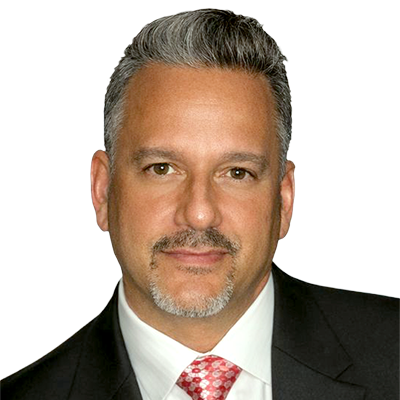
By Gerald M. Green, Special To National Mortgage Professional

Underwriters Don’t
Slow Down Loans.
They Eliminate Uncertainty.

The industry’s biggest bottleneck is not underwriting itself — it is the uncertainty that reaches underwriting too late in the process. When validation happens upstream, speed follows naturally.

By Gerald M. Green, Special To National Mortgage Professional

The mortgage industry has spent years asking the wrong question about underwriting.

Why does it slow everything down? Why does momentum stall just as a loan approaches the finish line?

The answer is simpler and more uncomfortable than most are willing to admit. Underwriters do not slow down loans. They slow down uncertainty. Until that distinction is fully understood, the industry will continue trying to fix the wrong problem.

Loans rarely fall apart because underwriting is too strict. They fall apart because validation happens too late.

Long before a file reaches underwriting, a quiet set of assumptions has already taken root. Income is treated as stable. Assets are assumed sufficient. Liabilities are considered complete. The file moves forward not because it has been proven, but because it appears complete.

That appearance creates momentum. But it is a fragile kind of speed — built on data that has not been tested.

Consider a familiar scenario. A borrower presents what looks like consistent income. Nothing raises concern. Weeks later, underwriting identifies pay period fluctuations that materially affect qualifying income. What appeared stable was never verified.

The loan does not slow down because underwriting is inefficient. It slows down because the truth surfaced late.

This is the structural tension at the center of mortgage operations. Assumptions move quickly. Verification does not — and should not.

Real verification requires alignment across documents, consistency between data sources, and clear explanations for any discrepancies. It is deliberate by nature because it carries accountability. When early momentum is built on assumption and late accountability is built on verification, friction is not a failure. It is physics.

“The loan does not slow down because underwriting is inefficient. It slows down because the truth surfaced late.”

“The loan does not slow down because underwriting is inefficient. It slows down because the truth surfaced late.”

That friction has a name. It is underwriting.

It is also why underwriting so often feels like a bottleneck. Not because underwriters resist efficiency, but because they carry final responsibility for the integrity of the loan. Their decisions must hold up under investor scrutiny, quality control review, and audit trails long after closing. In that environment, hesitation is not inefficiency. It is discipline.

The real breakdown begins when underwriting is forced into a role it was never designed to play: discovery.

Instead of confirming a well-understood file, underwriters routinely uncover issues that should have been resolved weeks earlier. Undisclosed liabilities. Address inconsistencies. Income discrepancies. Assets without clear sourcing. None of these is inherently complex. What makes them disruptive is timing.

Once a loan is already in motion, every new finding creates rework. Conditions multiply. Timelines compress. Teams shift from execution to reaction.

This is not a failure of underwriting. It is a failure of sequencing.

The industry has optimized for early momentum instead of early certainty. Underwriting is the point at which assumptions are tested against reality. When they do not hold, the process slows — not because something is broken, but because it is correcting itself at the worst possible time.

Speed was never the problem. Unverified data was.

A better approach does not start by asking underwriting to move faster. It starts by redefining when certainty is established.

A validation-first model shifts critical checks earlier in the life cycle. Before submission. Before automated underwriting systems are run. Before a file is treated as complete. Income is fully verified before eligibility is assessed. Liabilities are reconciled before risk is evaluated. Assets are sourced and confirmed before they are counted.

This is not about adding friction to the process. It is about moving friction to the point where it is least disruptive and most actionable.

It also requires a shift in mindset. A file should not advance because it appears complete. It should advance because its data has been tested.

When that happens, underwriting changes fundamentally. It no longer functions as a backstop against uncertainty. It becomes a confirmation layer on a file that is already stable. Discovery is slow because it requires investigation. Confirmation is fast because it relies on validated inputs. That distinction is where real efficiency lives.

“Underwriters are not the source of delay. They are the control point that protects the integrity of every loan.”

“Underwriters are not the source of delay. They are the control point that protects the integrity of every loan.”

The downstream effects are immediate: fewer conditions, shorter closing timelines, less rework, and an originations-to-underwriting relationship built on alignment instead of reaction.

Automation will accelerate this shift — but cannot substitute for it. Systems can surface inconsistencies faster and flag patterns at scale. What they cannot do is fix data that was never validated in the first place. If the inputs are flawed, speed only compounds the problem. The real opportunity is not faster decision making. It is stronger data integrity at the point of entry.

More organizations are already recognizing this. Efficiency does not come from compressing underwriting timelines. It comes from reducing the uncertainty that reaches underwriting at all.

Because underwriting was never meant to be the place where loans are figured out.

It was meant to be the place where loans are confirmed.

Until that distinction is operationalized, underwriting will continue to feel like a constraint. But once validation leads instead of follows, the discipline remains, the accountability remains — and the delays disappear.

Underwriters are not the source of delay. They are the control point that protects the integrity of every loan.

If the industry wants faster, more predictable outcomes, the answer is not to pressure underwriting to move more quickly. It is to ensure that by the time a file gets there, the uncertainty is already gone — resolved at the moment it mattered most.

This article originally appeared in National Mortgage Professional, on the week of June 21, 2026.
About the author
Founder and CEO
Gerald M. Green is Founder and Chief Executive Officer of Veri-Search.
Published on
Jun 16, 2026
More from NMP Magazine
NMP
The Hidden Cost Of Talent

Retail veterans explain the calculation, the clawbacks, and the fine print

Katie Jensen
NMP
Not Your Conforming Comfort Zone

Non-Agency originations could reach $500 billion this year. Are you ready to tap in?

Tom Davis
NMP
The Liquidity Squeeze In FHA Servicing

The long tail of loss mitigation is now coming into view as FHA’s post-pandemic relief tools give way to repeat defaults, exhausted options, and a swelling foreclosure pipeline

Katie Jensen
NMP
The NEXA Disruption

A bold rebrand tests the broker–retail divide

Katie Jensen
NMP
The More AI, The More LO

AI makes human loan officers more essential, not less

John Cady
NMP
Homes For People, Not Portfolios

Trump’s housing directive targets bulk buyers — but the real impact hinges on definitions, supply, and migration to build-to-rent

Seamus Nally

Webinars

The CEO Mindset: 5 Daily Successful Routines

In this webinar, NMP CEO Andrew Berman sat down with GMCC's James Jin, CEO and President, alongside four of th...

Webinar
May 28, 2026
Investor Confidence in Today’s Non-QM And Why Originators Are Paying Attention... A Virtual Town Hall

We host Angel Oak Mortgage Solutions for a special 2021 edition of their virtual town hall series they ran fro...

Webinar
Apr 08, 2021
How to Help Real Estate Pros in a Post-Refi World

Hear from Melissa Merriman, REALTOR® with The Melissa Merriman Team at Keller Williams, on what real estate pr...

Webinar
Mar 18, 2021
Connect with your local mortgage community.

Meet your your colleagues, both national and local, by attending an event in your area.