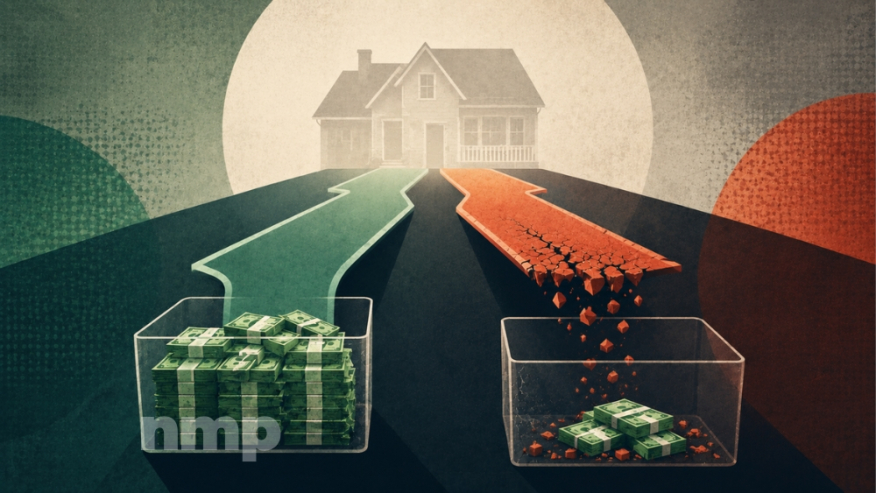
Short sales are increasing for the third consecutive year and now recover more of a property’s estimated value than foreclosures, according to a new Realtor.com report.
Short-sale transactions increased 4% from 2023 to 2024, nearly 10% from 2024 to 2025 and approximately 16% year over year during the first quarter of 2026. Despite that acceleration, the transactions remain a small corner of the housing market.
Fewer than 30,000 short sales occurred nationwide in 2025, representing approximately 0.6% of typical home sales and 28% of distressed sales. Foreclosures remained more than twice as common.
The findings point to increasing distress among a limited group of homeowners rather than a broad deterioration in mortgage performance. They also suggest short sales could offer lenders and servicers a more favorable recovery than allowing distressed properties to proceed through foreclosure.
“Even in a strong economy with home prices close to record highs, a small segment of households find themselves facing tough circumstances,” said Danielle Hale, chief economist at Realtor.com. “The good news for struggling homeowners is that they have more options now than in previous decades.”
Short-Sale Discount Narrows
Beginning in January, short sales started selling at a smaller discount to estimated property value than foreclosures for the first time since Realtor.com began tracking the valuations in 2018.
Distressed properties now recover roughly 9% more of their estimated value through a short sale than through foreclosure, reversing a pattern that had persisted for nearly a decade.
Foreclosed homes have generally sold for 25% to 30% below estimated value. The short-sale discount has been considerably more volatile, widening from approximately 30% in 2018 to 50% in 2022 before narrowing to around 20% by early 2026.
Realtor.com attributed much of that volatility to the time required to complete a short sale. Unlike a foreclosed property, which is priced by the lender near the time of sale, a short sale is priced while the borrower still owns the home and can remain pending for months while the lender decides whether to accept less than the outstanding mortgage balance.
During the rapid home-price appreciation of 2021 and 2022, property values increased faster than many short sales could close, making their recorded discounts appear wider. That effect diminished when price growth flattened in 2025 and 2026.
The current premium is also consistent with findings from the Federal Reserve Bank of Philadelphia. Research examining the 2007-2012 housing downturn found that short sales sold for approximately 9% to 10% more than comparable foreclosures.
Why Foreclosures Still Dominate
Short sales can help lenders recover more value, reduce the time a property remains distressed and limit the effect of a vacant foreclosure on surrounding homes. But they require the borrower to act before the foreclosure process is completed and cooperate with the sale.
“A short sale recovers more value for the lender and does less damage to the surrounding neighborhood, but the decision isn’t the lender’s to make,” said Glen Morgenstern, an economist intern at Realtor.com.
Morgenstern said a borrower facing foreclosure can remain in the property without making payments for an average of 592 days. The value of that additional time can outweigh the potential credit and eligibility advantages of pursuing a short sale, he said.
A short sale may release the borrower from remaining mortgage debt and allow the borrower to qualify for another mortgage in approximately four years, compared with about seven years following a foreclosure. Realtor.com noted, however, that credit bureaus generally score short sales and foreclosures similarly.
Short sales have never equaled foreclosures since Realtor.com’s records began in 2006. Their prevalence rose after the federal Home Affordable Foreclosure Alternatives program began promoting them in 2010, then declined after the program ended in 2016. The market has since settled at approximately four short sales for every 10 foreclosures.
Distress Follows A Different Map
Short sales are not concentrated in precisely the same markets as foreclosures.
While foreclosures are more prevalent in some of the country’s most affordable markets, short sales are dispersed across moderately priced metropolitan areas in Florida and the West.
Miami, New York, Tampa, Phoenix, and Houston had the greatest number of active short-sale listings in May. Lakeland, Florida, recorded the highest short-sale share at 6.7% of listings, followed by Pueblo and Colorado Springs, Colorado.
Based on completed transactions, short sales were most common in Salt Lake City and Texas markets including Austin and Dallas.
The geographic concentration could create a limited but expanding specialty opportunity for originators and real estate professionals who understand distressed transactions. However, the extended approval process remains a significant obstacle to producing dependable purchase pipelines.
Short-sale listings received approximately 20% fewer Realtor.com page views than comparable properties and required about two additional months to sell. Deals can remain subject to lender approval for months and may still collapse before closing.
For mortgage professionals, the accelerating transaction count is worth watching, particularly in markets where prices have weakened. But with short sales accounting for only 0.6% of typical sales last year, the data point to localized borrower distress — not a return to the distressed-market conditions that followed the financial crisis.