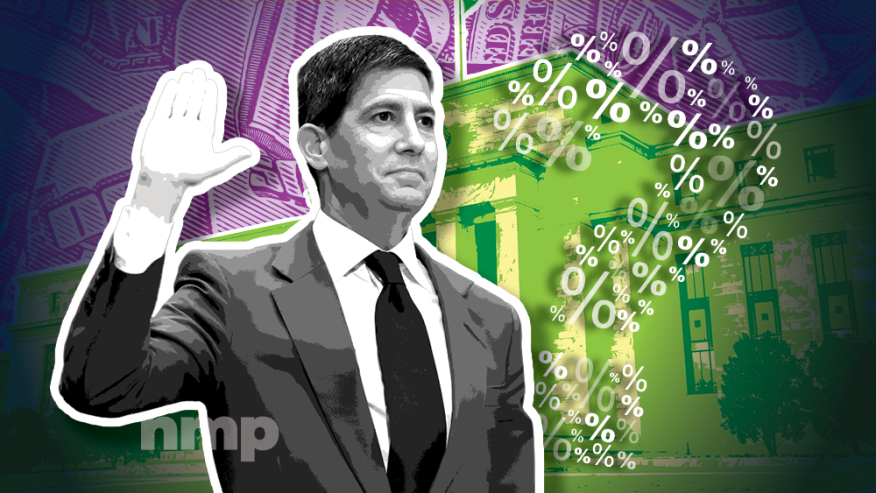
The Senate has confirmed Kevin Warsh as the next Chairman of the Federal Reserve, placing a new leader at the center of monetary policy just as inflation pressures are reaccelerating and mortgage markets are reassessing expectations for rate cuts.
Warsh, a former Federal Reserve governor and longtime Wall Street adviser, takes over during a pivotal moment for the housing and mortgage industries. Hotter-than-expected inflation data released this week has already pushed bond markets to scale back expectations for near-term easing, raising new questions about how quickly mortgage rates may actually improve.
The confirmation comes only days after April Consumer Price Index (CPI) and Producer Price Index (PPI) reports showed inflation accelerating again, complicating the outlook for the Fed and increasing the likelihood that higher borrowing costs could remain in place longer than many lenders and borrowers had hoped.
Markets Reassess The Rate-Cut Timeline
Mortgage markets had increasingly been positioned around the possibility of Federal Reserve easing later this year. But inflation data forced traders to rethink that outlook.
Reuters reported that investors are now questioning how much flexibility Warsh will have to lower rates quickly, despite expectations from some corners of the market that the new Fed chair could take a more growth-oriented approach than current leadership.
For mortgage lenders and originators, that matters directly.
Treasury yields moved higher following the inflation reports, while mortgage pricing deteriorated across much of the market this week. The shift has again delayed hopes for meaningful mortgage-rate relief that many in the industry had expected would help revive refinance activity and improve affordability conditions for buyers.
MBA Signals Focus On Capital Rules And Mortgage Liquidity
Following the confirmation, Mortgage Bankers Association President and CEO Bob Broeksmit congratulated Warsh while emphasizing the industry’s continued push for changes to bank capital standards affecting mortgage finance.
“MBA congratulates Kevin Warsh on his confirmation as Chairman of the Federal Reserve,” Broeksmit said in a statement. “His experience in financial markets and thoughtful approach to monetary policy will serve the country well during this pivotal period for the economy.”
Broeksmit added that MBA plans to continue advocating for “a more balanced and risk-aligned approach to capital standards affecting mortgage lending and commercial real estate finance,” including changes tied to Basel III proposals.
The organization specifically reiterated its recommendations to:
- Reduce the risk weight on mortgage servicing assets to 100%
- Eliminate the Tier 1 capital cap on MSRs
- Reduce the risk weight on warehouse lending lines to 50%
- Recalibrate capital requirements tied to commercial and multifamily lending
Those issues have become increasingly important across the mortgage industry as servicing economics, warehouse liquidity, and balance-sheet management remain under pressure from elevated rates and tighter capital conditions.
What This Means
For LOs, the immediate takeaway may be less about the leadership transition itself and more about what it signals for rates.
Warsh will succeed Jerome Powell after one of the most aggressive rate-tightening periods in modern Fed history, a cycle that reshaped mortgage affordability, crushed refinance volume, and forced lenders across the industry into years of consolidation, cost-cutting, and margin pressure.
A new Fed chair does not automatically mean lower mortgage rates, especially when inflation remains stubbornly elevated.
Instead, this week’s combination of hotter inflation data and Warsh’s confirmation may reinforce several realities:
- Mortgage rates could stay elevated longer than borrowers expect
- Refinance recovery timelines may continue to shift outward
- Purchase affordability pressure is unlikely to ease quickly
- Market volatility tied to Fed policy expectations may remain elevated
Warsh has historically been viewed as more inflation-focused than aggressively dovish, which could limit expectations for rapid easing if inflation data remains firm.
For the mortgage industry, the bigger question now may not be whether the Fed has a new chair, but whether the market’s long-awaited rate relief has once again been pushed further out of reach.