Is banking still a male dominated industry? Jennifer McGuinness, CEO of Pivot Financial, says 'Not anymore.'
Women leaders from banks, mortgage companies and credit unions across New England gathered Jan. 14 at Mohegan Sun Resort & Casino for the New England Women in Banking & Mortgage conference, a one-day program held alongside the New England Mortgage Expo that focused on leadership, workplace dynamics and the evolving role of women in financial services.
The event featured a slate of panels and discussions addressing everything from managing difficult conversations to executive leadership styles and technology adoption, culminating in an awards luncheon recognizing industry leaders.
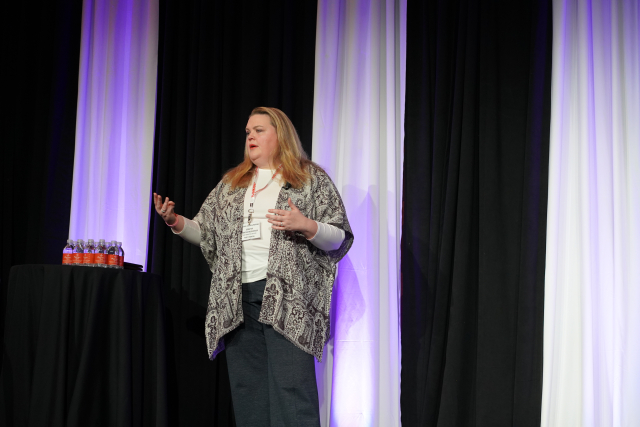
Jennifer McGuinness, CEO, Pivot Financial
Early discussions centered on how the mortgage and banking industries continue to frame power and progress — or whether those narratives still reflect reality. One of the first ideas challenged from the stage was the industry’s long-standing habit of framing itself as permanently male dominated.
“A lot of people in this industry go, well, this is a male dominated industry. Not anymore,” said Jennifer McGuinness, CEO of Pivot Financial. “Women are a significant component of this industry, and this is not an us versus them kind of thing.”
McGuinness urged attendees to reconsider the language used to describe power and progress.
Get the NMP Daily
Essential stories, every weekday.
“We need to stop saying ‘male dominated,’ or ‘them,’ or, well, you know, ‘they’ — no, it’s us,” she said. “And the more that we can absorb that, the better we’re going to do.”
Her remarks aligned with sessions focused on workplace relationships and leadership challenges, where speakers emphasized confidence, boundaries and shared accountability. McGuinness grounded those themes in personal experience.
“As a matter of fact, I was told if I didn’t become a professional level golfer as a woman, I would never get anywhere,” she said. “I made it my business to never play golf.”
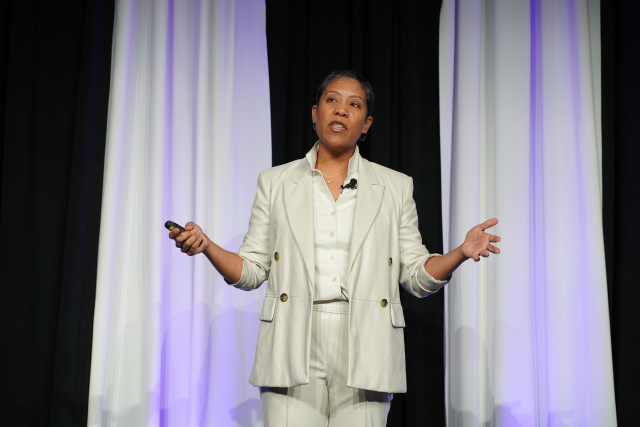
Victoria Arlen: On-Air Personality, Motivational Speaker, Author, Victoria's Victory Foundation Founder, ESPN
That theme surfaced again during the keynote session, “Face It. Embrace It. Conquer It,” led by guest speaker Victoria Arlen. Arlen, an ESPN on-air personality and author, described spending nearly four years fully conscious but unable to speak, eat, walk or move after developing two rare neurological conditions at age 11. Doctors at the time believed recovery was unlikely. As she recounted relearning basic functions and rebuilding her life, her experience reflected a theme that surfaced repeatedly throughout the conference: the ways women in financial services can find themselves limited not by capability, but by assumptions about role, access and trajectory.
“As a tech leader in the mortgage industry, we don’t see as many women in tech,” said Tammy Richards, chief strategy officer at NEXA Lending. “We need to be encouraging our young women as they’re growing up to be taking tech classes. And that’s gonna be the future.”
Richards traced her own entry into mortgage technology back decades.
“My first interaction with mortgage tech was in the eighties and I was selected with a couple of other people to work on the more track system,” she said. “The couple of other people decided not to work on it. They didn’t understand tech and they were mortgage bankers, but I really loved it.”
That emphasis on curiosity and execution extended to discussions around artificial intelligence, which were framed as operational, not theoretical.
“I’m so excited about the AI tech conversation that we’re gonna have,” Richards said. “I plan to give a lot of takeaways that can be used right when people get back to the office to start implementing AI into their companies.”
Throughout the morning, the conference returned to a consistent theme: leadership is strengthened through peer support.
“I love the conversation that we had today, especially on ou
Tammy Richards, Chief Strategy Officer, NEXA Lending (left), and Maura Malo, President & CEO, Northwest Community Bank (middle), chat on stage with LaDonna Lockard, CEO of MaxClass (right).
r panel where we were talking about helping mentor each other and being each other’s support systems and finding our tribe,” Richards said. “Women in this industry need to support each other.”
Nicole Elam, President and CEO, National Bankers Association
The speaker lineup reflected the breadth of leadership in attendance, featuring Maura Malo, president and CEO of Northwest Community Bank, the first woman to lead the bank since its founding in 1860 — the year before the outbreak of the Civil War.
Additionally, Nicole A. Elam, president and CEO of the National Bankers Association. Elam spoke about the role minority depository institutions play in expanding access to capital and shaping inclusive economic growth, drawing on her background in banking policy and federal advocacy. Michelle Dwyer, president and CEO of Franklin First Federal Credit Union, discussed how to embrace "reluctant leadership" as an introvert and a woman in power.
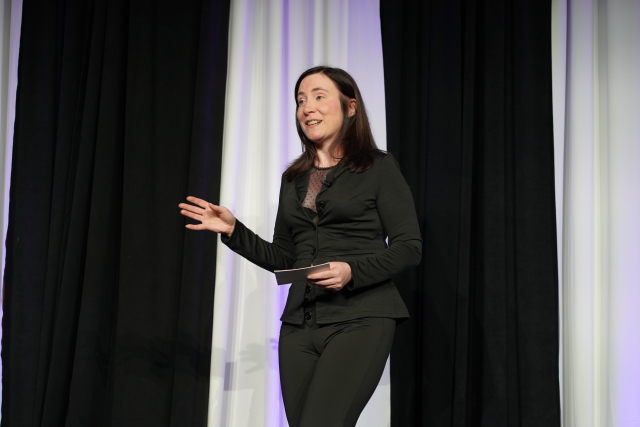
Michelle Dwyer, President/CEO, Franklin First Federal Credit Union
By the time the conference adjourned early afternoon, the distinction between panelists and audience felt intentionally thin — reinforcing a central takeaway of the day: women leaders across banking, mortgage and credit unions are no longer waiting to be included in the conversation. They are shaping it.
The dispute over publicly marketed homes comes amid a Compass–Rocket alliance linking home search, buyer inquiries, and financing offers
Six multiple listing services have sued Compass over its demands that they stop penalizing agents who publicly market homes without sharing the listings through the MLS, escalating a dispute over who gets access to for-sale inventory and when.The lawsuit, filed Oct. 21 in th...
Veterans United’s survey finds less willingness to hold out for lower rates, but little change in purchase timelines
Prospective homebuyers are growing more pessimistic about interest rates, and less inclined to wait for relief.In Veterans United Home Loans’ latest survey, 57% expect interest rates to rise over the next year, up from 45% a year earlier. Yet the share who would consider wai...
HUD’s proposed rollback of housing protections could deepen barriers for underserved borrowers, shrink the pool of prospective homebuyers, and ultimately cost loan originators business