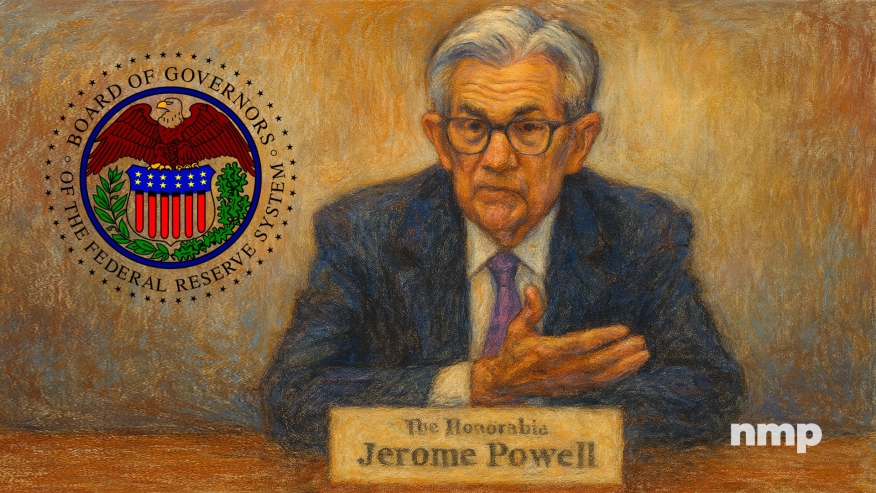
In his testimony before the U.S. House of Representatives and Senate this week, Federal Reserve Chairman Jerome Powell at times found himself on the defensive regarding the Fed’s immobility in making any rate cuts to the federal funds rates the first half of this year.
Those rates currently stand at 4.25% to 4.50%, and President Trump has called for them to be drastically lower — in the neighborhood of 2% or even less.
“We realize that people are feeling high housing costs and high financing costs,” Powell said, addressing the pervasive U.S. housing affordability problem. He noted owners’ equivalent rent — an economic indicator that measures shelter costs for homeowners — and rental inflation have been some of “the stickiest parts of inflation,” but have recently been seeing declines.
“In the long run, the best thing we can do is restore price stability and let the market work,” Powell asserted. “Even then, though, we’re still going to have a housing shortage.”
“The reason [the Fed has not cut rates is] all professional forecasters that I know of, on the outside and [within] the Fed, do expect a meaningful increase in inflation over the course of this year.” —Jerome Powell, Chairman, Federal Reserve Board
“So what is it that’s keeping, in your mind, the Fed from what many of us believe is the right thing to do, which is to lower some interest rates?” Rep. Bill Huizenga (R-MI) asked Powell, offering potential reasons such as high employment, tariff concerns, and/or costs of energy, groceries, and durable goods.
“You’re right that if you just look in the rearview mirror, and you just look at the existing data that we’ve seen, you can make a good argument that would call for us to be at a neutral level [for interest rates] — which would be a couple of cuts or maybe more,” Powell admitted.
“The reason we’re not [making cuts] is the forecast,” he continued. “All professional forecasters that I know of, on the outside and [within] the Fed, do expect a meaningful increase in inflation over the course of this year.”
One such forecaster is Apollo Global Management’s Chief Economist Torsten Sløk, who predicts U.S. GDP growth could slow to 1.2% during the second half of this year, with inflation hovering around 3%, well above the Fed’s 2% target.
Goldman Sachs economists have also adjusted their inflation forecasts upward, pointing to potential price increases due to tariffs and a possible rise in core PCE inflation — which measures price changes for goods and services purchased by consumers — to 3%. Analysts from Morgan Stanley similarly have upped their inflation forecast for 2025, citing President Trump's tariffs as a key factor.
In his testimony, Powell touched on inflation that could come from tariffs, which was earlier this year expected to be potentially very high, but has proven so far to be much less significant.
“When I said we weren’t going to talk about tariffs and inflation [in January], that was to say, ‘until we see what the policies are,’” Powell explained. “And so now we know a lot more, in the six months since I said that.”
Shifting Fed Board Stances, Friction From Administration
Powell’s testimony came amid considerable criticism of the Fed’s policies, and even repeated calls for his resignation from within the Trump Administration.
Following Powell’s House appearance Tuesday, “in anticipation of his Senate testimony tomorrow, I am calling for the resignation of Federal Reserve Chairman Jerome Powell,” Federal Housing Finance Agency (FHFA) Director Pulte posted on X.
Pulte later sharpened that call: “Jerome Powell must resign.”
Meanwhile, the FHFA Director posted simply a “thank you” emoji in response to Fed board member Michelle Bowman signaling in a speech on Monday she would be open to the Fed cutting rates as soon as next month.
“If inflation remains near its current level or continues to move closer to our target, or if the data show signs of weakening in labor market conditions, it would be appropriate to consider lowering the policy rate, moving it closer to a neutral setting,” Bowman said, speaking in Prague, Czech Republic.
Fed board member Christopher Waller has also recently expressed openness to rate cuts. “When inflation comes down to target, we can actually bring rates down,” Waller said late last week.
Vice President JD Vance, meanwhile, intimated that Powell and the Fed’s obstinance on rate cuts this year are political. “I’d love to hear an argument for why Powell cut rates 50 points right before an election but can’t do it now with inflation lower,” Vance posted on X Tuesday evening, and FHFA Director Pulte reposted.
President Trump himself has been increasingly, and more sharply, critical of Powell in recent months, referring to him as “Too Late” Powell for lagging behind the European Central Bank in trimming rates — which the ECB has done multiple times this year.
As recently as June 5, by comparison, the ECB cut key rates by another 25 bps, which lowered all of its interest rates to about two full points or more lower than the Federal Reserve’s rates.
While many of President Trump’s posts this week have had to do with Iran, he also called attention to Powell’s appearance in Congress.
“Europe has had 10 cuts, we have had ZERO. No inflation, great economy — We should be at least two to three points lower. Would save the USA 800 Billion Dollars Per Year, plus,” the President posted early Tuesday morning on Truth Social.
“What a difference this would make,” he continued. “If things later change to the negative, increase the Rate ... We will be paying for [Powell’s] incompetence for many years to come. THE BOARD SHOULD ACTIVATE.”
Though he has said recently he will not fire Powell, President Trump at the same time reportedly is developing a list of potential successors to the current Fed Chairman.
According to Yahoo Finance, following Powell’s two-day congressional testimony, the President told reporters he has narrowed that list down to five names. They include:
- U.S. Treasury Secretary Scott Bessent;
- Current Fed Governor Christopher Waller;
- Former Fed Governor Kevin Warsh;
- National Economic Council Director Kevin Hassett; and
- Former World Bank President David Malpass.