While the average homebuyer continues to struggle with economic uncertainty and affordability concerns, more and more investors are swooping into select markets and closing deals at a rapid clip, according to Realtor.com's Investor Report Mid-Year Update.
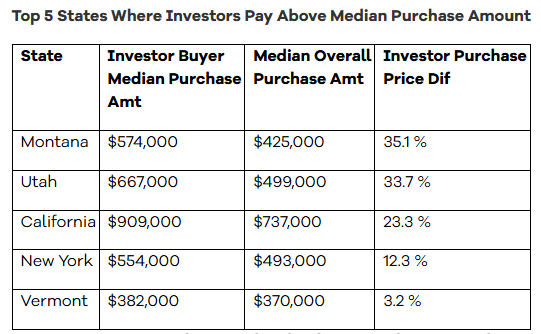
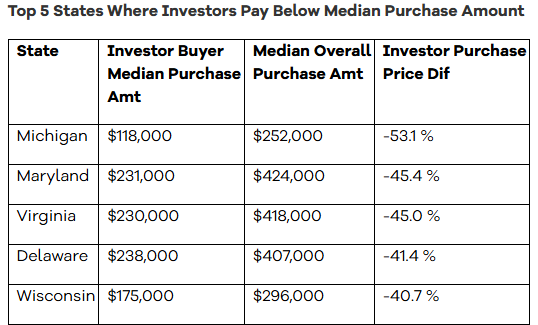
The report found that investors are both paying a premium to buy homes in high-cost areas and are capitalizing on affordability in lower-priced regions in Western and coastal states, such as Montana, Utah, and California. In those metros where housing affordability is most stretched, median investor purchase prices reach up to 35% above the typical local sales price. At the same time, investors in more affordable states like Michigan, Maryland, and Virginia are targeting lower-priced homes, some in excess of 50% below typical sales prices.
"Even as investors pull back from pandemic-era activity, they're facing fewer headwinds than many typical buyers," said Danielle Hale, chief economist at Realtor.com. "With affordability still stretched and inventory tight, many would-be buyers remain sidelined, giving investors a larger share of the market and, in some areas, more influence over prices. As a result, investor activity can amplify price pressures, especially in markets where their purchases concentrate in already competitive price ranges."
An examination of overall home sales found a decline of 4.2% in Q2 of 2025, compared to the same period just one year ago. However, investor purchases fell just 2.7%, giving investors a greater presence in a smaller market. Investors continued to purchase more homes than they sold and their overall market share slightly increased to 10.8% of all homebuyers during Q2, up from 10.7%, helping drive prices upward in markets where competition for homes remains intense.
Investors Amp Up Competition in Western and Coastal Regions
In several Western and coastal states, investors paid far more than typical buyers. In Montana, for example, the median investor purchase price was 35.1% higher than the state's median sale price, followed by:
- Utah at +33.7%
- California at +23.3%
- New York at +12.3%
- Vermont at +3.2%
Price premiums in these regions often reflect high-end or short-term rental strategies in luxury and lifestyle markets, or competition for limited housing stock in high-demand areas, such as California and New York.
Among major metros, investors paid the largest premiums in:
- Los Angeles at +19.8%
- San Diego at +9.2%
- New York City at +8.7%
- San Francisco at +6.8%
- Nashville at +3.4%
Some Markets Offering Steep Discounts
Home investors in more affordable states aimed for lower-priced properties, with the largest gap between investor and overall purchase prices reported in:
- Michigan at -53.1%
- Maryland at -45.4%
- Virginia at -45.0%
- Delaware at -41.4%
- Wisconsin at -40.7%
These discounts show that investors are targeting lower-priced homes and entry-level stock, which often provide the best rent-to-price ratios and long-term income potential.
At the metro level, investors found the steepest discounts in the following locations:
- Detroit at -58.0%
- Pittsburgh at -52.7%
- Baltimore at -52.0%
- Cleveland at -51.4%
- Milwaukee at -50.1%
It was in these markets that Realtor.com found a combination of affordable housing with stable rental demand and opportunities for renovation.
Affordable Markets Attracting Investors
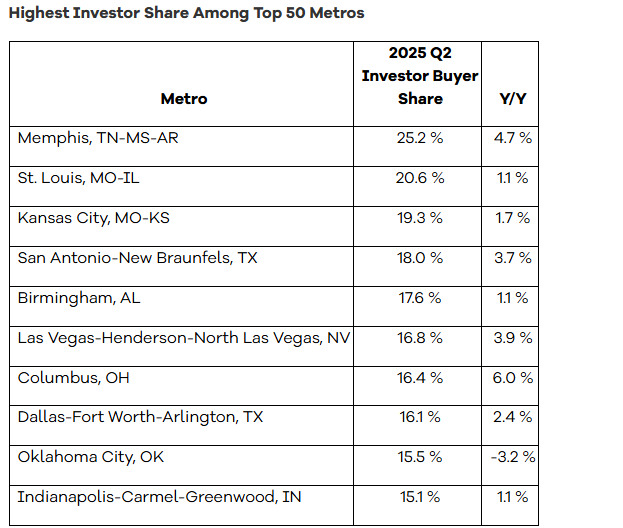
Overall, investor participation remained concentrated in affordable, high-demand regions, led by Missouri at 18.9%, Mississippi at 17.1%, and Nevada at 15.4%. Those three states recorded the highest investor buyer share of home purchases, followed by Indiana at 14.3% and Alabama with 14.2%. Among the 50 largest U.S. metros, Memphis, Tennessee at 25.2%; St. Louis, Missouri at 20.6%; and Kansas City, Missouri at 19.3% led the nation in investor buyer share.
Investors Bought 41,000 More Homes Than Sold
In Q2, investors accounted for 10.8% of all home purchases, up slightly from 10.7% year-over-year, and just below the 2022 peak of 12.1%. In the first half of 2025, investors bought roughly 41,000 more homes than they sold, a wider gap than the same period last year, as selling activity slowed. Put simply, this wider gap means that investor competition with buyers has intensified.
The trend marks a shift from 2024, when a pickup in investor selling had briefly eased competition for buyers. In 2025, fewer investor listings mean less inventory on the market, even as overall buyer demand remains subdued.
"We're seeing a clear split in investor strategy," said Hannah Jones, senior economic research analyst for Realtor.com. "Some investors are doubling down on affordability and rental yield, while others are willing to pay a premium for markets with persistent housing shortages and strong rental demand. Both approaches reflect confidence that housing demand, and rent potential, will remain strong over time."