Fast Food To Fast Finance – NMP Skip to main content
Cover Story

Fast Food To Fast Finance

How Jeff Tesch swapped lunch for loans, foot-longs for finance, and sandwiches for success

Pretend it’s the late 1980s and you’re a young Jeff Tesch, future CEO of RCN Capital. You’re cruising around the Southern Connecticut State University (SCSU) campus, maybe on a skateboard, maybe with a feathered mullet, and you’re looking for opportunity. Majoring in business management, you’ve got a decent idea what your future’s going to look like, but you’re a born and bred Connecticut resident, and let’s face it: Connecticut’s small. Connecticut’s boring. 

“A new franchise restaurant opened up near campus. I’d eat there a lot,” the real Tesch recalled. “That restaurant was a Subway sandwich shop.”

So it’s the early 1980s and everyone in New Haven, Connecticut is slipping off campus to eat fresh at Subway. The soundtrack, Duran Duran, the hair big and stiff, the leg warmers, warm. In a fast food landscape of McDonalds and Burger King and Taco Bell, Subway stands out as an alternative to greasy ground beef. The dining hall’s open, sure, but few people are choosing that when italian herbs and cheese bread exists just down the street. You, being an enterprising business student, take notice. 

“Every single time I went in that place the lines were never-ending,” Tesch said.

Even though you’re young, inexperienced, maybe a little lacking in the “people skills” department, you figure that, with a good head on your shoulders, you’ll figure it out. During your senior year you check out Subway’s Ownership Path program, determined to “find out about this whole franchise thing.”

Subway, like Tesch, was born in Connecticut, and despite humble beginnings, was on a trajectory toward huge success. At just 22 years old, Tesch opened his first franchise location in Waterbury, Conn., but quickly discovered that becoming a business leader was not the smooth ride he’d hoped. Scrubbing toilet bowls, restocking salami, and guiding staff who might be ten years his senior were likely not on his successful businessman Bingo card. And yet, it set a foundation for his future in the mortgage industry. 

“I had the ability to start RCN Capital and hit the ground running because I developed those people skills at Subway,” Tesch said. “And you would think, what in the world does putting pickles on a sandwich have to do with making loans?”

Turns out, nearly everything. 

No Task Too ‘Nitty-Gritty’

Although Tesch says he had “way more entrepreneurial spirit than most people,” as a recent college graduate he also had student loans to repay and little to no credit history. To secure financing, he turned to his father, who co-signed the loan for his first Subway in Waterbury.

“The fact that my father said yes so quickly — it was like a done deal,” Tesch said. “But nothing about my journey was easy after that.”

“They didn’t prepare you for the nitty-gritty,” he continued, “like mopping floors, cleaning bathrooms, or managing a team.”

Before opening his first store, Tesch attended informational meetings for Subway’s franchise ownership program, where he learned the basics of day-to-day restaurant operations. However, they neglected to mention the less attractive duties owners might face.

“I quickly learned that if you weren’t willing to do every job yourself, alongside your employees, you couldn’t build loyalty or respect,” he said.

Owners aren’t exempt from scrubbing toilets if there isn’t a dedicated employee who’s willing and able to do the work. Oftentimes, if someone quit or couldn’t make their shift, Tesch had to fill in.

“It wasn’t something I expected, but learning how to treat everyone with respect — no matter what their specific task was — was something I figured out really quickly,” he said.

“You have to be firm when needed, but also give grace and focus on creating teachable moments.”

> Jeff Tesch

> Above: RCN Capital LOs train during the annual meeting week at their Connecticut headquarters.

Managing teams requires knowing how to respect employees and when to be firm. Instead of reprimanding employees, Tesch would create “teachable moments,” an important skill he later carried into his mortgage business. “At Subway, I had to teach people why the small details mattered,” he explained.

“You’re constantly sharing how you’re looking at things and trying to get everybody else to do the same,” Tesch said. “The small, everyday tasks — done well — are what build great companies,” he added, sometimes reminding others: “Dude, it’s supposed to be 10 olives. If you put 20 olives on there, that’s going to hurt food cost.”

At RCN, the lessons are similar. “If you spend too much time on a loan that’s not going anywhere, you’re affecting the entire team’s workflow,” he said. “It’s about instilling that awareness in every interaction.”

Running a service-driven business taught Tesch how to be both respectful and assertive. As someone who focuses heavily on the bottom line, he knew those skills would pay off, eventually opening two more Subway shops in Cheshire, Conn.

“When you run a small business,” Tesch said, referring to both RCN Capital and his Subway shops, “whatever comes into the cash register goes into the bank. If there’s any left, it’s yours. And if there’s none left, well, you don’t get paid. That’s when you start thinking about how you’re going to treat your employees and how you’re going to run your shop.”

Transitions And Big Thinking

The skills Tesch developed during his 20 years as a Subway franchise owner carried over seamlessly into his leadership at RCN Capital.

“That transferred over to RCN big time,” Tesch explained. “When we’re talking about salespeople interacting with customers, broker correspondents, or lender partners, those partners will remember how you treated them. There’s a fine line between being too busy to give them the time of day and respectfully asking, ‘What else can I do for you?’ before moving on.”

Creating memorable interactions is what Tesch considers a cornerstone of RCN’s culture, where account executives are taught to approach every client interaction as if they are “on stage every day.”

> Above: RCN Capital LOs train during the annual meeting week at their Connecticut headquarters.

Managing teams requires knowing how to respect employees and when to be firm. Instead of reprimanding employees, Tesch would create “teachable moments,” an important skill he later carried into his mortgage business. “At Subway, I had to teach people why the small details mattered,” he explained.

“You’re constantly sharing how you’re looking at things and trying to get everybody else to do the same,” Tesch said. “The small, everyday tasks — done well — are what build great companies,” he added, sometimes reminding others: “Dude, it’s supposed to be 10 olives. If you put 20 olives on there, that’s going to hurt food cost.”

At RCN, the lessons are similar. “If you spend too much time on a loan that’s not going anywhere, you’re affecting the entire team’s workflow,” he said. “It’s about instilling that awareness in every interaction.”

Running a service-driven business taught Tesch how to be both respectful and assertive. As someone who focuses heavily on the bottom line, he knew those skills would pay off, eventually opening two more Subway shops in Cheshire, Conn.

“When you run a small business,” Tesch said, referring to both RCN Capital and his Subway shops, “whatever comes into the cash register goes into the bank. If there’s any left, it’s yours. And if there’s none left, well, you don’t get paid. That’s when you start thinking about how you’re going to treat your employees and how you’re going to run your shop.”

Transitions And Big Thinking

The skills Tesch developed during his 20 years as a Subway franchise owner carried over seamlessly into his leadership at RCN Capital.

“That transferred over to RCN big time,” Tesch explained. “When we’re talking about salespeople interacting with customers, broker correspondents, or lender partners, those partners will remember how you treated them. There’s a fine line between being too busy to give them the time of day and respectfully asking, ‘What else can I do for you?’ before moving on.”

Creating memorable interactions is what Tesch considers a cornerstone of RCN’s culture, where account executives are taught to approach every client interaction as if they are “on stage every day.”

“You have to be firm when needed, but also give grace and focus on creating teachable moments.”

> Jeff Tesch

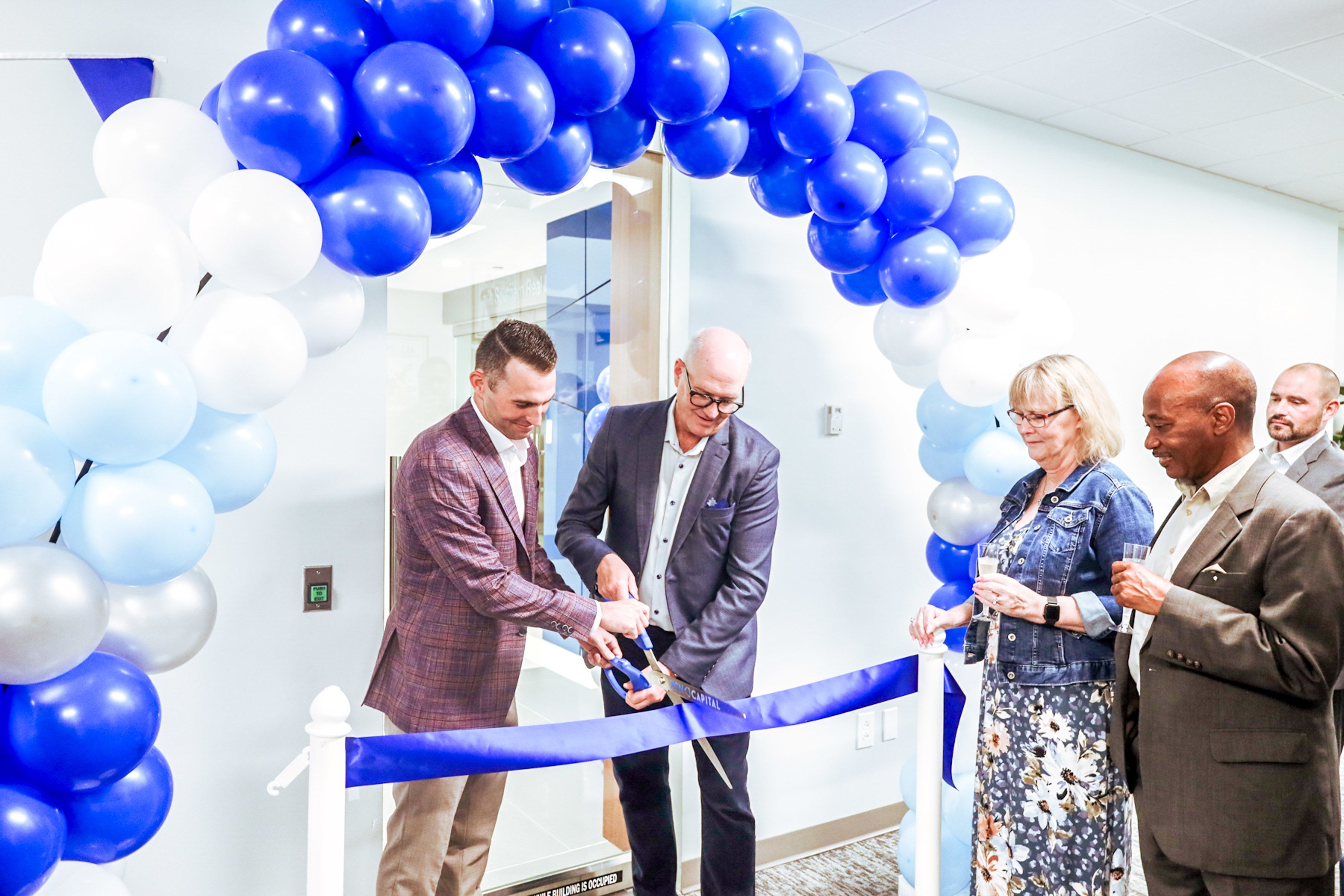
> Above: Tesch cuts the ribbon with CFO Justin Parker to celebrate the re-opening of the Charlotte office.

Tesch’s journey to the private lending industry was a natural evolution of his entrepreneurial spirit and long-standing interest in real estate. “I always had the real estate bug, even back in college,” he said. Using profits from his Subway franchises, Tesch began investing in properties, laying the groundwork for his transition to RCN Capital. 

That shift came in 2009, during the foreclosure crisis, when a friend and business associate, Don Vaccaro, the founder and CEO of TicketNetwork, approached Tesch with a compelling idea.

“My friend, who owned a software company, called me and said, ‘Jeff, there’s an opportunity here,’” Tesch recalled. At the time, banks were offloading dilapidated foreclosure properties, leaving families unable to live in them. Investors were buying and rehabbing these homes, but there was a significant shortage of capital in the marketplace. “He thought we could build a platform to deploy capital to these investors in a more sophisticated way than what existed.”

Historically, private lending had been an informal process — connections made through attorneys or personal networks. Tesch and his partner envisioned a scalable, repeatable system where capital could be deployed more efficiently and sustainably. “The idea was to stop using our own money — well, mostly his money — and eventually bring in outside investors to fund the loans,” Tesch explained. They aimed to model the system after traditional banks, which often sell loans to entities like Fannie Mae and Freddie Mac. While the vision evolved as the real estate market recovered, the foundation of their business remained: providing a reliable, scalable solution for funding real estate investors.

“I quickly learned that if you weren’t willing to do every job yourself, alongside your employees, you couldn’t build loyalty or respect.”

> Above: Tesch cuts the ribbon with CFO Justin Parker to celebrate the re-opening of the Charlotte office.

Tesch’s journey to the private lending industry was a natural evolution of his entrepreneurial spirit and long-standing interest in real estate. “I always had the real estate bug, even back in college,” he said. Using profits from his Subway franchises, Tesch began investing in properties, laying the groundwork for his transition to RCN Capital. 

That shift came in 2009, during the foreclosure crisis, when a friend and business associate, Don Vaccaro, the founder and CEO of TicketNetwork, approached Tesch with a compelling idea.

“My friend, who owned a software company, called me and said, ‘Jeff, there’s an opportunity here,’” Tesch recalled. At the time, banks were offloading dilapidated foreclosure properties, leaving families unable to live in them. Investors were buying and rehabbing these homes, but there was a significant shortage of capital in the marketplace. “He thought we could build a platform to deploy capital to these investors in a more sophisticated way than what existed.”

Historically, private lending had been an informal process — connections made through attorneys or personal networks. Tesch and his partner envisioned a scalable, repeatable system where capital could be deployed more efficiently and sustainably. “The idea was to stop using our own money — well, mostly his money — and eventually bring in outside investors to fund the loans,” Tesch explained. They aimed to model the system after traditional banks, which often sell loans to entities like Fannie Mae and Freddie Mac. While the vision evolved as the real estate market recovered, the foundation of their business remained: providing a reliable, scalable solution for funding real estate investors.

“I quickly learned that if you weren’t willing to do every job yourself, alongside your employees, you couldn’t build loyalty or respect.”

RCN Capital officially launched in 2010, and by 2011, Tesch had fully transitioned out of Subway to focus on his new venture. For 20 years, his three Subway shops in Waterbury and Cheshire had supported Tesch while he and his wife raised their three children. But he knew that it was time to pivot, and so, over a six-month span, he hired new managers and sold all three, ending the Subway chapter of his story.

“It’s not that I didn’t enjoy running Subway, it was just time for something different,” Tesch said. At the age of 43, he was eager to apply the lessons from his franchise experience to a new industry.

Even though he didn’t know it when he was encouraging his employees and occasionally doing some after-hours clean-up, those two decades at Subway were precisely the education he needed for the next chapter of his life. “Those lessons translated directly to RCN. You have to be firm when needed, but also give grace and focus on creating teachable moments. That mindset — shared and repeated — builds loyalty and trust, whether you’re making sandwiches or managing loans.”

Empowering Brokers

Tesch’s ability to identify and leverage key opportunities has been a hallmark of his entrepreneurial journey. One of his early breakthroughs at RCN Capital came when he realized the potential of working with brokers to scale the company’s reach.

Tesch’s first exposure to brokers came earlier, through a casual introduction from a friend during his Subway days. “A buddy of mine, knowing I was investing in real estate, said, ‘Hey, if you don’t have a good bank relationship, you should talk to this guy,’” Tesch explained. Although that initial interaction didn’t lead to a deal, it showed him how brokers operate: they fill out an application, shop it around, and match it to a financing source.

“I started figuring out how the whole broker relationship worked,” Tesch recalled. “It was an aha moment. I thought, ‘Wait a minute. If I can create programs that brokers understand and can sell, I don’t need to hire people all over the country.’”

He takes inspiration from the Subway franchise model, where he bought into an established system in exchange for brand recognition and resources. Similarly, mortgage brokers can partner with lenders that have established brands and credit lines. In return, the lender can expand its footprint without opening offices nationwide.

Another area where Tesch owes a debt to Subway? Education. As Subway’s Ownership Program helps young professionals begin an entrepreneurial path, RCN Capital uses a proprietary training system to make private lending more accessible to brokers across the country.

“We were already thinking big,” Tesch said. “The idea that brokers could sell our products everywhere if we invested in them — it was amazing.”

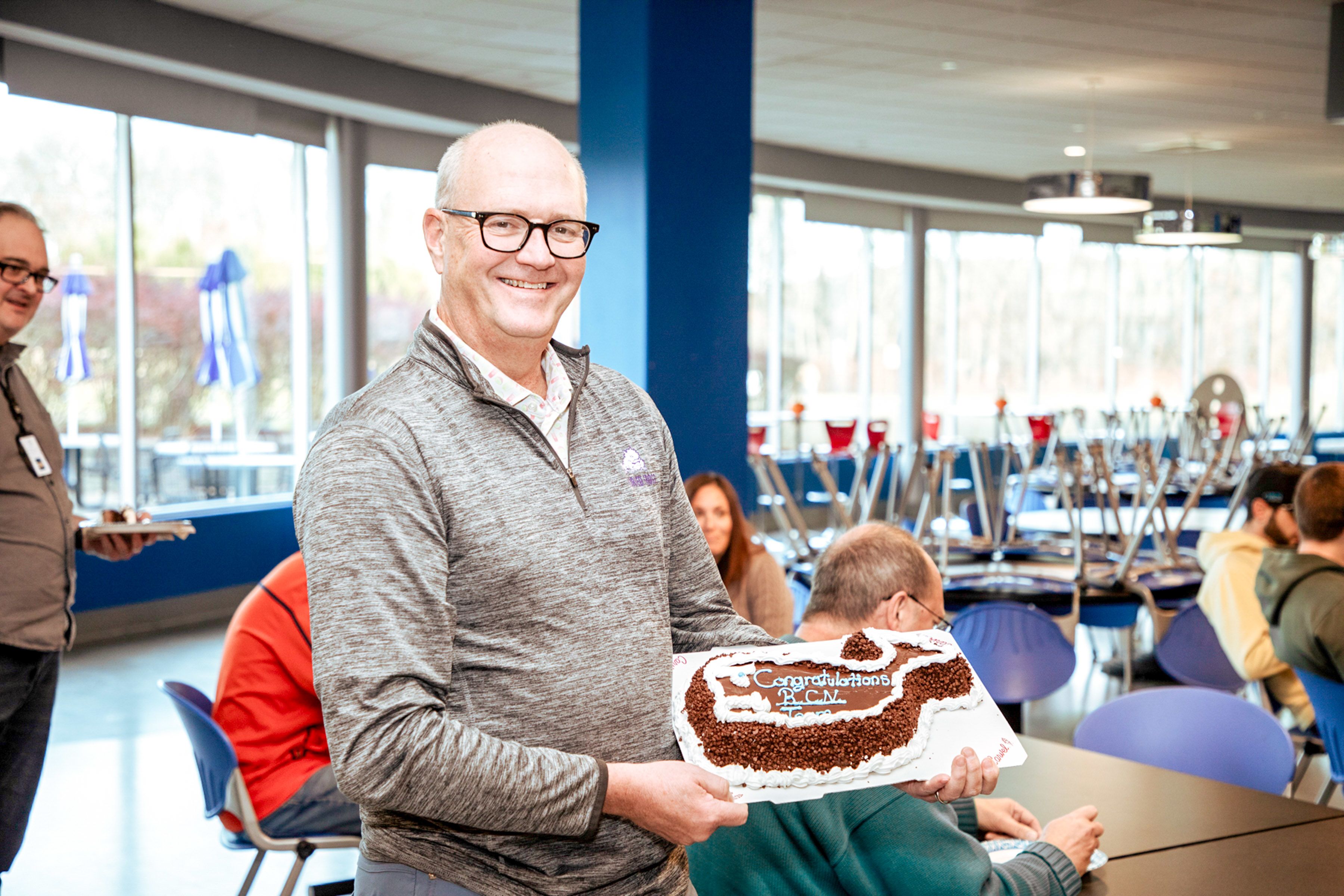
> Above: Tesch holds a 'Fudgie The Whale' cake, a tradition for RCN's major milestones, to celebrate a record-breaking October in 2024.

When Tesch launched RCN Capital, brokers became a critical part of the company’s strategy. His approach to private lending offered brokers something refreshingly different from traditional loans.

“It was a breath of fresh air for brokers,” Tesch said. “Especially back in the day when they were dealing with so many new rules and regulations after the financial crisis. They didn’t need to put loans into desktop underwriting or deal with the red tape of traditional financing.”

RCN Capital’s niche in business-purpose loans — primarily for single-family investment properties — requires a different expertise. Brokers often understand the properties but need guidance on RCN’s lending process.

“A lot of the training focused on helping brokers understand debt service coverage ratios (DSCR loans),” Tesch explained. “We don’t care about a borrower’s W-2s or what they make. What matters to us is the property — its value, rental potential, and whether the income it generates can cover the debt, plus insurance and taxes.”

To ensure brokers are equipped, Tesch prioritizes building sophisticated training programs. These clarify RCN’s lending model and help brokers match clients with the right loan products. “Investing in brokers was key,” he emphasized. “They’ve become a vital part of our ability to scale, and their success is directly tied to ours.”

Unlocking Potential In Underserved Markets

The opportunity to expand RCN’s footprint and introduce more brokers to private lending arrived toward the end of the COVID-19 pandemic. In the Midwest and Southeastern U.S., states where property values are lower — like Missouri, Indiana, Kansas, Ohio, and Western Pennsylvania — became hotspots for real estate investment. Tesch noted that up to 30% of monthly housing transactions in those regions involved investors focusing on fix-and-flip projects or rental properties.

He also realized that the concept of business-purpose lending can be daunting for some brokers accustomed to traditional residential lending. “There’s a real lack of education,” Tesch said, describing many brokers in those regions as “a deer in headlights.”

“It was an aha moment. I thought, ‘Wait a minute. If I can create programs that brokers understand and can sell, I don’t need to hire people all over the country.’”

> Jeff Tesch

In a way, Tesch saw himself in those brokers — people with entrepreneurial spirit but little experience in private mortgage lending. So, RCN Capital stepped in by offering broker education and training programs tailored to those markets.

Once brokers understand that DSCR loans focus on underwriting the property rather than the borrower’s W-2 or credit history, Tesch said the “light bulbs” start going off.

“We don’t think about it as much when living on the coasts, but these markets are incredibly strong,” he said. “Brokers in these areas are now seeing the value in understanding business-purpose lending.”

RCN’s training programs are designed to eliminate confusion. Through tools like the Amplify training platform, brokers can access self-directed modules that teach them how to “talk the talk” of private lending. By learning to serve real estate investors, Tesch believes brokers can tap into a lucrative market that may have been out of reach. “If 25-30% of transactions in your market involve investors and you can’t serve them, you’re missing out,” he emphasized.

Tesch also highlights the role of local brokers in driving success. “Who knows the community better than the local mortgage broker? They’ve lived there, know the community, and are best positioned to connect investors with the right financing solutions.”

Stability In Business

Although broker owners often value freedom, in an industry shifting between feast and famine, many also seek stability. “We’ve always worried about making money,” Tesch said of RCN Capital. While that seems obvious, he points out, “That’s not exactly true for companies that scale fast and plan to exit. They have lower rates and higher margins… but when trouble comes, there’s no safety.”

Tesch prioritizes stability as a key strategy for long-term success. His approach is rooted in avoiding overextension — especially in unpredictable market conditions.

“There’s a lot of business schools that would argue, ‘Well, Jeff, you’re never going to attain the true value of your brand if you don’t put yourself in a situation to maximize every sale.’ Well, I don’t know,” Tesch said. “But my guess is the employees probably feel better knowing we have certainty in what we’re doing.”

He emphasizes not getting “ahead of our skis” — refraining from excessive hiring and expansion unless it’s truly necessary. This conservative growth strategy helped RCN overcome disruptions like COVID-19 and the interest rate shock without major setbacks.

“My mindset — some of it is drilled into my head from Subway — is I can’t ever let my expenses get ahead of my revenue,” Tesch said. “If the money is not in the cash register, how in the world am I going to pay these employees?”

In a broader sense, Tesch’s focus on stability provides employees with careers rather than just jobs. That, too, emerged from his early years at Subway, when he invested in developing his people skills; now, supporting and valuing his team has become his core strength and purpose as a leader.

“I’m more concerned that the people in RCN know they don’t just have a job—they have a career,” he continued. “That’s way more important to me than being the fastest grower out there.”

This article originally appeared in National Mortgage Professional, on the week of March 9, 2025.
About the author
Associate Editor
Katie Jensen is a mortgage news reporter at NMP.
Published on
Mar 07, 2025
More from NMP Magazine
NMP
Underwriters Don’t Slow Down Loans. They Eliminate Uncertainty.

ndustry’s biggest bottleneck is not underwriting itself — it is the uncertainty that reaches underwriting too late in the process. When validation happens upstream, speed follows naturally.

Gerald M. Green
NMP
The Hidden Cost Of Talent

Retail veterans explain the calculation, the clawbacks, and the fine print

Katie Jensen
NMP
Not Your Conforming Comfort Zone

Non-Agency originations could reach $500 billion this year. Are you ready to tap in?

Tom Davis
NMP
The Liquidity Squeeze In FHA Servicing

The long tail of loss mitigation is now coming into view as FHA’s post-pandemic relief tools give way to repeat defaults, exhausted options, and a swelling foreclosure pipeline

Katie Jensen
NMP
The NEXA Disruption

A bold rebrand tests the broker–retail divide

Katie Jensen
NMP
The More AI, The More LO

AI makes human loan officers more essential, not less

John Cady
Connect with your local mortgage community.

Meet your your colleagues, both national and local, by attending an event in your area.