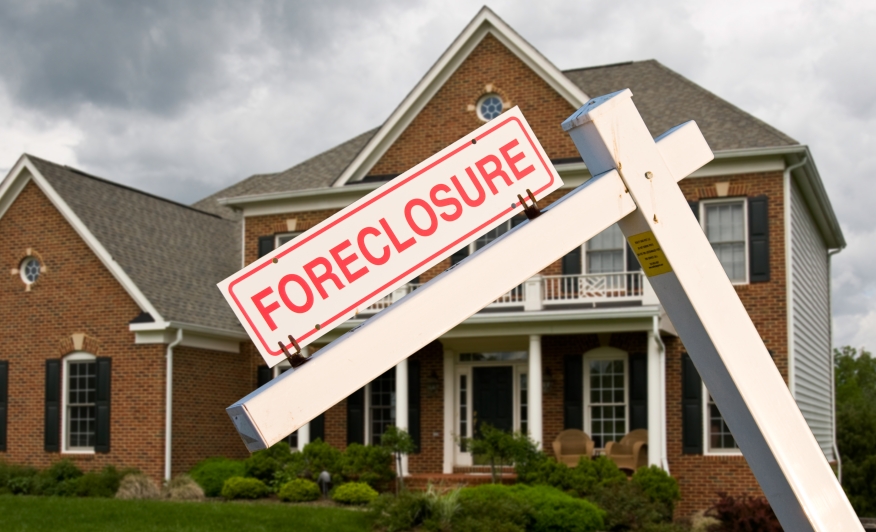
ATTOM’s January 2022 U.S. Foreclosure Market Report shows foreclosure filings were up 29% from a month ago and 139% from a year ago, with a total of 23,204 U.S. properties with foreclosure filings.
"The increased level of foreclosure activity in January wasn't a surprise," said Rick Sharga, executive vice president of RealtyTrac, an ATTOM company. "Foreclosures typically slow down during the holidays in November and December and pick back up after the first of the year. This year, the increases were probably a little more dramatic than usual since foreclosure restrictions placed on mortgage servicers by the CFPB expired at the end of December."
Foreclosure completion numbers are on the rise, as lenders repossessed 4,784 U.S. properties through completed foreclosures (REOs) in January 2022, up 57% from last month and up 235% from last year, marking the seventh consecutive month with an annual increase in completed foreclosures.
States with at least 100 or more REOs that saw the greatest monthly increase were Michigan (up 622%); Georgia (up 163%); Texas (up 98%); Tennessee (up 50%); and Alabama (up 44%). Meanwhile, major metropolitan areas with a population of at least 200,000 that saw the greatest number of REOs includes: Detroit, MI (1,013 REOs); Chicago, IL (210 REOs); New York, NY (129 REOs); Miami, FL (113 REOs); and Philadelphia, PA (107 REOs).
"It's very important to keep these numbers in context," Sharga noted. "Foreclosure completions are still far below normal levels – less than half as many as in January of 2020 before the pandemic was declared, and about 60% lower than the number of foreclosure completions in 2019. We're likely to continue seeing large year-over-year percentage increases for the rest of this year, but it's also likely that foreclosure activity will remain below historically normal levels until the end of 2022."
States with the highest foreclosure rates were New Jersey (one in every 2,336 housing units with a foreclosure filing); Illinois (one in every 2,740 housing units); Nevada (one in every 3,119 housing units); Michigan (one in every 3,127 housing units); and Ohio (one in every 3,251 housing units).
In major metropolitan areas with populations of at least 200,000 that saw the highest foreclosure rates were: Detroit, MI (one in every 1,547 housing units with a foreclosure filing); Atlantic City, NJ (one in every 1,564 housing units); Cleveland, OH (one in every 1,659 housing units); Columbia, SC (one in every 1,921 housing units); and Trenton, NJ (one in every 2,299 housing units).
Lenders started the foreclosure process on 11,854 U.S. properties in January 2022, up 29% from last month and up 126% from last year. States with the highest number of foreclosure starts in January were: Florida (1,238 foreclosure starts); California (1,226 foreclosure starts); Texas (1,003 foreclosure starts); Illinois (757 foreclosure starts); and Ohio (665 foreclosure starts).
In major metropolitan areas (with at least 200,000 residents and 100 or more foreclosure starts) that saw the greatest annual increase in foreclosure starts in January 2022 were: Minneapolis, MN (up 300 percent); Detroit, MI (up 298%; San Antonio, TX (up 291%); Jacksonville, FL (up 259%); and Miami, FL (up 242%).