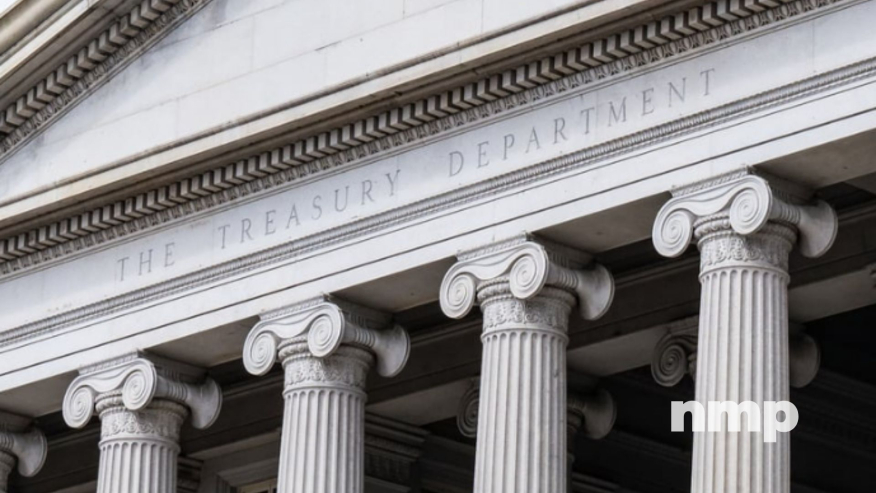
The Financial Stability Oversight Council’s (FSOC) 2025 Annual Report reaffirms the resilience of the U.S. financial system in the face of recent stress, while marking a notable strategic shift in how financial stability is conceptualized and pursued by federal regulators.
The report, mandated under the Dodd‑Frank Wall Street Reform and Consumer Protection Act and produced collaboratively by member agencies, assesses current risks, highlights evolving threats, and lays out a policy agenda that increasingly weighs economic growth and “economic security” alongside traditional risk monitoring.
Spotlight on AI
The FSOC’s report identifies artificial intelligence (AI) as both an opportunity and a potential risk to U.S. financial stability. The Council established a dedicated Artificial Intelligence Working Group to examine how AI can be harnessed to enhance the resilience of the financial system while also monitoring risks that may arise from its adoption. This working group is tasked with identifying high-value use cases of AI that member agencies can adapt to improve regulatory and supervisory effectiveness and efficiency. It also aims to foster public-private dialogue to understand and mitigate regulatory impediments to responsible AI adoption within the financial services sector.
The report underscores that rapid technological advances have spurred increased AI adoption by financial institutions and regulators, highlighting both potential benefits — such as improved analytical capabilities and operational efficiency — and risks, including systemic vulnerabilities tied to AI use. Going forward, FSOC recommends coordinated exploration of AI opportunities and vigilant monitoring of associated risks to promote financial stability.
Performance of Financial Markets and Institutions
According to the report’s executive summary, U.S. financial markets and institutions performed well throughout 2025, supporting the smooth flow of credit to businesses and households. Core components of the financial system — including short‑term funding markets, the Treasury market, and payment, clearing, and settlement systems — remained operational and resilient even amid a brief bout of volatility in April 2025. Asset prices recovered after this episode, although valuations in some markets remain elevated relative to underlying fundamentals. Aggregate measures of household and corporate debt were broadly stable, though certain pockets of weakness in lower‑rated corporate borrowers and some segments of household credit bear continued monitoring.
Reframing Financial Stability: Growth and Security as Core Principles
A central theme of the 2025 report is the integration of economic growth and economic security into the framework for assessing financial stability. The report explicitly acknowledges that the regulatory burden imposed by financial rules can itself affect financial conditions and economic performance — an analytical shift from past FSOC reports that focused predominantly on identifying vulnerabilities that could disrupt financial markets or institutions. By broadening the paradigm, the Council seeks to balance traditional risk oversight with a consideration of how regulations influence capital flows, growth prospects, and household resilience.
This “growth‑centric” lens is reflected in the Council’s letter from the Chairperson, Treasury Secretary Scott K. H. Bessent, which underscores the importance of sustainable long‑term growth and secure economic conditions as underpinnings of financial stability, alongside the traditional mandate to identify and mitigate potential disruptions.
Key Areas of Focus and Policy Recommendations
The report’s executive summary and subsequent sections outline four primary areas of focus that will shape FSOC’s agenda in 2026 and beyond:
Bolstering Treasury Market Resilience: As the deepest and most liquid market globally, the U.S. Treasury market is critical to domestic and international financial activity. Episodes of stress in 2025 highlighted the need for targeted resilience measures, including enhanced surveillance, clearing reforms, and careful monitoring of new market participants and structures.
Addressing Cybersecurity and Operational Risk: The rapidly evolving cyber threat landscape — with sophisticated attacks against financial institutions and infrastructure — remains a material risk to financial stability. The Council emphasizes the importance of coordinated defenses, threat monitoring, and investments in technologies that bolster operational resilience.
Enhancing Supervisory Frameworks for Depository Institutions: Recognizing the role of banks and depositories in underpinning credit provision and economic activity, the report calls for enhancements in supervisory approaches that reflect contemporary risks while avoiding undue regulatory burden.
Harnessing Artificial Intelligence (AI) for Stability: For the first time, FSOC identifies AI as both a risk and an opportunity. A new working group will explore high‑value use cases for responsible AI deployment in financial oversight and risk management while monitoring potential systemic vulnerabilities associated with AI adoption across the sector.
These areas will be operationalized through new working groups focused on market resilience, household financial resilience, AI, and crisis preparedness — the latter addressing not only cyberattacks but also broader technological and geopolitical risks that could disrupt critical financial services.
Risk Monitoring and Significant Market Developments
Beyond the core focus areas, the Annual Report includes detailed monitoring of significant market trends. These include developments in short‑term funding markets, commercial real estate, corporate and household credit, and other segments such as residential real estate. The report also tracks ongoing changes in institutional structures, including depository institutions, investment funds, central counterparties, and insurers.
Notably, the report’s structure distinguishes between issues that warrant policy recommendations from those meriting ongoing surveillance, enabling a more strategic allocation of regulatory attention.
Reception and Policy Context
Reactions to the 2025 Annual Report reflect broader debates about the role of financial regulation. Some observers characterize the report as signaling a shift toward deregulation or regulatory “light‑touch” approaches, particularly given the emphasis on economic growth and the de‑emphasis of digital assets in the risk inventory. Critics warn that such shifts could weaken oversight at a time of persistent structural and technological risks.
Nevertheless, the report represents a deliberate effort by FSOC to align financial stability policy with evolving economic conditions, leveraging interagency collaboration to respond to both traditional and emerging threats while reinforcing the resilience of the U.S. financial system.